


 Francais
 Deutsch
 Italiano
Refine Your Search
B-24-Burma stock footage and images
- Showing 121 to 126 of 3692 results more
more Hide
Hide
An X-24A aircraft is hauled out of a building and an animation depicts its launch from a B-52 Stratofortress in the U.S.
U.S. X-24A experimental aircraft in the United States. An X-24A aircraft hauled out of a building. Animation : X-24A aircraft launched from a B-52 Stratofortress aircraft. The aircraft climbs up and then descends. A map of the United States depicts the landing of the X-24A aircraft at Cape Kennedy.
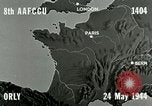
U.S. 8th Air Force B-24 Liberator aircraft drop bombs on an airfield in Orly, France during World War II.
Allied air attacks against France during World War II. A map of France shows the location of Orly. Aerial view of U.S. Army Air Forces B-24 Liberator aircraft in a formation flight. Bombs being dropped on an airfield by U.S. 8th Air Force aircraft on May 24, 1944. Pillars of smoke rise up as the bombs hit the targets. Bomb craters on the field. Smoke rises.
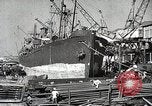
Construction of India-Burma-China Pipeline during World War II
Opening scene shows a large transport ship at a dock in Calcutta, India, during World War 2. It is surrounded by cranes unloading it. In the foreground, numerous sections of pipe are piled up on the dock. Closeup of group of pipe sections being lifted by crane from the ship's hold. Some individual pipes are seen moved by groups of Indian workers carrying them over their heads. Other Indian workers roll pipe sections onto barges that are seen clustered together near a steel bridge. A convoy of trucks is seen carrying the pipe sections along the Ledo road. Some bundles of pipe sections are carried on jeeps. View of an Army Air Forces C-47 transport plane taking off. Sections of pipe being offloaded from a C-47 plane. Numerous pipe sections in organized stacks near the airfield. Sections of pipe being fastened together. Engineers re-condition the road bed using construction equipment. Long connected pipe lines being pulled through water. Caterpillar tractors working on a muddy section of the road. Workers installing pipe near graves of workers who died from disease and other causes. Workers sending a bundle of pipe segments across a river by means of a Zip line. A worker's camp of tents in the background. Workers dressed in rain gear and boots carrying a pipe section through water during the Monsoon. Workers using machetes to chop their way through jungles. An open utility train moving Chinese troops along a single-track rail line, passes pipeline workers standing aside. Engineers and other pipeline workers distributing pipe sections along the rail line from railroad flatcars. Trucks driving the road, in Burma. Various views of the pipeline in including one showing lines of pipe forming a suspension bridge across a river. Other scenes show the pipeline crossing ravines, submerged under rivers, climbing vertical cliffs. Aerial views of the pipeline from low flying aircraft. A vehicle marshaling yard filled with army vehicles. M3A3 Stuart light tank moving past a yard filled with them. Army trucks moving out of their parking yard. Aerial view of large airfield with many parked Air Transport Command C-47 airplanes. B-29 bombers being refueled at an airfield. One is seen taking off. Lieutenant General Daniel Isom Sultan, Commander India-Burma theater, comments that the pipeline is a lifeline to our beleaguered ally and that the Chinese are in on this. Views of Chinese soldiers engaged against Japanese forces. They fire artillery pieces and heavy machine guns. British soldiers carrying Bren guns and struggling to move artillery pieces in the mud. They are seen firing artillery from under camouflage canopies and firing Vickers machine guns. Aerial view of the British controlled port in Calcutta, India, where war materiel is seen being unloaded. Tanks being transported on an Indian railroad. War supplies moving on a barge line and on roads. View of a British airfield in India. North Burma Chinese troops with their weapons and army vehicles. U.S. troops advancing on roads in the jungles. Chinese Marshal Chiang Kai-shek with U.S. President Franklin D. Roosevelt and British Prime Minister Winston Churchill, at the Cairo Conference of November 22–26, 1943. General Sultan concludes the film by reassuring American soldiers that they are in the China-Burma-India theater in the common allied effort to fight against Japan.

Allied troops advance as B-24 Liberators bomb target areas in Papua New Guinea.
1943: Animated map depicts Japanese advancement and footholds of Allied troops in Papua New Guinea. Australian 6th Division troops advance through thick jungles towards Salamaua. Soldiers route for enemies in the jungle and fire guns and artillery. Machine gun nests in the jungle. An injured soldier waits to be evacuated. The natives carry soldiers on stretchers. An Australian soldier help a wounded comrade across a river. The Australian troops are relieved by U.S. troops. USAAF B-26 Marauder at a supply depot in Kela village. Native carriers wait for supplies to be dropped from airplanes. 14 August 1943: 5th AAF bombs and strafes targets in the Wewak and Salamaua areas. USAAF B-24 Liberator drops bombs over target areas. Smoke and explosions due to the bombardment. (World War II period).
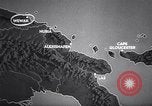
USAAF B-24 Liberator bombers drop 1000 lb demolition bombs over Nubia in World War II.
1943: An animated map depicts the strategic Japanese air and shipping base at Nubia in Papua New Guinea, during World War Two. 25 August 1943, Nubia: USAAF 5th Air Force B-24 Liberator bombers drop 1000 lb demolition bombs, from 16,000 feet, over Nubia. They target bivouac and supply areas. That afternoon, U.S. B-25s, flying low to the ground, make strafing attacks against the Japanese airfield at Nubia. United States soldiers unload jeeps, bulldozers, scrapers and other construction equipment in an abandoned Japanese airfield at Nadzab. U.S. 5th AAF constructing their air base. USAAF C-47s bring Australian infantrymen to the new base.
U.S. Army Information film about air sea rescue using B-17 and A-24 aircraft and Army rescue boat
A film on U.S. Army air-sea rescue operations. A U.S. Army Air Forces B-17 Flying Fortress aircraft in flight over water. Crew at controls of the aircraft. Number 1 engine is feathered. Then, number 4 engine fails and is feathered. View from behind shows the B-17 descending with all four engines feathered. (Some of these scenes probably employed models.) Crew members in the aircraft. A wireless operator sets a key at automatic SOS. Crew preparing for ditching. The aircraft ditching in the water.Crew evacuates from the ditched aircraft in 6-man life rafts. They employ their various survival gear, including Gibson Girl radio with balloon-mounted antenna, signal mirrors, fishing gear, dye marker, and smoke flares. They are spotted by an Army Air-Sea rescue Douglas A-24 aircraft. The aircraft reports their position and a rescue boat is dispatched to their location. They are reached by U.S. Army air sea rescue boat, number P-249 (An 85 foot, wooden, gas- powered boat, built by Eddy Ship Building, Bay City, Michigan). Crewmen are taken aboard and given refreshments.
CRITICALPAST.COM: About Us | Contact Us | FAQs - How to Order | License Agreement | My Account | My Lightboxes | Shopping Cart | Advanced Search | Featured Collections | Website Terms & Conditions | Privacy Policy ©2026 CriticalPast LLC.
License Agreement |
Terms & Conditions |
Privacy Policy
©2026 CriticalPast LLC.