


 Francais
 Deutsch
 Italiano
Refine Your Search
B-24-Burma stock footage and images
- Showing 1321 to 1326 of 3678 results more
more Hide
Hide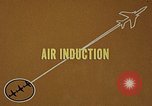
The air induction of the F-105B Thunderchief fighter bomber in the United States.
Different features of the U.S. Air Force F-105B Thunderchief fighter bomber in United States. An animated and actual footage explains the air induction of the F-105B. The F-105B taxis and stops. The right wing air intake. Several views of F-105B right wing air intake with sliding plug in operation. The fuselage bleed doors in operation. The vertical fin air intake of the aircraft.
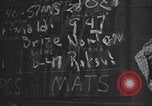
A crew member inspects a B-47 and it taxis and takes off from Brize-Norton Air Force Base in the United Kingdom.
A U.S. Air Force B-47 Stratojet aircraft takes off from Brize-Norton Air Force Base in the United Kingdom. Ground crewmen in a group beside the B-47 Stratojet. One of the members holds a writing pad. All of them check their hats. A ladder leading to the cockpit. A man climbs up the ladder and inspects the cockpit. A crew members close the door. The aircraft taxis on a runway and takes off. Contrails come out from the B-47 when it takes off. The B-47 lands and taxis.
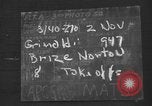
Three B-47 Stratojets make a rocket assist take off one after the other from Brize Norton Air Force Base, United Kingdom.
U.S. Air Force B-47 Stratojets make a rocket assist take off one after the other from Brize Norton Air Force Base, United Kingdom. A B-47 takes off and contrails are released by the aircraft. Another B-47 taxis on the strip and takes off. The third aircraft taxis and takes off. Other B-47s taxi on the runway.
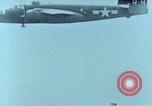
A USAAF B-25 Mitchell bombs a bridge resulting in an explosion in France during the Battle of France of World War II.
United States Army Air Force ( USAAF ) aircraft in France during the Battle of France of World War II. A USAAF B-25 Mitchell medium bomber in flight. The aircraft in flight over fields and wooded areas. The aircraft in flight over target areas. The aircraft drops bombs over a bridge which explodes. Thick smoke rises from the explosion. The smoke spreads over the area. The surrounding wooded region in view. Few B-25 Mitchells in formation flight. The tail section of a B-25 in view. The B-25s in formation flight over a coastline.

USAAF B-17 Flying Fortresses drop bombs over Germany during World War II.
View from inside a B-17 of the U.S. 351st Bomb Group, as it arrives over its target in Germany during World War 2. Smoke screen set off by defenders is visible streaming across the ground. A lone German fighter makes a final attack through the flak zone and downs a B-17, which is seen falling out of the formation with part of its empennage shot away. The lead B-17 fires a flare signalling start of the bomb run. Control of the aircraft's course is transferred to the bombardier. Bomb bay doors are opened and bombs are seen falling from the B-17s. Bombs fall on waterfront dock areas and on industrial areas. A mix of incendiary and antipersonnel bombs are dropped on adjacent enemy aerodrome. Smoke rising from bomb strikes begins to obscure the targets. As the bombers close their bomb bay doors, to commence return home, they continue to be attacked by Flak.
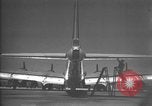
Members of U.S. Army Air Force 73rd Bombardment Wing paint the undersides of B-29s in Saipan, Northern Marianas Islands.
Members of U.S. Army Air Force 73rd Bombardment Wing paint the undersides of B-29 Superfortresses black for night –flying camouflage in Saipan, Northern Mariana Islands during World War II. Men stand on ladders and paint the underside of a Boeing B-29 Superfortress. Side view of the B-29. B-29s are lined up and are painted.
CRITICALPAST.COM: About Us | Contact Us | FAQs - How to Order | License Agreement | My Account | My Lightboxes | Shopping Cart | Advanced Search | Featured Collections | Website Terms & Conditions | Privacy Policy ©2026 CriticalPast LLC.
License Agreement |
Terms & Conditions |
Privacy Policy
©2026 CriticalPast LLC.