


 Francais
 Deutsch
 Italiano
Refine Your Search
B-24-Burma stock footage and images
- Showing 2083 to 2088 of 3678 results more
more Hide
Hide
The film of T-3A camera developed and a print is taken from B-7 printer in United States.
A U.S. Army training film about developing camera film containing aerial reconnaissance views. Film titled 'Aerial Photography', Part -5, 'Processing the Film'. A T-3A camera is unloaded from a plane. It is taken to a dark room at photographic laboratory Dept. 59. Exposed film roll is removed from camera and is put into its original box. The T-3A film development assembly, placed on table consist of 3 metal boxes, spool plates and motor to transfer film and a loading plate. Development of film starts with first fixing the film onto the loading plate and transferring it on to spools. These spools are then immersed in clean water and transferred from one solution to other. It is then transferred to the developing solution, then in water and hypo solution and then kept in fixing base for 30 minutes. It is washed in running water for 30 minutes. Film is then dried on film dryer blower drum. Then it is transferred to take up spool and laid on lettering table. Each film is lettered on right lower side with title, location, organization, date, day, length and altitude. Developer is prepared at appropriate temperature with water. Print is taken on paper. A B-7 printer is used for printing. The paper is immersed into different solutions and then dried on a canvas belt over a heated drum.
Methods of nuclear weapon delivery by A7 A/B light attack Tactical Aircraft in the United States.
A U.S. Navy film about delivery of nuclear weapons in the United States. The film is titled 'Special Weapon Mission by A7 AB Carrier Aircraft'. A light attack Tactical Aircraft in flight at low level. A board at a door reads 'U.S. Pacific Fleet Air Intelligence Support Center -FAISC-'. A sailor enters the gate. A pilot works out the mission plan. He is given two targets and information regarding his mission. The pilot prepares headings, selects initial points, and decides the method of delivery and escape maneuver. He opens a book about methods of delivery. Animation depicts methods of weapon delivery followed by demonstrations by practice weapons. The Run in, Pull up and Release methods explained. Delivery method Retarded Lay Down gives the maximum protection. The second method Retarded Loft gives the fastest escape. Low Angle Loft, Medium Angle Loft, 65 Degree Angle Loft, 90 degree Loft and Over Shoulder Loft. The pilot decides on Wing Allowances. He selects navigation and other preparations. A briefing about weather and navigation. B-43 weapons are loaded in the aircraft at the hangar deck. The pilot checks in and adjusts settings for the nuclear bomb release. He adjusts monitor and control sets, electric settings, and depresses gun side.
Nuclear weapon delivery by A7 A/B light attack Tactical Aircraft under Mission Profile in the United States.
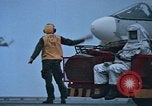
A U.S. Navy film about delivery of nuclear weapon in the United States. A7 A/B light attack Tactical Aircraft takes off on a practice mission from a US Navy ship. Flight deck crew in yellow vest giving guidance to pilot for take off from aircraft carrier. View of pilot in aircraft. Animation shows the steps to be accomplished during the mission. Steps shown include high altitude navigation, aerial tanking connection with another aircraft for midair refueling, two weapon deliveries, approach back, and land. Close-up aerial views of pilot in cockpit. Interior cockpit views of pilot using aircraft controls including ASN-41 navigation computer and APN-53 Doppler radar system. He is seen pulling up a thermo shield over himself in the cockpit. Closeup of gloved hand of pilot manipulating controls in cockpit. View of radar screen. At 200 feet angle he raises the thermo shield. Point of view through front aircraft windshield as pilot approaches target. At 15 miles away from target he increases the speed, makes the adjustments and drops nuclear bomb weapon. Gloved hand on bomb control seen as he presses bomb release button. View of bomb falling from aircraft. Aerial view of nuclear explosion on ground. View inside cockpit as pilot checks and enables second bomb and proceeds. Pilot views warning signal to pull up. View of altimeter responding as he ascends. During high ascent he performs loft delivery, dropping bomb and banking away from target site. He achieves some distance on his return before nuclear explosion is seen on ground at second target. Aircraft seen on return flight, crossing from land, back over sea, and landing back after accomplishing the mission.

Prototype B-26,with plexiglass nose and top turret in flight in Baltimore, Maryland.
A prototype B-26 with plexiglass nose and top turret is tested at Martin Aircraft company in Baltimore, Maryland. The aircraft at an airstrip. Officers talk. A man sits inside the transparent nose section. The aircraft takes off on test flight.
French B-26 bombers in Indochina fly over buildings, mountains and forest terrain
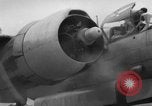
French B-26 bombers in Indochina. Aircraft lined up with running engines. They take off and fly in formation. Aerial views of terrain. Views from cockpit. Buildings, mountains and forest. The aircraft fly over the clouds. An aerial view of a river and a field.
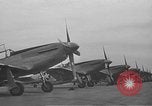
P-51 Mustangs and B-17 Flying Fortress planes attack German aircraft plants during World War II.
U.S. Army Air Force bombers attack Germany during World War II. View of U.S. P-51 Mustang aircraft in flight line at U.S. Air Base in England, United Kingdom. Aerial views of a formation of B-17 Flying Fortress planes and P-51 aircraft in flight over Germany. Bombs fall on German aircraft plants. Ruins of German aircraft plants after facing the bombings. Scene changes to show German war production workers building new Focke-Wulf aircraft (e.g., Fw 190) at production factory in Germany.
CRITICALPAST.COM: About Us | Contact Us | FAQs - How to Order | License Agreement | My Account | My Lightboxes | Shopping Cart | Advanced Search | Featured Collections | Website Terms & Conditions | Privacy Policy ©2026 CriticalPast LLC.
License Agreement |
Terms & Conditions |
Privacy Policy
©2026 CriticalPast LLC.