


 Francais
 Deutsch
 Italiano

Refine Your Search
B-24-Burma stock footage and images
- Showing 2761 to 2766 of 3692 results more
 Hide
Color Sound
The U.S. Army Signal Corps Signal Intelligence work during World War II.
The role and contribution of the U.S. Army Signal Corps in combat during World War 2. Soldiers on guard duty in a field. A soldiers talks over a radio receiver at the door of a cabin. An antenna on the cabin roof. Signal Officers intercept enemy transmission by the mean of radio and other electric equipment. Electrical equipment, radios, deciphering equipment, laboratory equipment and parts seen at work in Signal Corps facilities where intercepted enemy communications are analyzed and codes and ciphers are deciphered. Officers skilled in encryption and decryption work to decode enemy codes and messages. They use a microscope to read and write messages in microscopic writing on grains of rice. Signal Intelligence work in North Africa during World War 2. U.S. soldiers on tanks advance over rough terrain. A formation of U.S. B-17 bomber aircraft in flight. Tanks advance with the ground forces. The radio intercept picked up messages from a certain German Division headquarters. A soldier sets radio direction finders on the particular location. Officers receive the information and locate the headquarters on a map. The Allied troops attack the enemy. They hit them with tracers. Artillery and guns are fired. Smoke from fire due to explosions. Soldiers advance in prone positions. They lie low during the night assaults. German soldiers load and fire a mortar. Explosions in a field due to mortar attack. Dead U.S. soldiers and injured U.S. soldiers in foxholes and on the battlefield following mortar attacks. U.S. soldiers help a fellow wounded soldier in a jungle setting.
German paratroopers land in Rotterdam and advance during the Battle of Rotterdam in World War II.
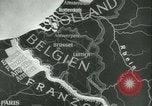
The German assault on the Netherlands during the first phase of German assault on France and the Low Countries in World War II. Germany commences Operation Fall Gelb on May 10, 1940. An animated map depicts the movement of the English and French Armies across France towards the Ruhr Area in Germany in response to the German aggression. German Fuhrer Adolf Hitler plans with his Generals and senior officers. An animated map depicts the position and advance of German Army Groups A, B and C towards the French border. German officers discuss over a map. A series of shots of German communication equipment as orders are received, typed, and transmitted by radio operators via morse code, typewriter, switchboard. A soldier leaves with a message on a motorbike. Military vehicles advance towards their positions. German Luftwaffe General Kurt Student accompanied by a Nazi officer greets troops and leaves in a car. German aircraft in flight during the Battle of Rotterdam. The pilot and gunner aboard. German officers and paratroopers seated in the transport aircraft. The paratroopers jump from the aircraft and descend towards the target area of Rotterdam. A map depicts the target area of Rotterdam in Holland. German troops advance on ground. Soldiers on motorbikes and tanks. They uproot barricades, fences and obstructions as they advance. German trucks haul artillery. German troops cross the Rhine in rubber boats and over pontoon bridges. German soldiers stuff grenades into their belts, lay wire, and horses are pushed into water. Street fighting on deserted streets. Medics attend to the wounded. German tank guns fired resulting in explosions. German Junkers Ju 87 or Stuka dive bombers in flight drop bombs over Rotterdam. Tanks are hit. Wounded soldiers helped onto motorbikes. A sign for a field hospital. German Corpsmen care for the wounded. German officers and soldiers during a discussion in the field. Dead French soldiers and wrecked French tanks. French prisoners of war (POW) transferred. Military trucks, antiaircraft guns and jeeps advance.
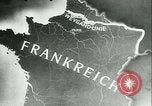
German troops advance through Hangest while German Stukas bomb Allied positions and dogfight with French airplanes.
The German assault on France during the Battle of France in World War II. A map depicts the location of Somme, Paris and the Weygand Line in France. Germans advance into France. German forces move through Hangest-en-Santerre, France. A bullet ridden sign for Hangest-en-Santerre. German soldiers take cover. Smoke due to several explosions. Bomb damaged buildings and rubble strewn on the streets. German soldiers in a 5 cm sIG 33 (Sf) auf Panzerkampfwagen I Ausf B, sometimes called a Sturmpanzer I Bison self-propelled gun as it makes its way through the streets amidst enemy fire. Machine gun fire. Tanks advance on the streets. German soldiers run for cover. Bomb damaged buildings and ruins. Soldiers amidst rubble. German Junker Ju 87 Stukas, He-111 and Ju-88 medium bombers bomb Allied positions in France. German pilots release bombs. The bombs descend to the ground and explode causing huge clouds of black smoke. View of bombing and smoke rising from targets as seen point of view from inside plexiglass nose section of German bomber aircraft. French MS-406 fighters and German Me-110 and Me-109 fighter aircraft dogfight. The crew inside a Stuka in flight. A French aircraft is hit and is seen nosediving toward ground. It crashes with a large explosion. German aircraft bomb the Weygand Line. German artillery bombards the Line.

French Bastille Day parade in Paris 1939, and German troops occupying Paris in 1940, during World War II
A group of German army troops seem marching casually at Champ de Mars, Paris, during 1940, in World War 2. Sounds of a fife and drum corps are heard in background. The Eiffel tower looms in the background. Some soldiers are on bicycles. View shifts to a nearly empty Champs Elysees, with Arc de Triomphe (Pl. Charles de Gaulle, 75008 Paris, France) in the distance. German military vehicles move along the edge of the road. Camera moves closer to the Arc de Triomphe. Suddenly the scene shifts back a year, to the 1939 Bastille Day parade, in Paris. It shows British Grenadiers in uniform with bearskin hats, parading on the Champs Elysees, along with French Colonial Senegalese Riflemen wearing the Fez. Also seen are French Sailors, and infantry. Then, from a high point overlooking the parade, vehicles are seen pulling artillery. Back at street level, French 2-man Renault UE Chenillette tankettes are seen in formation. They are followed by a formation of Panhard AMD armored cars. Scene reverts to the present (1940) with German occupation troops marching past the Arc de Triomphe. As the German troops pass, German Field Marshal (Generalfeldmarschall) Fedor von Bock, Commander of Army Group B, is seen briefly saluting, as he reviews the troops from the sidelines. Another General stands with him. Spectators and column of German troops seen from Eiffel Tower. A German officer on horseback, leading his troops. Marshal von Bock, saluting. Various closeups of parading troops. View from an aircraft flying over the city of Paris, with Arc de Triomphe near center of the view. German troops towing artillery and caissons by teams of horses. Glimpse of the Arc de Triomphe, and Eiffel Tower. Horse-drawn wagons, carrying German troops and towing field artillery at the Place de la Concorde. The French Naval Department building (Hôtel de la Marine, 2 Pl. de la Concorde, 75008 Paris, France) seen behind them. Parisians watching solemnly from sidewalks. German sentries posted at the Hôtel des Invalides. (Les Invalides, 129 Rue de Grenelle, 75007 Paris, France). French policemen giving directions to a German soldier, holding a map. German troops moving along the side of a commercial district street. Two French women smiling as the camera focuses on them. German soldiers marching cheerfully, along a French country road with a chorus heard singing in the background.

Chamber of Commerce members await the arrival of President John F Kennedy at Hotel Texas, Fort Worth.
A television presentation 'Welcome to Texas' welcomes U.S. President John Fitzgerald Kennedy on his visit to Dallas. A presenter reports on the President's Chamber of Commerce breakfast speech at the Hotel Texas (815 Main St. Town or city, Fort Worth, Texas) in Fort Worth. Guards at the entrance to the conference hall. Officials, members, and others seated inside the hall. Officials and Secret Service agents enter and leave the hall. Dignitaries including Vice President Lyndon B Johnson and his wife Lady Bird Johnson seated at tables on the stage. Attendants stand behind the seated guests. Policemen and Secret Service agents inside the hall. A 'Chamber of Commerce' banner on the stage. Officials, agents and guards at the hall entrance. These events took place on the morning of President Kennedy's assassination.

U.S. President Kennedy and Vice President Johnson at the Chamber of Commerce breakfast speech in Fort Worth, Texas.
United States President John F Kennedy's Chamber of Commerce breakfast speech at Hotel Texas (815 Main St, Fort Worth, TX 76102) in Fort Worth, Texas. Members, guests, and others seated in the Crystal Ballroom. A banner on the stage reads 'Forth Worth Chamber of Congress'. Vice President Lyndon B Johnson seated next to President Kennedy on the stage. A dignitary talks to the President and addresses the crowd. A children's chorus stands in one corner. The President hears the choir sing. A conductor with the chorus. Attendants serve the President and other dignitaries seated on the stage. Media persons record and photograph the proceedings. Guards at the hall entrance. These events took place on the morning of President Kennedy's assassination.
CRITICALPAST.COM: About Us | Contact Us | FAQs - How to Order | License Agreement | My Account | My Lightboxes | Shopping Cart | Advanced Search | Featured Collections | Website Terms & Conditions | Privacy Policy ©2026 CriticalPast LLC.
License Agreement |
Terms & Conditions |
Privacy Policy
©2026 CriticalPast LLC.