


 Francais
 Deutsch
 Italiano

Refine Your Search
B-24-Burma stock footage and images
- Showing 3217 to 3222 of 3692 results more
 Hide
Color Sound
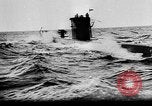
Period before U.S. formal entry into World War II. German submarines torpedo American ships and Japanese attack Pearl Harbor
Preface to U.S. in World War 2. German U-boat on surface. Crew climbing down into submarine and at duty stations while submerged. Torpedo trails bubbles underwater. Ship hit and explodes. Newspaper headlines report torpedoing of American ships: SS Robin Moor, SS Lehigh, SS Sessa, SS Steelfarer, and SS Montana, by German U-boats. Secretary of War, Henry L. Stimson calls on U.S. Navy to secure sea lanes. Wendell Wilkie agrees. U.S. Congress repeals Neutrality Act, November 17, 1941. Deck guns being placed on U.S. Merchantmen. Japanese warships docked and troops entering Indochina, as local people watch.Japanese troops by Dong Dang, near Chinese border. Situation described by animated illustrations.Japanese Special Envoy, Saburo Kurusu, is dispatched to Washington. Pan American Boeing 314 flying boat taking off. Japanese Naval Task Force of warships underway. Kurusu arriving in San Francisco, on November 14, 1941. He steps from the aircraft and makes statement to reporters. Japanese Ambassador, Kichisaburo Nomura, and Special Envoy Kurusu escorted into the White House by Secretary of State Cordell Hull, on November 17, 1941. Japanese troops in China bombarding Chinese city with artillery. November 26, 1941, View of Executive Office Building with statue of Victory atop U.S. Army First Division Monument. Secretary Hull announcing proposal to Japan.The Japanese representatives leaving the White House. Japanese aircraft carriers steaming toward Pearl Harbor. Japanese flight crews getting briefed on December 7,1941. Nakajima B5N (Kate) torpedo bombers taking off and in formation. Secretary Hull at his desk. The aloha tower and aerial view of Honolulu. Sailors at outdoor Sunday service, and relaxing at Pearl Harbor. Vehicle entering Hickam Field. Japanese airplanes bombing Pearl Harbor. Explosions on U.S. warships. USS Arizona (BB-39) suffers direct hit and explosion, as filmed from the deck of U.S. Navy Hospital Ship, USS Solace (AH-5). Shots of pilots and point of view from pilots inside Japanese bomber and attack aircraft, through a mix of dramatized segments from Japanese propaganda films about the Pearl Harbor attack, and real footage from the Pearl Harbor attack. View from Japanese planes bombing and strafing Ford Island. U.S. sailors firing antiaircraft and machine guns down Japanese planes. Secretary Hull describes memorandum from Japanese.
U.S. Douglas A-20 Havoc (aka Boston) aircraft take off from airfield in North Africa during World War II
North African Campaign in World War 2. U.S. Army Air Forces fliers of the 47th Bomb Group, , assemble for mission briefing outside a large tent at Allied airfield in North Africa, in World War 2. They look at aerial photos of targets. Red Cross women hand out refreshments to fliers. Crew members climbing, via top canopy, into an A-20 solid nose model Havoc bomber (called Boston, in British service). The aircraft is named "Boomerang." Numerous bombs are painted on its side for missions completed. An A-20 (with glass bombardier nose) is starting engines, as fireguard stands nearby. It has 38 bombs painted on its fuselage. A-20s taxiing for takeoff. One, of the 97th Bomb Squadron, with number 80 painted on its tail, takes off. A parked A-20, number 72, of the 86th Bomb Squadron. An instantaneous glimpse of several British Spitfire aircraft parked on the field. The bombers are seen flying in formation overhead. Closeup of one inflight. Aerial view of target area below. Waist gunner firing downward from a B-26 aircraft.

Allied bombing of Monte Cassino in WW II.
The Battle of Monte Cassino in Italy during World War 2. Film opens showing a Curtiss P-40 Kittyhawk aircraft of USAAF 315th Fighter Squadron in flight over Monte Cassino, in clear weather. View from interior of an aircraft as it maneuvers, following another unidentified warplane. Scene shifts to explosions from allied bombing at Monte Cassino. Large explosions and heavy black smoke rises from the town, itself, and the base of the mountain. Camera view is from nearby mountain. The entire area becomes obscured by smoke. More views of bombs striking. Brief glimpse of North American B-25 Mitchell bomber from USAAF 340th Bomb Group, dropping bombs at Monte Cassino. View from a fighter plane cockpit as it dives down over smoke rising from bombing of the Montecassino Abbey. View of a P-40 in clear air (same as opening shot in this film). Glimpse of more bombing.

Ruins of Cassino town and Monte Cassino monastery after bombardment during the Battle of Monte cassino.
The Battle of Monte Cassino in Italy. Ruins of Cassino town and Monte Cassino monastery. A wrecked M4 Sherman tank in view. Soldiers dig in field staked out with markers. Closeup of U.S. B-17 Flying Fortress bomber in flight. Smoke rising from bombing or shelling. (World War II period).

U.S. supply and ammunition base in Munda, New Georgia Island in World War II.
Wreckage and debris in Munda, New Georgia Island, during World War 2. Workers clear field at Munda Point. Air Force construction team clear area using power shovel and road graders. Supply and ammunition base of the island. TBF planes taxi on runway. C-47 crew unload bomb carriers. Loaded bomb carriers move out towards flight line. Control Tower operators look at a P-39. It taxis and takes off. B-25 (Mitchell Bomber) makes forced belly landing.
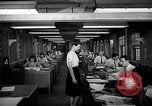
Work at an accounts department in an administration building in Oak Ridge, Tennessee.
An accounting department at an administration building in Oak Ridge, Tennessee, created during Manhattan Project effort to build the atomic bomb in World War 2. A man gives papers to a woman. She goes away. People work at a desk. Mr. Frank B. Elackston, the Chief Accountant, dictates to his secretary at his desk. Engineers work in a drafting room in the Engineering Section. Two men work at a drafting desk. A soldier hand prints a name on a blueprint at a desk.
CRITICALPAST.COM: About Us | Contact Us | FAQs - How to Order | License Agreement | My Account | My Lightboxes | Shopping Cart | Advanced Search | Featured Collections | Website Terms & Conditions | Privacy Policy ©2026 CriticalPast LLC.
License Agreement |
Terms & Conditions |
Privacy Policy
©2026 CriticalPast LLC.