


 Francais
 Deutsch
 Italiano

Refine Your Search
B-24-Burma stock footage and images
- Showing 3289 to 3294 of 3692 results more
 Hide
Color Sound
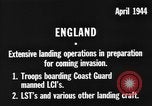
In England, U.S. Amphibious forces (in Exercise Tiger) practice for the invasion of Normandy, during World War II
U.S. troops descending from a pier, in England to board an LCI (L)- landing craft infantry, Large, during World War 2. Other LCIs are docked along the pier, including LCI -21. Ships and landing craft maneuver off shore from Slapton Sands, Devon, England, where U.S amphibious forces practice for the invasion of Normandy in World War 2. Closeup of troops underway in a Higgins boat landing craft. View from camera ship's deck, of a Transport ship, nearby and of several LCI(L)s in the distance. Closeup of U.S. Landing Craft Tank, LCT(5)-305, passing the camera ship. USS LST-30 and another ship are seen nearby. USS LST-310 is seen with a long floating dock in front of it. Next, the floating dock is turned sideways to her front hatch and soldiers are seen clearly on the dock. U.S. Landing Ship Tank - LCT(5)-305, passes behind. Next, the floating dock is seen moving away from LST-30. A ship, armed with guns, that appears to be numbered US 12F6. Closeup of LCI(L)-87 with Coast Guard Commander Miles Hopkins Imlay, seen on her bridge. (She is the flagship of his command, Flotilla 10.) View from ship beached on Slapton Sands, of Markers set up on the beach and Sign reading: "B." View from ship looking down on the sand where several officers are discussing the exercise. A truck driving out of beached landing ship.

Montage of scenes, in random order, involving U. S President and Congress, and Navy aircraft carriers. Covers 1920s through 1930s prior to U.S. involvement in World War II
Opening slate reads: "U.S. Seeks Neutrality."Glimpse of the U.S. Capitol building. Speaker of the House of Representatives, William Bankhead, gavels the assembly to order. President Franklin D. Roosevelt in his office signs the Neutrality Act, or Senate Joint Resolution No. 173, on August 31, 1935. Afterwards he chats with Senators who attended his signing. Among those seen in closeup are James F Byrnes, John Nance Garner, and John H. Bankhead II. The Senators shake hands with the President as they leave. Scene changes to German aircraft in flight including Messersmitt Bf 109s and Dornier 17 bombers. A crowd, including civilians and military personnel, stand about the site of a crashed airplane, in Europe. View shifts to U.S. Navy warships at sea. View from one of the Aircraft Carrier, USS Lexington (CV-2) where a Boeing F2B bi-wing fighter airplane is landing on her deck. Closeup of the plane landing on Lexington's flight deck and sailors rushing to arrest and control it. Somewhat fuzzy view of a ship sinking in rough waters. Clear view of an injured sailor in a ship's infirmary. Rescued sailors eating on deck of the rescue ship. One of the sinking victims covered by an American flag, is buried at sea. View of a burning ship.
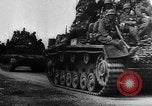
Montage of World War II images,covering Eastern Front, Pacific, and European theaters of operation
German troops advance on the Eastern Front during World War 2. Russians employ scorched earth policy . Oil tanks ablaze and dams and structures blown up. Germans lay siege to Stalingrad. A Soviet troops in urban combat in Stalingrad. A German soldier is shot and falls. Views of awful destruction. Animated map showing Leningrad and the Gulf of Finland and Lake Ladoga on either side. Views of Leningrad in snow. Citizens bundled against the cold, walk near historic structures. Food being distributed. Soviet troops in defensive positions. Animated map shows outbreak of Soviet forces in pincer movement that surrounds the German 6th Army. Two Soviet armies meet as they close the pincer. German Field Marshal Friedrich Paulus surrendering to Soviet forces on 31 January 1943. Troops of the German 6th Army make their way through the snow as they surrender. Battlefield cemetery, with markers of German soldier's graves. Numerous Soviet citizens, victims of the fighting, seen lying in the snow, as relatives grieve. Scene shifts to the Pacific theater with view of Japanese bombers flying over an installation flying the Rising Sun flag. Scenes of the Pearl Harbor attack. American workers fill yard near a war plant during shift change. Defense industry workers in the plants. Liberty ships being launched. American forces in amphibious assaults. U.S. forces engaged in North Africa and on Pacific islands. American soldiers at battlefield gravesite. General Dwight D. Eisenhower with General Omar Bradley and Allied military leaders, look over a map of Europe, following the June 6th invasion in Normandy. Fields filled with Sherman tanks and other war materiel, in England. The wing of an American airplane in D-day stripes as it takes off. Views from cockpit of an American bomber striking targets on D-day. B-17 bombers in formation at high altitude, leaving condensation trails in the sky. Pilots in cockpit of an American bomber, as they drop bombs. Allied fighters in D-day stripes peeling off to attack. Gun camera views of fighters strafing German targets. Explosions and fires.
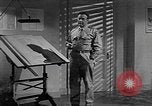
Effects of conventional bombs compared to incendiary bombs in tests against wooden structures, at Eglin Field in World War II
Tests to compare effects of conventional bombs to those of incendiaries,on wooden structures. Test conducted at Eglin Field, Florida, during World War 2. Actor Lee J. Cobb, portrays an Air Force Captain, seated at Project Officer's desk. He shows photographs of a wooden test house constructed similar to houses in Japan. View of wooden structure being ignited from within. The resultant fire is put out promptly. B-17 airplane in flight over the test area, drops conventional bombs, which destroy some of the test village houses. A second bombing using incendiary bombs that break apart and ignite many fires, produces greater destruction across the test village.
Bombing tests using conventional and incendiary bombs against wooden structures, at Eglin Field, Florida, in World War II.
Tests by the U.S. Army Air Forces to assess the effectiveness of incendiary bombs against wooden structures (typical of Japanese homes) during World War 2. Tests conducted at Eglin Field, Florida. B-17 bomber drops conventional bombs on test village, producing considerable damage where they strike. In contrast, bombing with incendiaries produces fire and smoke engulfing the entire complex, and greater destruction and confusion on the ground.
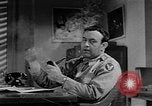
Testing various types of bombs against Japanese-style wood construction, at Eglin Field, during World War II
U.S. Army Air Forces tests of conventional and incendiary bombing of Japanese-style wooden structures, at Eglin Field, Florida, during World War 2. An Army Air Forces Captain (portrayed by actor, Lee J. Cobb) discusses bombing tests conducted at Eglin Field. He holds a pipe in his hand. B-17 bomber takes off over the camera. The plane in flight over the test area. Clusters of small incendiary bombs fall on the test village, causing it to be engulfed in flames. Immediately, thereafter, conventional bombs are dropped on the smoking test village, causing large explosions. The Air Force Captain (Cobb) discusses the results.
CRITICALPAST.COM: About Us | Contact Us | FAQs - How to Order | License Agreement | My Account | My Lightboxes | Shopping Cart | Advanced Search | Featured Collections | Website Terms & Conditions | Privacy Policy ©2026 CriticalPast LLC.
License Agreement |
Terms & Conditions |
Privacy Policy
©2026 CriticalPast LLC.