


 Francais
 Deutsch
 Italiano
Refine Your Search
Baltimore Maryland USA 1958 stock footage and images
- Showing 9919 to 9924 of 25435 results more
more Hide
Hide
President Roosevelt addresses congress after attack on Pearl Harbor in 1941; civilians enlist in U.S. military for World War 2
World-wide wartime activities during 1941 and 1942. President Roosevelt addresses Congress after the attack on Pearl Harbor in 1941. Crowd applauds. Citizens and cars stopped in busy New York listening to the news on the radio being broadcast regarding the declaration of war against Japan. Long queues and lines of civilian men get registered in the U.S. army as recruits are called up. Men taking oath of U.S. military service in New York and Washington DC (on U.S. Capitol steps) and other cities in mass recruitment events. New recruits stand in line in a city to register for U.S. Navy or U.S. Army service. New recruits shown include baseball star Joe Dimaggio, boxer Joe Louis, John Aspinwall Roosevelt (who was President Roosevelt's youngest son), Tyrone Power, Clark Gable, Douglas Fairbanks Junior, and Warren Pershing (son of famed General John Pershing) all seen registering to enter military service. Justice Frank Murphy of the U.S. Supreme Court is seen operating a machine gun during training. Another scene with a mass group of recruits standing and taking an oath of military service.
American industry focuses on defense and war materiel production during World War II
Film opens showing smoke pouring from industrial smoke stacks in American manufacturing plants, during World War 2. Sparks fly from crucible of molten steel. Steel workers silhouetted against fog as they leave on a shift change. Men tapping an open hearth furnace in a steel mill. Hot steel being poured in Crucibles and then into steel containers on rails. Huge overhead cranes moving in a mill. A Bessemer converter furnace tilted and blowing with flames extended from its mouth. (A smoke ring leaves the converter.) Various views of activities in steel mills with flaming steel involved and processing such as extrusion and forging taking place. Closeups of hardworking steel workers handling white hot steel ingots. Sheets of aluminum being processed in rolling mills and then inspected. Scene shifts to an oil field with numerous derricks and then to a refinery, with 10 tall smoke stacks, where crude oil is made into gasoline. Views of Grand Coulee Dam, Bonneville, Boulder, and the Tennessee Valley, where hydroelectric power is produced. Churning waters being discharged through dam spillways. Huge number of men and women war factory workers seen in a shift change at a war production plant. Closeup of machines producing small arms and ammunition. A woman war production worker assembling an M1 Garand rifle. Others working on Browning 30 caliber M1919 machine guns and Browining Model 1917A1 water-cooled machine guns. Belts of machine gun ammunition being boxed for shipment. Shops where torpedoes, shells and bombs are machined. A worker checking out movement of a 40-mm Automatic Gun M1. Field artillery pieces covered outside a war plant. A 14 inch barrel, for a coastal gun or Navy ship, seen suspended from an overhead crane in a factory. Views of various such barrels including a view through one. Elements of mobile weapons being assembled. Jeeps being assembled and driven out of a factory at the rate of one per minute and temporarily stored in a yard. Special machinery grinding gears and other parts. Arc welders at work on weapons. M4A1 Sherman medium tanks being manufactured. View in factory of M3 Lee medium tanks being assembled. Rear view of one being fitted with its treads. Others are seen suspended from overhead crane.
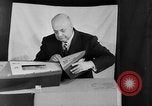
Assembly of liberty ships at Kaiser Shipyards, assembly of airplanes at aircraft factories in America during World War II
Opening scene shows U.S. Industrialist Henry J. Kaiser, demonstrating, on a scale model, how prefabricated parts are assembled into a Liberty Ship, in World war 2. Closeup shows each section of ship labeled by number and name, such as, “Transverse Bulkhead, number 44.” Scene shifts to Permanente Metals Corporation No. 2 shipyard in Richmond, California, where Liberty ships are seen in various stages of construction. Views of keels being laid, superstructures being raised into position, View from interior as skeleton of a ship is being completed. Sign atop the Liberty Ship, Robert E. Peary, as it is being launched, announces that it was completed from keel laying, to launch, in 4 days, 15 hours and 29 minutes. (This was a record for shortest time.) Camera view of the Robert E. Peary, from across the yard area where she was built. A brief view of shipyard activity at night, followed by camera panning over shipyard in daytime. Change of scene to an aircraft factory where B-17 bomber aircraft are being built. Women are seen riveting inside a plane’s fuselage. Other women work on a vertical stabilizer and still others work inside airplane structural members Men assemble an aircraft engine. Women fasten parts of engines together. Engines move through the plant on overhead cranes. An engine and propeller being placed into position on a wing with use of a crane. A right wing with two engines installed is moved into position for installation on a B-17 aircraft. Scene shifts to other aircraft factories building Martin Marauder B-26 aircraft; P-47 fighter aircraft;Navy Catalina aircraft; Douglas A-20 fighter bomber aircraft; and more B-17 bomber aircraft.

New U.S. Warships commence operations during World War 2
A new U.S. Essex class Aircraft Carrier is docked during World War 2. Her crew of more than two thousand Navy personnel are seen boarding with all their gear. Next the entire ship’s company is seen on deck for her commissioning ceremony. A large American flag flies over the assembly. The carrier moves away from the dock, and is then seen out in the water, as some sailors on the dock wave their hats. Scene shifts to the USS Alabama (BB-60) at sea in her final sea trials. View from her bridge overlooking her triple 16-inch guns. Another look at the guns from portside forward deck. Sailors on deck in cold weather gear, perform lookout duties with binoculars. Another glimpse of the 16-inch guns. View of bow wave and wake at the stern
Celebrities help promote American Red Cross blood donor programs and War bond drives during World War II.
Film opens showing a huge crowd gathered in New York’s Madison Square Garden for a rally in support of the American Red Cross, during World War 2. Eleanor Roosevelt, the First Lady welcomes and introduces Princess Martha of Norway. The audience applauds. Scene then shifts for Red Cross activities on the home front. Two Red Cross women remove items from a station wagon in preparation for a local Blood drive. A panel truck parked next to them is marked: “American Red Cross Blood Donor Service.” More Red Cross volunteer women remove items from the panel truck to set up the blood donor activity. View of many persons in beds at a blood donor center. Nurses and Red Cross volunteers working at the center with donors. One of the donors is an active duty sailor in uniform. Complete change of scene to California, where Hollywood stars are seen involved in a war bond drive. Closeup of several, including Irene Dunn, Ronald Coleman, Hedy Lamarr, and Greer Garson. Glimpse of crowd at the bond drive.

Fulgencio Batista greeted by President Roosevelt in Washington DC. Also Mexico, Brazil, and Chile side with Allies in World War 2
President of Cuba, Fulgencio Batista greeted by President Franklin D Roosevelt and Vice President Wallace in Washington, as Cuba expresses support for Allies in World War 2. Next scene shows armored tanks of Mexico rolling through Constitution Plaza in Mexico City, with Metropolitan Cathedral in background, as Mexico also side with the Allies. Next, President Vargas of Brazil waves from a balcony to cheering crowds in Rio de Janeiro as Brazil declares war. Chileans demonstrate for the United Nations in Santiago, Chile. Chilean demonstrators with flags and banners march on streets. Some carry large pictures of the Allied leaders.
CRITICALPAST.COM: About Us | Contact Us | FAQs - How to Order | License Agreement | My Account | My Lightboxes | Shopping Cart | Advanced Search | Featured Collections | Website Terms & Conditions | Privacy Policy ©2026 CriticalPast LLC.
License Agreement |
Terms & Conditions |
Privacy Policy
©2026 CriticalPast LLC.