


 Francais
 Deutsch
 Italiano
Refine Your Search
Baltimore Maryland USA 1958 stock footage and images
- Showing 10741 to 10746 of 25435 results more
more Hide
Hide
A VC-137 Stratoliner airplane of the U.S. Air Force One with its signal lamps blinking, takes off in the United States.
The plane of the President of the United States, the U.S. Air Force One, flies in the sky in the United States. The VC-137 Stratoliner residential airplane taxis on a runway and takes off at dusk. Signal lamps blink on the wings and fuselage of the plane. Signal lamps all along the runway help the air planes to land safely during the evening hours. The plane becomes airborne.

A VC-137 Stratoliner airplane of U.S. Air Force One takes off during evening and flies low in the sky in the United States.
The plane of the President of the United States, the U.S. Air Force One, flies in the sky in the United States. Signal lamps blink on the wings and the fuselage of the plane. The VC-137 Stratoliner residential airplane taxis on the runway and takes off at dusk. The plane becomes airborne and gradually turns to its left. It flies low in the sky during the evening hours.

A VC-137 Stratoliner airplane of the U.S. Air Force One makes a landing on a wet airstrip at midnight in the United States.
The plane of the President of the United States, the U.S. Air Force One, flies in the sky in the United States. The VC-137 Stratoliner airplane, with its flash lights on, lands on a runway at midnight. Signal lamps lighted along the runway to enable safe landing. The plane lands on a wet airstrip. Another plane lands just after it. The plane taxis on the runway and takes off at midnight.

President Richard Nixon delivers "Nixon Shock" speech dealing with the economic crisis in the United States.
President Richard Nixon gives a speech on the economy from the White House in the United States. Nixon addresses the nation on the need to create more jobs, stop the rise in the cost of living, control price inflation, relieve economic stagnation, and control speculation. He announces the Job Development Act of 1971. He talks of eliminating excise taxes on automobiles and speeding up availability of some exemptions in personal income taxes. He charges Congress to introduce incentives for research and development. He orders federal spending cuts including a postponement of pay raises, a 5 percent cut in government personnel, and a 10 percent cut in foreign economic aid. He notes need to open ways for the young people entering job markets. Nixon orders a freeze on all prices and all wages in the United States for 90 days, and he calls on corporations to extend the freeze to dividends. He announces a Cost of Living committee within the government. He calls for voluntary cooperation of all Americans to control price increases after the 90 day period ends. He talks of the need to protect the strength of the American dollar and prevent international money speculation. He announces that the dollar will be defended. He announces the suspension of the convertibility of the dollar to gold, except in certain circumstances. (Later this speech was called the Nixon Shock and also the speech closing the gold window.) He says he wants to "lay to rest the bugaboo of what is called devaluation." He states the goal is stability in the dollar. Regarding trade balances, he announces a temporary 10 percent tax increase on goods imported into the United States, valid until unfair exchange rates are eliminated. He reflects on success of post World War 2 relief measures offered by the U.S. to foreign countries, increased competition with those nations, and need for less U.S. relief to them. He asks the public of America to work together to crush unemployment and economic problems.
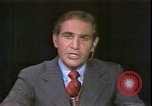
Irving R Levine and Paul Duke report and discuss the proposals stated by U.S. President on economic problems.
News analysis following Richard Nixon's speech on economy crisis from Washington DC, United States. Reporter discusses the speech with journalists Irving R. Levine and Paul Duke. Group reviews the proposal of President Nixon to end unemployment and economy crisis. The proposals to end unemployment by Nixon are 90 day wage-price freeze, additional action on wages and prices, temporary suspension of full convertibility of dollar into gold (later called the "Nixon shock"), investment of tax credit, temporary surcharge of 10% imports, repeal of excise tax on automobiles, speeding of personal tax exemption to get more money in pocket and reduction of federal expenditure. Journalists Irving and Paul Duke also question why the President made the proposal now when the graph of dollar and unemployment begins to fall after sitting on President's seat for two years.

Paul McCracken, an American economist, comments on the economic speech by U.S. President Nixon in the United States.
Discussion and analysis following U.S. President Nixon's speech on the economic crisis from the White House, United States. Reporter Bill Gill sits with Bob Clark, a White House correspondent, and economic advisor Paul McCracken. Both the reporters ask Paul McCracken to make a comment on the proposals of President Nixon dealing with the American economy (a speech later known as the "Nixon shock" speech). Paul McCracken speaks on the advantages of the 90 days wage-price freeze. He tells how to secure cost price level, how to control unemployment and inflation. He states the 90 days wage-price as the strongest economy program and how it will give foundation to more companies. He also speaks on dollar rate and foreign exchange and how to maintain its position, and the closing of the gold window.
CRITICALPAST.COM: About Us | Contact Us | FAQs - How to Order | License Agreement | My Account | My Lightboxes | Shopping Cart | Advanced Search | Featured Collections | Website Terms & Conditions | Privacy Policy ©2026 CriticalPast LLC.
License Agreement |
Terms & Conditions |
Privacy Policy
©2026 CriticalPast LLC.