


 Francais
 Deutsch
 Italiano
Refine Your Search
Berlin Germany 1937 stock footage and images
- Showing 4579 to 4584 of 6879 results more
more Hide
Hide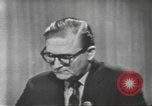
Vice President Nixon and Senator Kennedy debate in the U.S. over a summit conference between the U.S. and the Soviet Union.
The fourth presidential election debate held between Democratic nominee Senator John F. Kennedy and Republican nominee U.S. Vice President Richard Nixon in New York, United States on 21st October 1960. News correspondent John Edwards ask Vice President Nixon about the conditions to be met before meeting Soviet Premier Nikita Khrushchev at Vienna Summit of 1961. Nixon replies that an agenda should be prepared which should delineate those issues on which there is a possibility of some agreement or negotiation. He says that U.S. President should not go to the conference unless they have such an agenda, unless they have some reasonable assurance from Khrushchev that he intends seriously to negotiate on those points. News correspondent Quincy Howe asks Senator Kennedy to comment on the topic. Senator Kennedy says that the U.S. should not go to the summit until there is some reason to believe that a meeting of minds can be obtained on either Berlin, outer space or general disarmament including nuclear testing. He mentions the failure of the conference on May 15th 1960 in Paris, France. He further says it is important that they maintain their determination, that they indicate that they're building their strength, that they are determined to protect their position and that they are determined to protect their commitment.
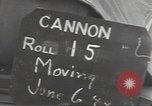
U.S. tanks leave the assembly area in Tidworth, England during World War II.
U.S. tanks in Tidworth, England on D-Day during World War II. U.S. tank crew member chalks 'Berlin or Bust - Goodbye Old England' on side of tank. Jeep loaded with soldiers pulls away. Tanks leave the assembly area.
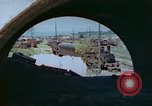
A damaged bridge and a railroad track in Italy after Allied bombings during World War II.
Aftermath of Allied bombings on Italy during World War II. Bomb damage caused in a marshaling yard. A wrecked bridge and bomb craters. A damaged railroad car with a sign on it that reads 'Berlin'. A wrecked railroad bridge.
German troops invade Danzig in 1939. Adolf Hitler addresses the Reichstag about Danzig and Poland.
Invasion of Danzig, 1 September 1939, during German invasion and occupation of Poland. Polish people in the streets. Women read a proclamation on wall. Officials leave a building as crowd sings 'Deutschland Uber Alles'. Artillery in street fires at Poles holding out in the Post Office at Heveliunsplatz . The Germans attack them with a Steyr ADGZ M35 armored car with the name "Sudetenland" painted on its side. Two grenades are thrown from the armored car. German troops move shielded by the armored car, which fires its guns at the buliding. A fire bursts out around it. Soldiers try to put out the fire with water hoses. Soldiers dashing in the street. A motorcade arrives at the Kroll Opera House in Berlin, with Adolf Hitler in a convertible. Hitler enters and addresses the Reichstag regarding Danzig and Poland. He is greeted with cheers. Nazi officers seated for the meeting. Nazi Swastika and symbol in the hall. German occupying troops are seen driving through Danzig aboard SD Kfz 7 half track trucks, amid cheers from civilians.
"Fasci Italiani All Estero" meeting. Wreath and flags in honor of fallen Fascists. Italian Fascist leader Piero Parini speaks (WW2)
Names of German war correspondents listed in World War II. Narrator refers to past political regimes. Refers to Fascists from Berlin and their comrades from the old guard. Representatives of "Fasci Italiani All Estero" (Italian Fascists Abroad) meet in Rome at Building labeled "Fascion-Federico Guella." They participate in ceremony honoring fallen Fascists. Memorial Wreaths and flags are shown. Secretary General of the Italian Fascists Abroad, Piero Parini, greets the group and gives a speech in which he emphasizes that Italian Fascists are "side by side" with the Germans--that. Italian and German soldiers are comrades in war. Banners of various groups of fascists abroad are displayed.
Propaganda piece shows Soviet troops, military equipment, agriculture, and industry contributing to the progress of the USSR.
United States Air Force Soviet Awareness Program shows a Soviet propaganda film with English translated voice over. Soviet troops rest after a training mission. Russian soldiers seated on and around tanks. Mountainous and wooded regions in the Soviet Union. Modern, developing, industrialized areas and cities. Women work in factories. Roads under construction. Modern farm equipment and views of farm fields in the Soviet countryside. The Soviet War Memorial or the Soviet Cenotaph in Berlin's Treptower Park. Soviet soldiers descend steps into a Soviet missile silo. Changing of personnel in a 24 hour missile silo. Soldiers at attention as a military band plays. Soviet soldiers salute. A Soviet soldier stands guard in the snow. A mission control center with men seated at some radar screens. Soviet soldiers on duty in various places. A Soviet pilot or astronaut in an aircraft or spacecraft cockpit.
CRITICALPAST.COM: About Us | Contact Us | FAQs - How to Order | License Agreement | My Account | My Lightboxes | Shopping Cart | Advanced Search | Featured Collections | Website Terms & Conditions | Privacy Policy ©2026 CriticalPast LLC.
License Agreement |
Terms & Conditions |
Privacy Policy
©2026 CriticalPast LLC.