


 Francais
 Deutsch
 Italiano
Refine Your Search
Berlin Germany 1952 stock footage and images
- Showing 4747 to 4752 of 6470 results more
more Hide
Hide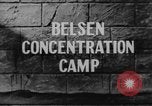
A British Commander of Royal Artillery and a woman doctor, prisoner herself, describe the conditions at the Bergen-Belsen Camp.
A British officer describes the conditions at the Bergen-Belsen Concentration Camp in Germany near end of World War II. A British Commander of Royal Artillery describes the conditions at the concentration camp. A woman doctor, a prisoner herself, describes the conditions at the female section of the camp. Other liberated women stand in the background. The commander of the Bergen-Belsen Camp, SS Hauptsturmfuhrer Josef Kramer, is shown taken into custody by Allied troops. German Army SS (Schutzstaffel) guards taken prisoners by Allied troops.
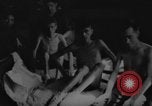
Captured German Army SS (Schutzstaffel) guards are forced to bury dead prisoners at the Bergen-Belsen Camp
Conditions at the Bergen-Belsen Concentration Camp in Germany immediately after World War 2. Liberated prisoners at the camp. Corpses lying on a field show signs of brutality. Prison number tattooed on the hand of a dead prisoner. Captured German Army SS (Schutzstaffel) guards are forced by Allied troops to bury dead prisoners. German women guard and SS guards bury the dead bodies in mass graves. Allied troops on a truck. A bulldozer pushes piles of dead bodies into mass graves.
German Emperor Wilhelm II visits the warship, S.M. Wilhelm II, prior to World War I
Kaiser Wilhelm II is seen looking through a telescope on the deck of his namesake pre-dreadnought warship (Linienschiff) the S.M. Wilhelm II, of the Imperial Germany Navy, circa 1912. Next to him is a Korvettenkapitän (three stripes insignia) who points out something to the Kaiser. The ship's captain (kapitän zur See) smiles for the camera as he leans over a railing while holding a spyglass (telescope). Smaller boats are seen anchored in a bay, in the background.
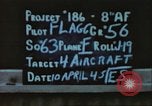
P-47 of U.S. 8th Air Force, 63rd Fighter Squadron, strafes German airfield near end of World War II.
Allied air operations near end of World War 2, in Europe. Gun camera footage from a P-47M of the U.S. Army Air Forces 8th Air Force, 56th Fighter Group, 63rd Fighter Squadron, strafing German aircraft on the ground at an airfield in Germany. The pilot is Captain Walter L Flagg, of Conimicut, Rhode Island. He is flying P-47M, Number: 44-21140, UN-F, "Shoot You're Faded". Burning German aircraft on the ground. Aerial view of bomb damaged city.
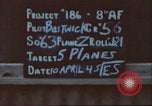
P-47 of the U.S. 8th AF, 63rd Fighter Squadron strafes German aircraft on the ground, near the end of World War II in Europe
U.S. 8th Air Force fighter aircraft operate unopposed over Germany in final days of World War 2. Gun camera footage from P-47M, of the 56th Fighter Group, 63rd Fighter Squadron, tail number 44-21112, UN-Z, "Ungly Duckling," flown by Major George E. Bostwick, of Dayton, Ohio. He strafes and destroys 5 German aircraft on the ground.
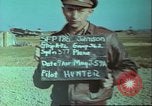
U.S. 9th Air Force P-47 aircraft of 362nd Fighter Group, 377th Fighter Squadron, strafe German targets at end of World War II
Last days of air war in Germany near end of World War 2. U.S. Airmen holding film slate, on dirt airfield, with P-47 parked behind. Slate identifies location as A-82 (Verdun Airfield, France). Gun camera footage from P-47 flown by pilot named Hunter, of the 9th Air Force, 100th Fighter Wing, 362nd Fighter Group, 377th Fighter Squadron. Footage shows strafing of German targets along lines of communication.
CRITICALPAST.COM: About Us | Contact Us | FAQs - How to Order | License Agreement | My Account | My Lightboxes | Shopping Cart | Advanced Search | Featured Collections | Website Terms & Conditions | Privacy Policy ©2026 CriticalPast LLC.
License Agreement |
Terms & Conditions |
Privacy Policy
©2026 CriticalPast LLC.