


 Francais
 Deutsch
 Italiano
Refine Your Search
Bolinas Beach California USA 1934 stock footage and images
- Showing 6235 to 6240 of 26867 results more
more Hide
Hide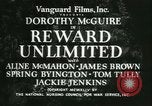
The need for cadet nurses and young girls to volunteer for military nursing service during World War II.
A film titled 'Reward Unlimited' starring Dorothy McGuire dramatizes the need for cadet nurses during World War II. Dramatization depicts why a girl called Peggy decides to become a nurse, and how she is trained. Peggy discusses marriage and future plans with her Lieutenant boyfriend. She decides to get a war job. She meets a woman who was a nurse and who gives her information about the U.S. Cadet Nurse Corps, Congress scholarships for nursing schools and duration of the courses. Peggy discusses her decision to join a nursing school with her parent. After she convinces her parents that nurses are needed, she enters training. She undergoes theoretical and practical training with many other girls in a hospital. Nursing students in classroom setting with teacher or professor at blackboard providing class instruction. Nurses receiving practical clinical instruction. Nurses using microscopes and taking notes, nurses attending patients in a hospital ward. Nurse cadet taking care of an infant baby. Nurse in surgery theater handing instruments to a doctor during operation on a patient. The graduation ceremony from the Army Nursing School. Peggy checks on a little boy called Jimmy. A government message urging young girls to volunteer for military nursing service with information about the U.S. Cadet Nurse Corps.
Dramatization depicts production, black marketing of gas coupons and citizens' responsibilities in supporting World War 2 gas rationing.
'No Alternative' dramatizes citizens' responsibilities in supporting gas rationing in the United States. Dramatization: Group of men seated playing card game. Tom interrupts a poker game to lecture on rationing, after Bob offers an illegal gas coupon to Frank. He talks about the production of automotive gasoline, increasing price and limited production of crude oil. Uses of crude oil: U.S. airmen and soldiers use crude oil to fuel aircraft and tanks. A U.S. aircraft drops bombs made with the use of crude oil. Workers produce synthetic rubber from crude oil at a plant. U.S. Navy ships, merchant fleets, railroads and war industries use crude oil. Tom explains how "black market" coupons cause shortages that affect war industries and military activities. Dramatization depicts safe breakers breaking into a ration board and stealing gas coupons worth 11 million gallons. Gasoline used by farmers in tractors, to take produce to the markets, finished ammunition, guns and tanks to the railroad stations so that they can be sent to the front. Tom points out ways to make rationing work and save gasoline including: formation of car pools, scorning illegal coupons, identifying coupons with the user's license number.
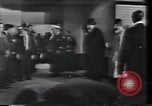
U.S. President Kennedy's accused assassin Lee Harvey Oswald is shot in the Dallas Police Headquarters basement by Jack Ruby
The murder of Lee Harvey Oswald, the accused assassin of U.S. President John F Kennedy. The basement of the Dallas Police Headquarters in Dallas, Texas. Dallas detectives, police officers and guards in the basement. Jack Ruby seen standing to right side among press persons just before Oswald is led into the corridor. Detective Jim Leavelle and others emerge with Oswald. Jack Ruby leaps in front of Oswald, and shoots him with a snub nosed Colt Cobra .38. The detectives and policemen grab Ruby and Oswald and quickly take them away. Confusion in the basement. Media persons click pictures and record films. Detectives hold off the media. Waiting police vans and cars outside the building. Entrance to the Police Headquarters.
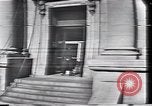
An unconscious Lee Oswald is placed in an ambulance and rushed to Parkland Memorial Hospital in Dallas.
Immediately after the murder of Lee Harvey Oswald, the accused assassin of U.S. President John F Kennedy. The basement of the Dallas Police Headquarters in Dallas after the shooting of Oswald by Jack Ruby. Detectives and police officers try to control the media. Newsmen, reporters and photographers speak to Dallas Police detectives and officers. Guards cordon off the area of the shooting. Photographers click pictures and record the event. An armored truck at the basement entrance. Reporters report on the event for various television channels. They interview police officers. An unconscious Oswald is brought into the basement on a stretcher and taken towards the entrance. An ambulance takes the armored truck's place. Oswald is placed in the ambulance as it leaves for Parkland Memorial Hospital.
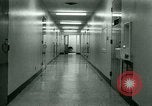
An interview with a young male patient and views of a mental hospital in the United States.
A mental hospital in the United States in the 1960s. View from a dolly moving down a mental hospital hallway or corridor. Patient treatment rooms on either side of the hall. A door at the end of the hall. Another corridor adjoining the hall. A ceiling light in the adjoining corridor. An interview with a young male drug abuse patient who use illegal drug LSD (Lysergic acid diethylamide).
An interview with a young female LSD drug abuse patient in the United States.
LSD (Lysergic acid diethylamide) patients in the United States. An interview with a young female user of illegal drug LSD. The patient responds to the interviewers questions.
CRITICALPAST.COM: About Us | Contact Us | FAQs - How to Order | License Agreement | My Account | My Lightboxes | Shopping Cart | Advanced Search | Featured Collections | Website Terms & Conditions | Privacy Policy ©2026 CriticalPast LLC.
License Agreement |
Terms & Conditions |
Privacy Policy
©2026 CriticalPast LLC.