


 Francais
 Deutsch
 Italiano
Refine Your Search
Bolinas Beach California USA 1934 stock footage and images
- Showing 10657 to 10662 of 26867 results more
more Hide
Hide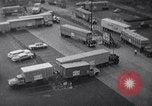
United States monitoring Cuba and enforcing Kennedy's shipment quarantine order during the Cuban Missle Crisis
Community fallout shelters being stocked. Lorries and trucks on road carry supplies. View of Red Ball trucking line truck. Aerial, exterior view of United Nations Building in New York City. View inside United Nations building. United Nation Ambassador Stevenson asks the USSR delegate whether there are missile bases on Cuba. President Kennedy signs Quarantine order on what materials may be shipped to Cuba, to begin 10am on October 24, 1962. B-52 bombers take off, taking 24 hour missions. Interceptors and fighters take off. Views on aircraft carriers with fueling and takeoff operations on flight deck. Radar dishes and radio communications. U.S. battleship at sea. U.S. intercepts Soviet tanker and allows her to proceed. Reconnaissance aircraft over Cuba. Views of White House. SAC bombers and anti aircraft missiles on 5 to 15 minute alert to handle any critical situation. Interiors of control room inside the Headquarters of American Air Defense Command.

Russia dismantles missile sites from the island of Cuba.
Population worldwide shown waiting for news about the Cuban Missile Crisis. Groups of people watching televisions and listening to radios. Press announcement in front of White House that President Kennedy has received message from Nikita Khrushchev, Secretary of Communist Party of the Soviet Union, saying that Russia will dismantle missile sites in Cuba. Views of various ships in United States fleet. Military band playing at port as wives and children of U.S. military service men return to Guantanamo, hug and greet the service men, and celebrate. View of a small church and citizens entering the church. Americans going to work. Reconnaissance photos showing missiles dismantled, and showing shadow of the photographing aircraft, itself. Soviet ships carrying missiles out of Cuba. American men, women, and children pedestirans walking on sidewalks in the downtown area of a town, past shops and stores. A man entering a building beside a fallout shelter sign. Department of Defense logo is shown at end of film, followed by on screen text, "If our country should ever be attacked by nuclear weapons, people at ground zero would be lost. But millions more, outside these areas of complete destruction, would be spared, only to be imperiled by radioactive fallout. Today, the nation is better prepared to meet this threat, as the community fallout shelter program goes forward. But much work still remains to be done. Cuba may not be the last crisis we'll be called on to face. But let it be the last we'll face unprepared.
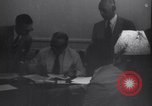
Two officials sign, successively, as parties to an agreement. One jokes and laughs before signing
A number of officials gather around two principals who both sign a series of documents. All are well-dressed in light weight summer suits and ties. The occasion seems relaxed. One of the signatories jokes and laughs before signing.

Making a brief history of Totem Poles of Alaska.
Landscape of Alaska is shown. Trees, glaciers, show covered mountains, dense forests and woods of Alaska, including areas of Tongass National Forest. View of paper mills and pulp mill factories (in other areas) that use tree harvest resources from the area. Forest rangers can be seen in boat reaching Alaska through water ways. Forest rangers walk up to Indian totem poles of native indigenous cultures, now overgrown with vegetation. A simple fishing village with small wooden homes can be seen near the water. A man walks next to a pile of old totem poles on the ground. An Alaskan Native American Indian artist teaching a young man how to carve a totem pole out of tree. Men cutting and carving trees and drawing outlines of figures on wood blocks. A carver sharpens his axe and works on long block of wood. Figures are carved on wood. Then the totem poles are painted with colors. Views of completed totems raised up. Tourists looking at the totem poles.
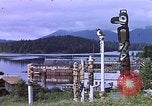
South Eastern areas of Alaska where totem poles are made.
Landscape and natural terrain views of Alaska, areas of South Eastern Alaska and Tongass National Forest where native indigenous indian totem poles are made are shown. View of glaciers across water. Two women walk away from a small PanAm passenger airplane on an airfield in Alaska. Aerial views of snow covered mountains, and wooded mountains and lakes in Alaska. Harvested wood timber floating in large pens in waterways of Alaska. Fishing boat and hauling in a large catch of salmon fish by net. View of waterfall. Mountain and lake scene at sunset.
Family members having breakfast in rural America in 1950s.
A film titled 'The family' shows husband and wife and family members in America in the early 1950s. A woman hanging clothes outside rural or small town house. Boy looks out of window when called by mother. Interiors of the house. Wife talks with husband while having tea at breakfast table. They are joined by an older woman (grandmother), the boy and a girl. Family talking and having breakfast. Girl shows newspaper to father. Man leaves to go to work. Women in homemaker or housewife roles of the time doing their routine household work in house and helped by the boy in the family.
CRITICALPAST.COM: About Us | Contact Us | FAQs - How to Order | License Agreement | My Account | My Lightboxes | Shopping Cart | Advanced Search | Featured Collections | Website Terms & Conditions | Privacy Policy ©2026 CriticalPast LLC.
License Agreement |
Terms & Conditions |
Privacy Policy
©2026 CriticalPast LLC.