


 Francais
 Deutsch
 Italiano

Refine Your Search
Bolinas Beach California USA 1934 stock footage and images
- Showing 4303 to 4308 of 26901 results more
 Hide
Color Sound

A large crowd gathers to watch the basketball match played between UCLA and Michigan in Portland,Oregon.
Basketball match played between the University of California (UCLA) and Michigan in Portland, Oregon. A large crowd gathers to watch the match between UCLA and Michigan. The match in progress. The crowd cheering and applauding. The UCLA wins the match.
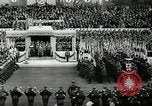
From Labor Department documentary. Montage of World War II scenes from start to finish,including American home front.
Opening scene shows Adolf Hitler reviewing German troops on parade. German paratroopers jumping from Junkers Ju-52 aircraft. View from the ground of paratroopers descending from three Ju-52s. The Japanese attack on Pearl harbor, December 7, 1941. Heavy smoke rising from the leaning USS Arizona after she is hit by bombs. Newspaper headline reading "Pearl Harbor Bombed!" American soldiers leaving Camp Stoneman, are seen assembled on a pier at the Pittsburg California waterfront to board one of the ferries that would take them to Piers 15 and 45 on the Embarcadero in San Francisco. A sign at pier reading:"Through these portals pass the best damned soldiers in the West." Glimpses of soldiers firing howitzers in World War 2. Glimpses of the civilians supporting the war effort. Auto factory workers walking near a war production plant during shift change. A new army truck leaves a factory. War production workers assembling the turret on a Sherman tank. Guns and turrets being manufactured. Factory floor filled with new pursuit airplanes. A B-25 Mitchell bomber aircraft taking off. Aerial view from bomber of its bombs exploding over enemy target below. Freight trains carrying United States military supplies. Supplies being loaded aboard a ship for the U.S. and Allies. The American battleship USS New Mexico firing a gun, and firing guns from triple turrets. Workers assembling aircraft engines in a war plant. A woman at work in a war materiel production plant. Gun camera images from warplane strafing a ground target. World War 2 Victory parade along 5th Avenue, New York City, in 1946. Washington Square triumphal arch in background. Various views of the parade. Laid off war plant workers looking for new jobs. Troops welcomed home: Ship carrying returning United States soldiers back home after the end of World War 2. Disabled soldiers and sailors, such as some who were wounded in battle and lost limbs like arms or legs, making their war to a Military Air Transport Service C-54 aircraft. More views of the disabled veterans who were injured during World War II.
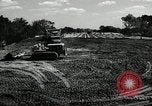
Inflation, labor unrest, and rising unemployment afflict America in decade following World War II.
Part of documentary by the U.S. Labor Department. Opening scene shows tractors pulling disc harrows to condition land at a construction site. The steel framework of a large sports complex under construction. Brick masons working on exterior of a large building. Two prize fighters in a ring being separated by referee as one is knocked to the canvas. Scenes of post-World War II labor strife in America. Police escorting persons to the safety of building entrance. Union protesters holding signs reading "Local 1173," (Machinists Union in California). Cars drive into a factory yard where workers are standing about. Narrator refers to busy schedule in history for the Labor Department Mediation Service. Workers crating completed washing machines for shipment. A parade in which a man on stilts represents high prices and another marching beside him representing low wages. A deserted commercial district in a small rural town, reflecting 1949 resurgence of unemployment problems. A mother and father with two small children, looking at baby carriages in a shop window. Men walking away from a factory office past a sign reading: "No Help Wanted." American soldiers engaged in combat during the Korean War. Narrator alludes to this bringing some relief to unemployment.

Loading and firing of Falcon air to air missiles from a U.S. Air Force F-102A interceptor aircraft. in United States.
Loading and firing of Falcon air to air missiles from a U.S. Air Force F-102A Delta Dagger interceptor aircraft. Several men load Falcon missiles into an F-102A at Holloman Air Force Base, New Mexico. Three contractor representatives going over graphs and charts in a conference room. The representatives going up steps of the Convair General Office Building at San Diego, California. Two Convair technicians check electrical connections and firing circuit of a Falcon missile on flight line at Holloman AFB. They load a Falcon onto launcher of a F-102A and insert the ignitor into the motor. The rockets are drawn into the aircraft and the bay doors closed. The F-102A taxis on flight line and takes off. F-102Ain flight, bomb bay doors open. The Falcon missiles are extended and fired in two salvos of three each. F-102A flying to the right.
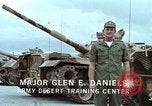
U.S. troops, armored vehicles, tanks and helicopters transported by U.S. Air Force Military Airlift Command aircraft.
Major Glen E Daniels of the Army Desert Training Centre in California. He stands in front of U.S. tanks and talks about movement of large units to combat zones by C-5 Galaxy aircraft of the U.S. Air Force Military Airlift Command. Soldiers load Cobra helicopters into a C-5. MAC C-5 Galaxy aircraft Interior of a C-5 showing two rows of M113 armored personnel carriers stowed inside. The troops accompanying them are seen climbing stairs to an upper deck of the C-5 where they will travel. Quick closeup view of a C-5 headed toward the camera during landing. Paratroopers jumping from MAC C-141 and C-130 aircraft. First Sergeant William Lawrence Jr, of the U.S. Army 82nd Airborne Division, stands in front of a camouflaged C-130 aircraft and talks about his experience in 20 years of parachute jumping. He extols MAC's efficiency in transporting paratroopers and comments on resulting improvement of drop zone times.
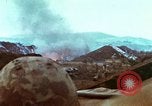
U.S. Air Force Military Airlift Operations in 1968 during the Vietnam War, and during 1976 border tensions in Korea
View from a U.S. Marine bunker as enemy shell explodes nearby, during the siege of Khe Sanh in 1968 during the Vietnam War. The United States Marines in the Battle of Khe Sanh firing mortars and a 105mm howitzer from their bunker. Enemy shells exploding on the tarmac, where American Air Force C-130 aircraft are parked. Marines rushing wounded comrades on stretchers, to C-130s for evacuation. Scene shifts to U.S. Marine Corps Lieutenant Colonel James P. Sheehan, standing at Camp Pendleton, California. (He was a company commander in the siege at Khe Sanh.) As he describes the C-130 aircraft support operations, a contingent of marines marches past, behind him. Scene shifts to a civilian narrator standing in the Military Airlift Command (MAC) Headquarters Command Center at Scott Air Force Base, Illinois. Among other things, he describes MAC support to the Tactical Air Command in Korea. Camera focuses on MAC air routes in the vicinity of the Philippines, Japan, and Korea. Next, is seen view of airfield at Mountain Home Air Force Base, Idaho, briefly at sunset, and then at night, as pilots of the 366th Tactical Fighter Wing and their F-111 aircraft prepare to depart for Korea, in response to border tensions, in August, 1976, after North Korean forces killed two American officers ("Korean Axe Murder Incident" and resulting "Operation Paul Bunyan"). Ground crewman directs a taxiing F-111 using lighted wands. The F-111s takes off. One of them is seen landing after the 7 thousand mile flight to Korea, as Major Paul Malandrino,Jr. (unseen) of the 366th Wing, speaks about MAC's airlift support. A C-141 MAC aircraft is seen landing. View of a C-141 with tail doors open and its cargo of military equipment on the ramp behind it. Glimpse of a marine with rifle and earphones, guarding equipment on the airfield ramp. Closeups of F-111 aircraft taking off.
CRITICALPAST.COM: About Us | Contact Us | FAQs - How to Order | License Agreement | My Account | My Lightboxes | Shopping Cart | Advanced Search | Featured Collections | Website Terms & Conditions | Privacy Policy ©2026 CriticalPast LLC.
License Agreement |
Terms & Conditions |
Privacy Policy
©2026 CriticalPast LLC.