


 Francais
 Deutsch
 Italiano
Refine Your Search
Brest France 1920 stock footage and images
- Showing 193 to 198 of 5746 results more
more Hide
Hide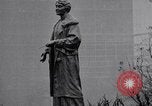
Brief montage of moving images from early 20th Century Women's suffrage and equal rights movement in Great Britain.
Scene opens showing the statue of British Women's suffrage movement leader, Emmeline Pankhurst, located in Victoria Tower Gardens next to the Houses of Parliament, Westminster. (This was erected in her memory, in 1930, two years after her death.) A World War 1 parade of women in clothing of religious orders; nurses; some military; and academics. One group carries a banner reading "Demonstrate-Trained Nurses." It also depicts What appears to be an Angel of Mercy and an appeal to buy war bonds. They are followed by women carrying a large British Union Jack, and by others, in academic garb, carrying banners of academic institutions. (This march was probably organized by the "Women's Party," the 1917 group founded by the Panghursts' to replace their "Women's Social and Political Union." The new party emphasized support for the British war effort.) Scene shifts to suffragist Emmeline Pankhurst (sometimes called a suffragette) viewed from camera behind her right shoulder as she addresses a large crowd. She is standing on a roofed platform in a park-like setting. The audience is mostly civilian, but a soldier is seen here or there. Several London Bobbies are in the audience, close to the speaker's stand. The next scene shows pedestrians gathered near Buckingham Palace, in London. A number of Bobbies (London policemen) are present, some on foot and some on horseback. The Queen Victoria monument is visible in the background. A horse-drawn carriage passes in front of the camera. Next, a woman is seen being arrested by two Bobbies, as passersby watch. An automobile passes and then the woman and police are seen approaching the camera as more officers become involved, keeping spectators away. In the final scene, in the 1920s, a man standing in front of a large group of women, congratulates one (probably Christabel Pankhurst). Closeup shows, from left to right, the man; a somewhat tired-looking Emmeline Pankhurst; and her daughter, Christabel.
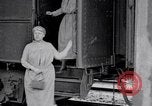
Women who had formerly served prison terms for their suffragist activities, arrive in San Francisco on "Prison Special" train.
Twenty four suffragist women (sometimes called suffragettes) arrive in San Francisco, California, on their 3-week tour across the country during February, 1919, in a last-ditch effort to urge passage of the 19th amendment, providing voting rights for women, which was being held up in the U.S. Senate. The women advocating women's suffrage are seen stepping from a railroad train coach, wearing uniforms like they wore when imprisoned at the Occoquan Workhouse (Run by the District of Columbia, the Workhouse, in Laurel Hill, Virginia, was later called Lorton Reformatory. Over 150 women suffragists were eventually incarcerated there.) (Note: The Senate later passed the 19th amendment which was ratified on August 18, 1920.)
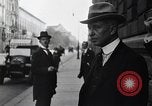
Dignitaries including Ellis Loring Dresel gather for signing of the U.S.-German Peace Treaty of 1921 in Berlin.
View of Ellis Loring Dresel, United States commissioner to Germany and chargé d'affaires for the United States in Germany, seen standing beside a building in Berlin. Men gather for the signing of the United States peace treaty with Germany in Berlin, almost three years after the World War I armistice was signed. Mr. Dresel and two other diplomats enter a 1920's car parked on the street, as a small crowd stands by. The Treaty document is shown for the camera, bearing the signature of Ellis Loring Dresel.
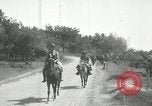
U.S. Army 45th infantry marches and rides horses on street in Dagupan, Pangasinan, Philippines.
45th infantry of the U.S. Army marches in Dagupan, Pangasinan, Philippines in late 1920s. Soldiers ride horses. Horse-cart on the street. Trees along the sides of the street. Troops drill and march with guns. Houses in the background. Horses on the ground.
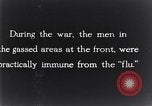
Chemists experiment with chlorine gas for influenza immunizations at Chemical Warfare Service in the United States.
Experiments with chlorine gas for influenza immunizations in United States. A World War I tank sprays gas in a field. View of American soldiers during 1917 to 1918 period of World War I, in a trench, wearing gas masks, and firing rifles at enemy positions. Post war tests on use of Chlorine gas to control the flu (emerging from 1918 Spanish Flu epidemic), inspired by low rate of influenza among United States soldiers exposed to chlorine gas during the war. Man enters a chlorine chamber at the Chemical Warfare Service. A chart on the wall showing results on symptoms after exposure in chlorine chamber. A woman in 1920s hat carrying a tissue is treated with chlorine gas. A testing apparatus on a table. Group of patients sit together in a chlorine chamber being exposed to the chlorine gas. A business man in a suit receives a portable chlorine gas treatment in his office as he is too busy to visit the chlorine chamber.
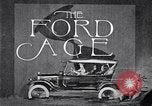
The First Ford Plant in Detroit, Michigan, USA.
Documentary titled 'The Ford Age'. Parked 1920s Ford automobiles. The First Ford Plant. Viewed through doorway an early model Ford automobile. Henry Ford drives a quadricycle, early Ford car model.
CRITICALPAST.COM: About Us | Contact Us | FAQs - How to Order | License Agreement | My Account | My Lightboxes | Shopping Cart | Advanced Search | Featured Collections | Website Terms & Conditions | Privacy Policy ©2026 CriticalPast LLC.
License Agreement |
Terms & Conditions |
Privacy Policy
©2026 CriticalPast LLC.