


 Francais
 Deutsch
 Italiano
Refine Your Search
Brest France 1920 stock footage and images
- Showing 205 to 210 of 5746 results more
more Hide
Hide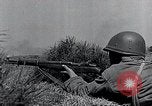
Role of American women in the military; WACS, nurses, and other military roles for women in World War 1 and World War 2
The role of women in the armed forces in the United States. A U.S. Army sniper fires a 1903 Springfield rifle on the Korean front during the Korean War. A woman in the Women's Army Corps (WAC) inspecting such a rifle in the U.S. Several Patton Tanks moving up a hilly road in Korean War. A WAC testing the turret of a Patton tank. U.S. Army women at desks as they work with Army men in an office. Picture depicts Molly Pitcher, wife of a fallen U.S. Revolutionary War artilleryman. Depiction of George Washington at desk. Depiction of Clara Barton, an American nurse with a wounded soldier. Reenactment of Clara Barton working with another women. A man holds the flag of the American red cross. Actual footage of a Wright Brothers aircraft in flight. Women in long dresses pushing an early model of car. A group of American soldiers in World War I running on a battlefield.. U.S. Army troops wearing gas masks and firing rifles from trench in World War I. American women war production workers assembling belts of machine gun bullets during World War I in a munitions factory in the United States. A nurse tending a wounded soldier. A woman nurse helping place a wounded soldiers into an ambulance in Europe, in World War I. Nurses in an operating theater in a hospital during World War I. Women march in victory parade at end of World War I. Women's suffrage demonstration by suffragists (sometimes called suffragettes) in front of the White House and then women and men entering a polling place to vote around time of of 19th amendment giving women the right to vote in 1920. Aviatrix Amelia Earhart climbing down from an airplane. Swimmer Gertrude Ederle on an award stand. U.S. Navy Vought SB2U-2 planes in flight as they drop bombs. Scene of Pearl Harbor attack by Japanese during World War 2. Army nurses look out from deck of ship in World War II. Soldiers fire artillery. View of mountains and scenes of combat on islands in the Pacific during WWII. General Mark Clark awards nurse Silver Star medal. Repatriated Army nurses, who were prisoners, are loaded onto an aircraft by means of a fork lift. In 1942, President Franklin D. Roosevelt signs legislation establishing the Women's Army Auxiliary Corps (WAAC). Secretary of State George Marshall and others witness the signing. Depiction of Godess Athena. Women volunteering for WAAC move in a line carrying bags. American women in military uniform marching. WAAC volunteers being processed. Women receive physical exams and receive inoculations. WAAC personnel being trained: working on X rays, in medical pharmacy laboratories, food service, and radio work. Women on board warships in World War 2.

Bar diagrams show significant reduction in the death toll due to diphtheria after the use of antitoxin in New York.
Precautions taken to prevent diseases in New York, United States. Bar diagrams show the deaths in 1890 due to diphtheria before the use of antitoxin and significant reduction in the death toll after its use in 1920.
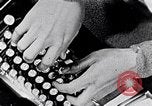
People performing various jobs in late 1930s U.S: Typing, filing, window washing, driving.
Close-up views of hands of various workers performing jobs and tasks in the 1920s. Female hands working on typewriter. View of hands of a woman operating a manual typewriter. Hands of a man who is busy stacking, shuffling, and stapling papers with a large stapler. Hands of a man putting papers, post, or mail into mail slots in a mail room operation. A restaurant waiter carrying a tray on his shoulder. Hands at work washing windows and using a small squeegee tool to clean the windows. Hands operating the lift mechanism for a Haughton elevator in a building. View from inside moving car of hands on steering wheel of car as it parks.
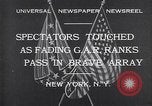
Civil War veterans of the Grand Army of the Republic (GAR), and other veterans, soldiers, and officers march in New York parade
Grand Army of the Republic (GAR) soldiers and officers march in New York for Memorial Day parade, together with veterans of World War 1 and other American conflicts. Elevated view of Soldiers and Sailors Monument in Riverside Park on Manhattan Island, decorated in patriotic bunting. Hudson River visible in background. View changes to parade route immediately beside the monument in Riverside Park. Marchers carry U.S. flags in hands. Ground level shot captures boots and lower legs only marching along. Veterans of World War 1, some missing limbs and using crutches, march in the parade. Also seen are National Guard units in uniform. Elderly veterans of the American Civil War are seen in the reviewing stands. An honor guard in German Army uniforms passes with three uniformed German soldiers carrying the French flag, American flag, and Imperial German War flag (Reichskriegsflagge or Empire War Flag, flown by some German nationalists in the 1920s and 1930s in protest of the Weimar Republic). They might be members of Friends of New Germany, which preceded the German American Bund. American Civil War veterans seen marching together in the parade, arms linked.
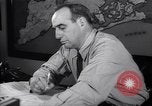
New York Urban Planner, Robert Moses, at his desk in New York City
Robert Moses,controversial visionary urban planner of bridges, highways, and worlds fairs, inter alia, for New York City, from the 1920s through about the 1960s. He is seen at a desk in his office, wearing shirt and tie, but no jacket. A large map of Greater New York, including New Jersey and Long Island, is on the wall behind him. He makes and receives telephone calls. Scene shifts to another office, where he appears wearing a jacket. He reviews papers containing planning ideas including sketches. Mr. Moses annotates some of the documents.
Private cars, motor trucks, buses, trailers and horse carts move on roads, in United States.
Various types of vehicles use the road, in United States. A number of parked cars at a public parking lot. Vehicles move on a busy street outside a motel. Motor truck and a trailer moves on a road. Flatbed car carrier truck parked on side of road with several new Ford automobiles on it. Two women leave their house, sit in a car and drive away. Cars, trucks, buses and a horse cart on a road. An early Greyhound Bus bound for Washington approaches on a highway. A late 1920's or early 1930's automobile passes a horse driven cart at high speed.
CRITICALPAST.COM: About Us | Contact Us | FAQs - How to Order | License Agreement | My Account | My Lightboxes | Shopping Cart | Advanced Search | Featured Collections | Website Terms & Conditions | Privacy Policy ©2026 CriticalPast LLC.
License Agreement |
Terms & Conditions |
Privacy Policy
©2026 CriticalPast LLC.