


 Francais
 Deutsch
 Italiano
Refine Your Search
British-Gliders stock footage and images
- Showing 181 to 186 of 3412 results more
more Hide
Hide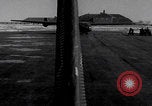
A Junkers Ju-52 transport aircraft towing a Go-242 during take-off and in flight (WW2)
German Junkers Ju-52 transport aircraft towing a Gotha Go-242 transport glider over a snow-cleared runway in Germany during World War II. Both take off as seen from camera placed in rear top turret of the Ju-52 towing the Go-242. Aerial, in-flight shots of the Go-242 glider taken from rear of the towing Ju-52. Interior shots of rear of the two pilots inside Go-242 glider cockpit. A Go-424 pilot demonstrates use or control wheel and movability of the pivoted instrument panel which can be swung from one side to other with pilot's foot. Go-242 releases toe line and continues to glide on its own power as seen from the rear camera of the Ju-52. View of gliding Go-242 from left to right. After a while three pair of spring skids are let out from-bottom of fuselage. Go-242 pilots as they pilot the glider. Two pilots at the nose section of the Go-242 glider. The nose section is half glass covered through which can be seen the two pilots. On top of nose is an opening through which a soldier climbs and shows a heavy caliber machine gun; another opening is on the right bottom side of nose where another opening is made for machine gun. One soldier demonstrating use of machine gun and a small rectangular opening just below pilot's seat where another soldier holds a light machine gun at the front section of Go-242 glider.
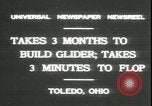
A ten year old John Susor makes an airplane out of boxes but it fails to take off in Toledo, Ohio.
A glider being made out of orange crates and boxes in Toledo, Ohio. A ten year old boy, John Susor, along with friends works to construct a motor less airplane with orange crates, boxes and clothes line. He works on different parts of the glider. He paints the airplane. John Susor seated in the glider as his friends gather around. Two boys push the glider on a field for a take off. The body of the glider collapses and John gets out of it.
Dayton Ohio street, Wright home, workshop, the Wright Museum and the first glider flight of the Wright brothers in the United States.
A film 'We saw it happen' about the history of aviation in the United States. In Dayton, Ohio: Houses seen along Hawthorn Street. A still picture shows the Wright brothers in their youth. View down Hawthorn Street with several 1940s and early 1950s cars parked along the Dayton street. Exterior view of 7 Hawthorn Street, home of the Wright Brothers. Interiors of the Wright home in Dayton. The workshop of the Wright brothers. Machines in the workshop. The "Wright Cycle Co" and Wright Museum (moved from Dayton to Greenfield village in Dearborn, Michigan.) A powered engine prepared in the workshop. Sweeping view of windswept beach area of Kitty Hawk, North Carolina where the Wright brothers conducted test flights in 1900-1902. Another view of Hawthorn Street in Dayton. A boy on the sidewalk. View of the 4 cylinder airplane engine first designed by the Wright Brothers. Narrator speaks of December 17, 1903 Wright Brothers flight. View of the Wright Flyer in flight overhead. Scene changes to aerial side view of Boeing B-52 Stratofortress aircraft in flight (this is aircraft YB-52,the second XB-52). The B-52 banks left and away.
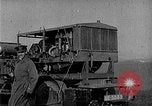
An old car carries a monoplane aircraft at the Wasserkuppe hill in Germany.
Gliders in flight at a contest at the Wasserkuppe hill in Germany. A diesel engine vehicle surrounded by military personnel. A man on a horse in the foreground. A monoplane being carried by an early model car. A group of spectators sit near the early model car. Two men attempt to launch a monoplane glider. Landing gear and left wing of the monoplane parked near a tent. A monoplane glider in flight. Pilots enter and sit in the cockpit of a monoplane glider prior to its take off. The monoplane being launched and in flight.
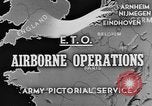
The 82nd Airborne Division and 101st Airborne Division prepare for a mission in the Netherlands (WWII)
Allied airborne operation in Netherlands during World War II during Operation Market Garden. Map showing the cities of Arnheim, Nijmegen, and Eindhoven in the Netherlands. The 82nd Airborne Division and 101st Airborne Division prepare for a mission in the Netherlands in World War 2. Troops listening. Paratroops board C-47s and fly to their objectives. Glider troops prepare to take off. They board the U.S. Army gliders (Waco CG-4). Waco CG-4 gliders take off and seen in flight. Aerial views of aircraft and ground below. View of gliders landing at Eindhoven. Troops assemble for their initial objectives. Troops hold rifles and pass away on Jeep. Allied troops enter the town of 't Zand on September 18, 1944 as Dutch citizens greet them.
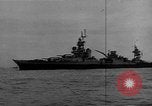
Allied movements including dispatch of Airborne units, the day before D-Day invasion of Normandy in World War II
Final preparations for the D-day invasion of Normandy, France, in World War 2. View of the USS Augusta (CA-31). Allied senior commanders on the Augusta, making decision to delay invasion 24 hours for weather. U.S. Army Airborne troops boarding buses for airfields in England. Formations of B-26 bombers overhead. B-17 bombing lines of communication. Invasion convoy ships underway. Gliders and C-47 tow planes in D-day stripes. C-47 aircrews and glider pilots being briefed. Brigadier General James Gavin, Commander of the 82nd Airborne Division, briefing his paratroopers. Chaplain conducting religious services. General Dwight D Eisenhower visiting paratroopers of the 101st Airborne Division. U.S. paratroopers boarding their C-47 transport planes. Troopers fastening parachute packs (parapacks) of equipment onto a C-47 for airdrop. Paratroopers loading their equipment onto a Waco CG-4A glider. Paratroopers of the 101st Airborne putting on their chutes and equipment. Jumpmaster checking each soldier's chute. The troopers helping one another as they board the aircraft. C-47 tow planes taking off with gliders behind. All planes in D-day white stripes.
CRITICALPAST.COM: About Us | Contact Us | FAQs - How to Order | License Agreement | My Account | My Lightboxes | Shopping Cart | Advanced Search | Featured Collections | Website Terms & Conditions | Privacy Policy ©2026 CriticalPast LLC.
License Agreement |
Terms & Conditions |
Privacy Policy
©2026 CriticalPast LLC.