


 Francais
 Deutsch
 Italiano
Refine Your Search
British-Gliders stock footage and images
- Showing 2125 to 2130 of 3412 results more
more Hide
Hide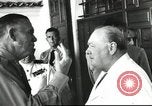
Winston Churchill chats with United States General George C Marshall and Dwight D Eisenhower in North Africa
British Prime Minister Winston Churchill speaks to General George C Marshall and General Dwight D Eisenhower in North Africa. British Foreign Minister Anthony Eden, Alan Brooke, Winston Churchill, General Marshall and General Eisenhower sit around a table and chat. Churchill, Eden and Brooke sit on top of a stairway and talk to the correspondents.
UN troops withdraw and destroy a bridge during the Chinese Spring offensive during the Korean War.
United Nations troops face the Spring offensive during the Korean War. UN combat team soldiers comprised of British, Belgian, Filipino, and American troops quickly break their camp in the Imjin River area. A soldier hastily finishes his meal. UN soldiers standing in a fox hole with rifles resting atop boxes and looking out at enemy lines. Mortars being fired by UN forces at the enemy Chinese forces. A UN Military trucks burns after being hit by an enemy shell. UN convoy of trucks and tanks on a retreat halts and is seen as it takes cover due to heavy firing from machine gun and mortar fire in the hills. UN convoy resumes the advance. British and Belgian battalion commanders discuss plans. Convoy rolls through Uijongbu. Tired and weary U.S. Army infantrymen advance and wade through a rice fields and streams after heavy battle the day before. In rainy conditions, soldiers hold rear guard position and U.S. Army 155mm howitzers being fired at the enemy in Uijongbu. UN military vehicles cross a bridge. Soldiers pour gasoline over a TNT (Trinitrotoluene) mined bridge. They set the gas on fire and run toward the camera position. Bridge explodes and smoke rises.
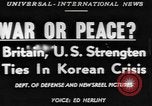
UN troops retreat in Korea and the leaders of U.S. and England meet in Washington D.C., United States to discuss the situation.
United Nation troops retreat during the Korean War. UN forces comprising of the British and American soldiers retreat south wards in Korea as a result of Chinese aggression, Soldiers loaded in military trucks as they cross a bridge. Displaced Korean civilians in a barge, on rail road tracks and along the roads. In Washington D.C., United States British Prime Minister Clement Attlee meets United States President Harry S. Truman. United States Secretary of State Dean Acheson also attends the meeting. Prime Minister Attlee during his address before the National Press Club emphasizes on resisting the aggression by the Red China. He also affirms the firm faith of the two countries in the principle of Rule of Law.
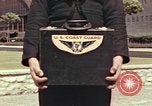
American soldiers board LCVPs at pier in Weymouth, county of Dorset, England, prior to D-Day, during World War II
Landing craft ferry Allied troops from pier in English port as they prepare for invasion of France during World War II. Two United States Coastguardsmen pose with members of British Women's Royal Navy Services (WRENS). Some British soldiers seated in a park with civilians on benches in the background. LCVPs ( Landing Craft Vehicle Personnel) tied up at the pier in Weymouth, Dorset. American soldiers are assisted by U.S. Coastguardsmen as they board LCVPs, which pull away from the pier as they are filled (ferrying troops out to transport ships). Several Landing Craft Infantry (Large) are seen in the port, including LCI(L)s 494, 92, and 490. View of Weymouth from a boat flying a green flag, in the bay.

Firefighters extinguish a fire aboard Silverash in Brooklyn, New York.
British ship Silverash burns at a pier in Brooklyn, New York, United States. British ship Silverash after it caught fire at the pier. Fire fighters on the deck of the ship. A snow cover on the railings on the deck of the ship. Water being released from the ship.

A Supermarine Scimitar aircraft falls into the Atlantic Ocean while landing aboard HMS Victorious.
A Supermarine Scimitar aircraft lands aboard British Naval aircraft carrier Victorious underway in the Atlantic Ocean. HMS Victorious underway at sea as a Supermarine Scimitar, a British fighter aircraft, comes in for a landing. The aircraft lands perfectly, but is suddenly thrown over the side, into the sea, as the arresting cable snaps. The pilot, Commander John D. Russell, is unable to open his canopy to escape. A helicopter is dispatched to assist. But a sailor suspended from the helicopter is unable to help because the plane's canopy is jammed shut. The aircraft sinks with the pilot trapped inside. (Note: This dreadful accident occurred while the HMS Victorious was operating off the Isle of Wight. The pilot, Commander John .D. (Des) Russell, Royal Navy, was Commanding Officer of the new 803 Squadron. embarking for the first time at sea from the Royal Naval Air Station Lossiemouth in Scotland. The aircraft, Scimitar F1. XD240 coded 145/V, sank in 220 ft. of water after plunging into the sea.)
CRITICALPAST.COM: About Us | Contact Us | FAQs - How to Order | License Agreement | My Account | My Lightboxes | Shopping Cart | Advanced Search | Featured Collections | Website Terms & Conditions | Privacy Policy ©2026 CriticalPast LLC.
License Agreement |
Terms & Conditions |
Privacy Policy
©2026 CriticalPast LLC.