


 Francais
 Deutsch
 Italiano
Refine Your Search
British-Gliders stock footage and images
- Showing 3295 to 3300 of 3412 results more
more Hide
Hide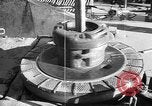
Oil exploration and production by Compagnie Française des Pétroles, in Sahara, Algeria
Scenes of oil exploration and production operation by Compagnie Française des Pétroles in the Hassi Messaoud oil field at edge of Sahara Desert in Algeria. Drilling operation in desert. drill turning in hole. Derrick in background with dromedary camels standing by sand dunes and being watered from a well by their Algerian Berber owner. Two men pile stones to make a marker in the desert. A 1958 British land rover vehicle driving across the desert. View of drilling derrick. Sections of pipe on the ground. Oil being pumped from a producing well into pipeline. French oil drilling worker empties bag of Boue forage (drilling mud) into hole. French worker, with hose, washes down base areas of drilling rig.Oil storage tanks connected by pipes. Local Algerian Berber workmen lift and carry bags of forage. Footprints in sand. Network of piping next to drill rig.
Numerous scenes showing evolution of mechanized warfare emphasizing World War I. but including footage as late as 1934
Montage of scenes illustrating development of mechanized warfare beginning with American Expeditionary Forces (AEF) engaged in World War I. U.S. Army infantry soldiers moving out of trenches going "over the top" into "no man's land" and advancing on battlefield. U.S. troops firing Browning M1917 machine gun,1903 Springfield rifles, and Stokes mortar from trench positions. Soldiers firing mortar are wearing gas masks. AEF trucks and other vehicles ostensibly an improvement over horses, but seen having difficulty in mud. A truck pulling a large artillery gun. A German 80cm K (E) rail gun (developed in 1934) shown at the Rugenwalde Test Range in Germany. It moves along curving rails and is elevated to its maximum elevation (65 degrees). Two World War 1 rail guns firing. An American World War I Naval 14-inch rail gun firing. Allied heavy howitzers firing in World War 1 (one with gun crew in gas masks). American gunners with a French 75 field piece and caisson. French soldier advancing in no-mans-land. The Wright brothers brought warfare into the air with their Wright Flyer airplane, seen being maneuvered on the ground by U.S. Army personnel at Fort Myer, Virginia in July 1909. A De Havilland DH-4 airplane taking off in World War I. A German Fokker D.VIII aircraft in flight. Three U.S. Army Air Service Curtiss P-1B Hawk pursuit aircraft in flight, circa 1926. Aerial dogfight scene including view from behind a pilot in open cockpit biplane (from feature film, circa 1927). Brief view of Renault FT tank maneuvering in World War I. Narrative and clips shift to historical perspective of warfare, showing use of horse and chariot, starting in ancient Assyria and use of elephants in later years by Hannibal. Pictures of mounted soldiers, in the middle ages, waging war in armor, and being transported in a wagon. Shift to World War I showing British Mark IV tanks maneuvering in a field.
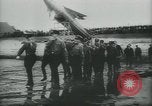
Montage of German rocketry scenes from 1930s through World War II. Nazi surrender. Atomic bomb. Japanese surrender
German rocket pioneer, Gerhard Zucker, attempting to develop postal rockets in the 1930s. Location is Wadden Sea off Cuxhaven, on April 9, 1933, where Zucker follows Nazi Sturmabteilung (also called SA or Stormtroopers) carrying the mail rocket across wet sands. The rocket is set up on a launch stand. Zucker and an assistant ignite the 8 side rockets and the mail rocket takes off. It noses up and loops over backwards, falling to the sand. German Stormtroopers lift up the damaged device. Next, is seen a later, more modern, rocket trial ending in failure. Two German engineers display a model similar to the pulse-jet-powered "buzz bomb" (V-1) employed by the Nazis in World War 2. A brief glimpse of similar American machine on sand flat, as narrator states German acknowledgement of knowledge gleaned from Dr. Robert Goddard's work. A German V-1 flying bomb (aka Doodle Bug) being launched in 1944, during World War 2. View of British houses of Parliament, London, England; an air raid shelter sign in City of Westminster. Londoners waiting out a raid in the shelter. Scenes of fire and destruction during German bombing of London, as narrator speaks about the more advanced German V-2 ballistic missiles employed later in the war. Londoners trudging through debris amongst bombed out buildings. Change of scene to U.S. infantry and armor advancing deep into Germany. Narrator refers to them overrunning rocket bases and other vital war-making facilities, near the end of the war. Glimpse of large number of German prisoners of war. Documents of military surrender being signed by Field Marshal Wilhelm Keitel, in Berlin, May 8, 1945. Closeup of Keitel. Scenes of American forces operating in Pacific theater. Aerial view of atomic bomb explosion. Japanese surrender ceremony on September 2, 1945, aboard the battleship USS Missouri. U.S. soldiers and other service personnel return home and greeting loved ones at end of war. Aerial view of Pentagon building and surrounding area in Arlington Virginia near Washington DC. U.S. troops boarding a ship in San Francisco, bound for war again, this time in Korea (1950).
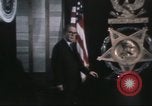
Views of three versions of the Medal of Honor for different branches of the service shown at Hall of Heroes in the Pentagon
John Charles Daly speaks about the recipients of the Medal of Honor in various wars. He stands next to large facsimiles of the medal in the Hall of Heroes at the Pentagon in Arlington, Virginia, United States. He explains the three versions of the Medal of Honor which include first for the U.S. Army, the second for the U.S. Navy , Marine Corps, and Coast Guard, and the third for the U.S. Air Force. Dramatized past scenes show American colonial volunteers advancing on a battlefield and firing artillery against the British, during the Battle of Saratoga in the year 1777.
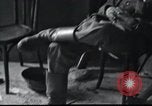
Allied prisoners are marched by German troops in a French town during World War II.
German troops invade France during World War II. A German soldier sleeps in a room. Several British Expeditionary Force soldiers with arms raised, are marched into and through a building, followed by large numbers of French prisoners, all under German guard. The Allied prisoners are marched by German troops across a town square. Allied prisoners being marched along a road in wooded area. A German Pz.II tank stationed at the side of the road.
Marshal Josip Broz Tito at his mountain headquarters near Drvar, Bosnia.Yugoslavia. Tito's troops training in Italy during World War II
Note: This film was shown during World War 2 and edited for security reasons. Accordingly, some narrated statements are incorrect or misleading, and should be disregarded. Film opens showing a sentry posted at Yugoslav Partisan Leader Marshal Josip Broz Tito's mountain headquarters in Drvar, Western Bosnia, Yugoslavia. Marshal Tito steps from his headquarters to a lower porch where he stands with American OSS Officer, American Army Major Linn M. Farish, American Liaison to the Partisans, and British Brigadier General Fitzroy Maclean, Winston Churchill's special envoy to the Yugoslav leader. (For security reasons, they are identified as war correspondents.) Scene shifts to the town of Drvar that has experienced several periods of German occupation. Local people go about their daily activities and some pose for the camera. Women are seen salvaging silk from Allied parachutes, that they have spread out on the ground. It will be used as bandages for their Partisan army. View from above of a number of Partisan fighters gathering before the camera. One, a woman with dark hair wearing a black coat, is identified by the narrator, as a 21-year old Montenegrin who left school to join the Partisans. Closeup of that woman conversing with uniformed women soldiers. Next, a loose column of Partisan fighters is seen marching slowly through the town of Drvar. Scene shifts to a large formation of marching Yugoslav Partisan soldiers, who are training in Italy. They are seen standing if formation in a field, under Marshal Tito's command. He orders their officers forward and exchanges salutes with them. Marshal Tito then inspects the ranks. Women soldiers are seen conversing with Tito. He converses with his Chief of Staff, General Koča Popović. Closeup of a smiling woman Partisan fighter. Closeup of a soldier with a notable white moustache. Closeup of two uniformed women with Red Cross armbands. The Partisan soldiers marching across the field with shouldered arms. Film closes with closeup of Marshal Tito in front of his headquarters.
CRITICALPAST.COM: About Us | Contact Us | FAQs - How to Order | License Agreement | My Account | My Lightboxes | Shopping Cart | Advanced Search | Featured Collections | Website Terms & Conditions | Privacy Policy ©2026 CriticalPast LLC.
License Agreement |
Terms & Conditions |
Privacy Policy
©2026 CriticalPast LLC.