


 Francais
 Deutsch
 Italiano
Refine Your Search
British-Gliders stock footage and images
- Showing 3367 to 3372 of 3412 results more
more Hide
Hide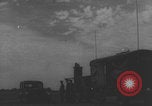
Vickers Wellington No. 149 Squadron RAF takes off during WW2
Period dramatization: British Royal Air Force (RAF) station groundcrew assist Vickers Wellington No. 149 Squadron RAF during taxiing and take off from RAF Mildenhall airfield during World War 2. A ground control crew member salutes to an officer, the air controller, entering the control room of a portable ground controlled approach radar equipment (GCA) room. Air controller stands on a wooden stool to look through a bubble window in the control room’s ceiling. Air controller tests his radio, saying, "ground control, are you receiving?" View of air direction indicator on air field. Engines running on Vickers Wellington bomber at sunset along with "OC" on fuselage. “You may taxi out and take off!” the air controller says after a pilot asks for clearance on the radio. A Vickers Wellington bomber taxiing. Evening view of lighted bubble window of air control trailer as air controller inside watches the Vickers Wellington bomber taking off. Vickers Wellington bomber flying over RAF Mildenhall airfield. “C for Charlie airborne sir! Nineteen hours thirty-five minutes!” a RAF officer says as he enters air control trailer. Air controller standing in control room dome relays information, saying, "C Charlie took off 19:35." Inside air control headquarters at RAF Mildenhall as RAF officer smokes a pipe while another RAF officer writes flight information on the blackboard. More Vickers Wellington bombers taxi and take off from the airfield one by one. Vickers Wellington OJ-F 'F for Freddie' kicking up dust as groundcrew watches. Vickers Wellington OJ-F 'F for Freddie' taking off as the last Vickers Wellington bombers in No. 149 Squadron departs for Germany at night. View of pilot in Vickers Wellington as he radios to crew, "OK chaps, here we go!" RAF officer writes down the last aircraft’s departure time as “19:51”.
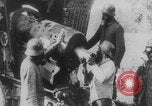
German soldiers shoot gas shell, German Kaiser Wilhelm II observes, Allied troops marching.
German soldiers wearing gas masks load a gas shell into artillery in the 1918 Spring Offensive (also known as the Kaiserschlacht or “Kaiser’s Battle”) during World War I. Soldiers fire gas shell from artillery. German soldiers assume “brace position” in trenches. From an observation position, German Emperor Wilhelm II speaks to German generals belonging to the Supreme Army Command or the Oberste Heeresleitung (OHL). German troops advance from the trenches, running past obstacles. British soldiers firing with artillery. Soldiers running as noxious gas disperses in the battlefield, with German soldiers in trenches. A French soldier uses a telephone under a tree during a battle. United States soldiers marching with rifles. French troops wearing gas masks fire with artillery, stacks of shells amassed alongside them. Allied troops, including French soldiers and American soldiers, marching in farmland. Bodies of German soldiers killed lying in meadow.
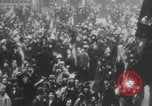
Crowds celebrating Armistice Day 11 November 1918, WW1
People worldwide celebrate Armistice Day on 11 November 1918, then end of WWI. Crowds cheerfully wave with their hats in the streets. Some British flags seen. A truck with soldiers and American flags slowly drives in the middle of a crowded road. People cheerfully wave USA flags and hats to celebrate the November 11, 1918 Armistice, which ended fighting on land, sea and air in World War I between the Allies and Germany, the last remaining Central Power opponent.
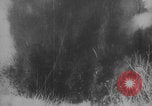
Allied soldiers in trenches during World War I
An artillery cannon fires in the battlefield. Explosion from shell in a battlefield. A British soldier in a trech carries an injured comrade on his shoulders. French soldiers move in single file in a trench. French soldiers climbing the parados of a trench. French soldiers move through field after climbing up the trench parados.
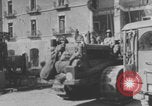
Wreck military vehicles and ships in Europe (WW2)
American soldiers drive a tracked vehicle to transport an artillery piece into a European city in World War 2. A United States Army tank rolls through the countryside. United States soldiers load a stretcher with patient on an ambulance. Medics comforting injured soldiers. United States soldiers put supplies on a pack horse. American soldier leads a pack horse in rugged terrain. Allied trucks drive through rough, rocky terrain. Abandoned car remains on the roadside as military trucks drive on the road. Soldier drives a motorcycle beside smoking vehicle wreckage. A military truck wreckage on fire. A military vehicle wreck on fire and covered with thick smoke. A dead soldier lying beside wreckage. Various battlefield wreckage of vehicles and field guns. Stranded armored vehicles, battlefield wreckage and other mechanical debris in beachhead. Narrator refers to location, but intelligible. A ship on fire and covered with smoke. Fire inside remains of ship. Various stranded tanks and ships wreckage after a beachhead battle. Two British “Brodie” helmets washed up by waves on the shore. A damaged ship with heavy smoke. A ship listing after sustaining damage. A submerged ship with only the mast and funnel showing.
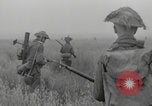
Planes dropping incendiaries, Canadian soldiers capture Caen from German forces (WW2)
Canadian soldiers advancing through the city of Caen during the Battle of Caen in World War 2. Canadian Sherman tanks outside Caen. Several Canadian 25pdr SP tracked Sexton self-propelled artillery vehicles firing. Planes dropping incendiaries. Canadian soldiers, some wearing helmets covered in foliage for camouflage, carefully move through field. A German prisoner throws up his hands and surrenders to Canadian forces. A burning armored vehicle. A Canadian soldier during a mop-up of a destroyed house. Canadian soldiers walk through rubble in Caen. A British Churchill Tank AVRE underway in Caen. Bombed houses in Caen as Canadian soldiers perform a mop-up operation.
CRITICALPAST.COM: About Us | Contact Us | FAQs - How to Order | License Agreement | My Account | My Lightboxes | Shopping Cart | Advanced Search | Featured Collections | Website Terms & Conditions | Privacy Policy ©2026 CriticalPast LLC.
License Agreement |
Terms & Conditions |
Privacy Policy
©2026 CriticalPast LLC.