


 Francais
 Deutsch
 Italiano
Refine Your Search
Bruchsal Germany 1945 stock footage and images
- Showing 4525 to 4530 of 10471 results more
more Hide
Hide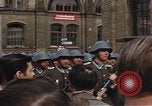
Civilians in communist May Day parade in East Berlin, East Germany.
East German soldiers and sailors marching in May Day parade. Bands marching. East German civilian spectators watch. Civilians march as they carry Soviet and East German flags.
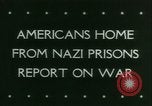
The Gripsholm arrives in New York harbor with soldiers and others recently freed from German prisoner camps (WW2)
The Swedish American ship Gripsholm arrives at New York harbor carrying American soldiers and others exchanged for German prisoners in World War II. 160 were internees at Vittel. Others included American diplomats from Vichy who were being held at Baden-Baden. Soldiers stand on deck and wave as ship is docked at Pier F in Jersey City. The soldiers disembark the ship. The Wounded soldiers. Diplomats and war correspondents talk about the conditions of Germany as it is losing the war. Douglas MacArthur (nephew of General Douglas MacArthur) is seen with a dog as he arrives. Ralph E. Heinzen of the United Press describes conditions in Germany and stresses that Germany is losing the war.

German invasion of France,sinking of RMS Lusitania and resignation of William Jennings Bryan
Events during World War I. Sketches : workers in a German arms factory. German soldiers advance towards France. Animation of a map shows the German invasion of France through Belgium. Kaiser Wilhelm II, the German Emperor. Buildings damaged by invading Germans. U.S. president Thomas Woodrow Wilson advises Americans to stay calm. American people read papers. Cartoon depicts the President about his domestic reforms. The German atrocities in Belgium. Man holds a dead person. Sketch depicts Germany crushing everything on its way. The apprehensive people of America. Sketches of American man against a German leader. Trucks and taxi cabs on the Orne river. A gun barrel. Bombs being dropped on the German ships. Worker at a factory in America. Sketch of a man standing beside a flag having the dollar sign shows the prosperous America. Sketch shows the various resources required by the American industries. An American ship carrying war materiel. Sailors in German submarines. German submarines target allied ships. Sketches of U.S. president Wilson warning Germany. On 1st May 1915 RMS Lusitania a British luxury ship at sea as it starts from New York. Paper shows a warning by the German government. A German sailor on board a submarine as it targets a ship. The RMS Lusitania ship sinks killing many, including Americans. The U.S. secretary of State William Jennings Bryan and Thomas Woodrow Wilson with other officials. The former U.S. president Theodore Roosevelt addresses people opposing President Wilson's policy. The President prepares a note for Germany. Sketch of U.S. Democratic Presidential candidate William Jennings Bryan during his resignation. Sketch of Kaiser Wilhelm II.
Improvement of miners, condition of mines and factories and civilians of war affected countries of Europe, by Marshall Plan.
Film titled 'Me and Mr. Marshall' depicts developments of coal mines in Germany and aid to other European nations affected by World War II. German coal miners dig deep in a coal mine soon after the end of World War 2. Volunteers awarded at a ceremony. Volunteers board a train and proceed for work at coal mines. Volunteers eat food, give their shoe size, under go training on mine machinery. Miners on lift move underground. Miners at end of the day walk out tired and blackened by coal dust, from a mine. Miners take hot showers after work and get clean clothing hung high on ropes. Salary given to workers for a day's work. Headlines of German newspapers about Marshall Plan. General George C. Marshall speaks his plans at a meeting in Washington DC, America. Aerial views of ruined buildings and factories, wrecked harbor, refugees in tenements in Europe after World War II. Buildings, monuments and bridges in London and Eiffel Tower and other buildings and civilians on roads in Paris, and view of Kremlin in Moscow, Soviet Union. Map shows countries under Marshall recovery plan. View of meeting in progress of Conference for European Economic Cooperation in July 1947, in the Grand Dining Room of the French Foreign Office. Meetings of leaders of nations adopting Marshall plan. Ruins of industries of Germany. Ruins on the ground after war in London, with Big Ben in the far distance. Workers at a factory. Miners take a horse inside a coal mine. Empty coal cars at a German coal mine. Men push coal cars full with mined coal out from mine, on rails. Views of buyers in suits at a German trade show and conference, promoting German products and industries to potential buyers in other countries, a few years after the end of World War 2. U.S. Congress and President Harry Truman in Washington DC approve the Marshall Plan and provide monetary aid to other European countries. Scenes in Germany as it recovers economically after the war: Workers in a factory. Harbor, fruit and vegetable market; customers in a bakery; coal cars and machinery at a coal mine under normal operation under the plan.
An enactment about U.S. Air Force personnel Carl W. Kramer as he prepares to go on a duty to a foreign land.
'To a Foreign Land' an enactment depicts duty on to a foreign land (Germany) of U.S. Air Force personnel Carl W. Kramer from the United States. Wife of Carl W. Kramer reaches and enters into her house. She receives a call of an officer. Officer tells her about overseas duty of her husband in Germany. On next morning, Carl reports in the office of U.S. Air Force personnel. Carl and officer talk about overseas journey and rental charges in Germany. Carl seeks permission to bring his wife and daughter overseas. Carl seated at a table and his wife cleans utensils. She talks to Carl. Their daughter 'Jenny' comes with her pet. Carl and his wife report at the office of USAF personnel. Personnel types a document and gives it to Carl's wife. Mrs Carl and her daughter pose in front of a camera to get a passport sized photo clicked in a photo lab. They go at a dispensary. Doctor examines Jenny. Dentist examines Carl. Carl works in his office. Carl signs a power of attorney of House and other things, by making Jenny and his wife beneficiaries. Carl and his wife discuss a problem at the office of USAF personnel. Carl meets overseas project officer. Carl and his family takes dinner. Their daughter gets upset. Mother explains to her. Carl and his wife realize separation in their married life.
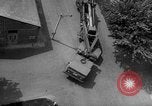
America test fires the M65 atomic cannon in the Nevada Test Site; 1953 East German uprising and Trieste Crisis in Europe
Major events of the year 1953. The first atomic artillery test fired in United States on May 25, 1953. The M65 atomic cannon moving in the Nevada Test Site (specifically Frenchman Flat). A mushroom cloud rises after the M65 Atomic Cannon, sometimes called Atomic Annie, is fired and atomic bomb explodes. The M65 atomic cannon test is done as part of the Upshot–Knothole series of nuclear tests. East German uprising of 1953 (“Volksaufstand vom 17. Juni 1953”). Riots in East Germany against the increase in work quotas and withholding of American food. East German police escort a man away during a riot. People protest in streets as police try to crush the revolt. A stack of StarLac boxes bound for East Germany with sign in front. Sign reads “First Food Relief Shipment to East Germany by M.S.A. United States Lines S.S. American Inventor”. East Germans line up to receive food relief from the United States. An East German woman receives a food aid pack from the United States. The Trieste Crisis of 1953. Sign in front of a house reads “Trsta ne damo”. Officials inspect a car in the United Nations Security Council-controlled Free Territory of Trieste. Students riot in the streets of Trieste over the issue of Adriatic area between Italy and Yugoslavia. (Cold War period.)
CRITICALPAST.COM: About Us | Contact Us | FAQs - How to Order | License Agreement | My Account | My Lightboxes | Shopping Cart | Advanced Search | Featured Collections | Website Terms & Conditions | Privacy Policy ©2026 CriticalPast LLC.
License Agreement |
Terms & Conditions |
Privacy Policy
©2026 CriticalPast LLC.