


 Francais
 Deutsch
 Italiano
Refine Your Search
Bruchsal Germany 1945 stock footage and images
- Showing 4777 to 4782 of 10471 results more
more Hide
Hide
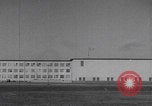
German technicians use gauges to measure speed of test engines at aircraft research facility
A German Aeronautical research facility in Germany, before World War 2. Materials testing machines inside the research facility. Technicians turning crank handle of a cylinder test machine. A machine with coils. Various gauges and valves of a machine. Gauges measuring the speed of engines. A multi-cylinder pulse machine. A Tacho Waage speedometer. Scientist inspects machine. Smoke rises from large chimneys beside towers. A soundproof engine test building. A propeller running on high speed inside the soundproof engine test building to test engine reliability.
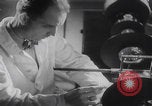
Technician reading gauges and speedometers, testing metal samples inside a German laboratory
A materials testing laboratory in Germany, before World War 2. Technicians working on aerodynamic research for aircraft applications inside laboratory. A scientist subjects a test rod into a machine. Technician reading gauges and speedometers. A test rod breaks during test. Machine tests the strength of metal.
Technicians use a fluoroscope to show stress pattern in sample metal
German Aeronautical technicians working at a aircraft materials testing laboratory in Germany, before World War 2. A pair of technicians use a fluoroscope on metal. The fluoroscope showing stress pattern in piece of material bed tested. A sheet metal being strain tested by scientists. A technician pulls chains. Sheet material shattering with characteristic diagonal folds.
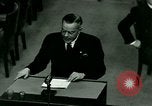
M A. Musmanno calls three defendants for trial and B. Ferencz makes his opening speech at The Einsatzgruppen Case in Nuremberg.
The Einsatzgruppen Case in Nuremberg, Germany war crimes trials after World War 2. Judge Michael A. Musmanno announces that three defendants are to be arraigned separately because they were ill when the remainder of the prisoners were arraigned. The prosecutor, Ben Ferencz, makes his opening speech in which he says that the court is not looking for vengeance but rather a plea of humanity to law.
General Telford Taylor in courtroom and prosecution reads, the crimes done by the Einsatzgruppen, during a trial in Nuremberg.
The Einsatzgruppen Case in Nuremberg, Germany. General Telford Taylor in a courtroom. A member of the prosecution reads in part the description of the mass murders committed by the Einsatzgruppen. He also describes how the displaced persons, or DPs, were put into a van and gassed to death. One Einsatzgruppen detachment while making a report states that 121, 817 Jews were killed and that at one place they arrested all Jews over 16 and with an exception of the doctors and the elders all of them were executed. The leader of Einsatzgruppen reports that 15,000 Jews were executed in Schrewindt.
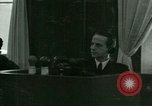
James E. Heath questions Otto Ohlendorf and Michael A Mussmanno makes a statement in the Einsatzgruppen Case, Nuremberg.
The Einsatzgruppen Case in Nuremberg, Germany, following World War 2. The chief defendant in trial in the case, Otto Ohlendorf, tells his story on the witness stand, relating that the records indicate where his Nazi German death squad group put to death more than 90,00 persons. Mr. James E Heath, prosecution lawyer questions Otto Ohlendorf about the 90,000 killings by Einsatzgruppen. Judge Michael A. Mussmanno makes a statement related to the above talks.
CRITICALPAST.COM: About Us | Contact Us | FAQs - How to Order | License Agreement | My Account | My Lightboxes | Shopping Cart | Advanced Search | Featured Collections | Website Terms & Conditions | Privacy Policy ©2026 CriticalPast LLC.
License Agreement |
Terms & Conditions |
Privacy Policy
©2026 CriticalPast LLC.