


 Francais
 Deutsch
 Italiano
Refine Your Search
Budapest Hungary 1916 stock footage and images
- Showing 199 to 204 of 876 results more
more Hide
Hide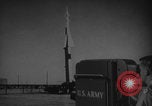
Scenes of tactical nuclear and missile launches, United States Army Sikorsky H-19 helicopters landing, United States Army Soldiers firing, and United States Army Sergeant Stuart Queen speaking to audience
A United States Army cameraman shoots a scene. A tactical missile launches. A United States Army tank fires and a nuclear explosion behind. Two United States Army Sikorsky H-19 helicopters land in an open field, soldiers coming out of the first helicopter. Soldiers fire in a battle. “The Big Picture” opening sequence. The host, United States Army Sergeant Stuart Queen, introduces “Operation Mercy”. “There is another side to the contribution of the American soldier to peace and goodwill- the human side.” Sergeant Stuart Queen said, referring to the purpose the United States Army was assigned “Operation Mercy” in Hungary.
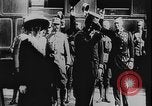
Emperor Karl I and Empress Zita after coronation, Italian POWs, SMS Szent István, WWI
Austro-Hungarian Emperor Karl I and wife, Empress Zita of Bourbon-Parma, meets military officials and commoners in Vienna shortly after their coronation. Empress Zita receives flowers, shakes hands with children. Austro-Hungarian citizens welcome the new emperor and his wife. Empress Zita and Emperor Karl receive more flowers from adoring children. Emperor Karl I meets Austro-Hungarian generals and infantry. Emperor Karl I speak to soldiers fighting for Austria-Hungary during World War 1, giving them reassuring pat on the back. Emperor Karl I rides a horse with retinue. View of Italian prisoners-of-war in Austria. Emperor Karl I onboard SMS Szent István, also known as His Majesty's Ship Saint Stephen (the last of four Tegetthoff-class dreadnought battleships built for the Austro-Hungarian Navy).
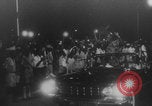
Sylvanus Olympio celebrates the independence of Togo
Togolese Prime Minister and President Sylvanus Olympio raises his fists during a celebratory motorcade in 1961. Newly independent countries in Africa and Asia celebrate their independence. Sign reads “Proclamation de L’Independence du Togo 27 Avril 1960”. Sylvanus Olympio speaks to the Togolese people after his election as president. The flag of Togo is raised. Togolese women raising their hands. The United Nations seal. An African delegate speaks to the United Nations (U.N.). The host and narrator shows a map of Europe to the audience. He points to Lithuania, Latvia, and Estonia on the map. He also points to other Eastern European countries such as East Germany, Czechoslovakia, and Hungary that fell under Soviet influence after World War II.
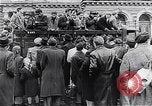
Citizens arm themselves and seize tanks during Hungarian revolution
Hungarian revolution. Hungarians aboard truck armed with guns drive down streets of a city. The word "Budapest" seen on the side of one truck. Seized tank is driven down the street. A sign reading 'Racalmas Kozsec Adomanta' is seen.
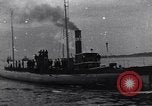
The German Merchant Submarine, Deutschland, arrives with merchant cargo in Baltimore, Maryland, during World War I.
The German merchant submarine Deutschland being assisted by the tugboat "Thomas F Timmins" into Baltimore Harbor (Maryland) on July 9, 1916. Her crew stands on deck and she flies the German flag. The Captain (Paul Koenig, sometimes spelled König, or Konig) and crew pose on shore for a photograph, behind a sign reading: Deutschland, Bremen. (Note: This commercial submarine was operated by the North German Lloyd Line. Submerging to avoid British patrols, she was able to carry valuable cargoes through the British (and other Entente Powers) WWI blockade. On this first trip to the U.S. She carried industrial dyes and gemstones. The Deutschland left Baltimore about 3 weeks later and returned safely to Bremen with with cargo of nickel, tin and rubber.)
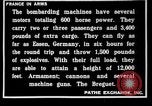
French military aircraft of World War II. Brequet 14; Caproni Ca.3; Voisin V experimental twin engine aircraft
Several french aircraft of World War 1. Right rear view of the French Brequet 14 biwing bomber. Gunner's circular ring gun mount seen in rear cockpit. Camera pans along right wings. View, from right side, of a Caproni Ca.3 trimotor biwing bomber taxiing forward, with nose wheels off the ground, after ground crewman steps out from under from under right wing. Diamond 5 painted on its fuselage. Characteristic triple tail,tail skids, double wheels, and tricycle gear,are visible. view from left side of another Caproni, with Diamond 1 painted on its fuselage. Aviators occupy tandem seats. The aircraft rests on its tricycle gear. Ground crew pull chocks from wheels and it makes right turn out from parking position. Rear view of a parked Caproni shows twin forward engines and rear pusher engine of the aircraft. Next sequence shows an unusual Voisin V experimental aircraft, tail number V.1889, parked in front of a hangar. As the camera pans from the tail forward the aircraft looks like a standard model 5. However, as the view extends to the cockpit, the fuselage is seen to extend much further, forward, and a mechanic works on something (engine) in the extended fuselage. As the camera continues panning, it appears to show another propeller (puller) installed at the front. So this aircraft number V.1889, appears to be the Voisin V (only one) that was modified as an experimental twin engine (pusher-puller) version, in 1916.