


 Francais
 Deutsch
 Italiano
Refine Your Search
Coney Island New York 1898 stock footage and images
- Showing 6889 to 6894 of 11259 results more
more Hide
Hide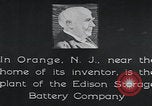
Workers manufacture Edison nickel-iron batteries at the Edison Storage Battery Company Building in West Orange, New Jersey
Manufacturing Edison batteries (also known as nickel-iron battery or NiFe battery) in West Orange, New Jersey, United States. View of the Edison Storage Battery Company Building (177 Main Street, West Orange, New Jersey, USA), the manufacturing facility for Edison batteries. Smoke emanates from vats. Motorized ceiling rack carries cylinders receiving nickel flake via electro plating. Aerial view of battery tube steel manufacture. Factory workers working in assembly lines to assemble batteries. The workers pack batteries for shipment. The four main parts of an Edison battery- negative plates (steel), container (steel), electrolyte (alkaline), and positive plates (steel)- on display. The steel positive plate and perforated steel tube which hold Nickel Hydrate on display. A finger touches the carbon steel ribbon that runs through a perforating machine to create battery tubes. A pen points to the perforation of the carbon steel ribbon. Machines nickel plate steel ribbons. Man places reels of steel ribbons in a tub. Men pushes the tubs into an automatic machine. A machine winding steel ribbons into tubes. Closer view of the steel tube showing its spiral pattern. Hand holding a steel tube. The manufacturing of nickel flake by an electro plating process. Metal sheet cylinders lifted out from vats of nickel. The cylindrical rolls of metal sheet are lowered to alternating vats of copper and nickel. Man unfolds a nickel-copper sheet. A machine cuts the nickel-copper sheet into small pieces. The copper in the nickel-copper pieces is chemically dissolved in a electro plating vat. The positive tubes are loaded with alternate layers of nickel hydrate and nickel flake. Man fits the tubes into a metal mold. Nickel hydrate and nickel flakes are fed into a machine. The man takes off the metal mold, taking the tubes. Cross section of a steel tube. Steel rings on a machine. Man counts the 8 steel rings of the tube. A woman mounts the tubes and presses them into a permanent position in a nickel-plated steel grid. A finished positive plate. A man mounts positive plates on the pole piece. He screws them into place. View of the negative plate, showing its perforated steel pockets holding iron oxide. Machines fold the perforated steel ribbons into Negative Pockets. A worker inserts Negative Pockets into a metal mold. A machine fills the Negative Pockets with iron oxide. Worker mounts the Negative Pockets in a nickel-plated steel grid. A machine secures the Negative Plates by a pressure of 120 tons. The Negative Plates are equidistantly spaced on the negative pole piece. Worker assembles the positive and negative plate groups together. A woman inserts additional insulation between each plate. The container is made of a nickel-plated steel sheet folded and welded to form one piece. Workers carefully inspect and insulate the assembled elements before the elements are permanently sealed in the container. Workers wearing goggles fill the finished battery cells with alkaline solution. Man closes the Filler Cap of the battery cell. Two terminals are seen on top of battery cell. Quality control inspectors check the finished products. A Weston DC voltmeter. A man dips battery cells into an insulating preservative compound. He places the battery cells in trays. Another man connects the cells in trays.
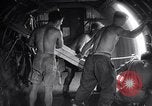
Soldiers drop supplies from C-47 Skytrains over Salamaua in Papua New Guinea.
March 1943: Soldiers in Douglas C-47 Skytrains prepare to drop supplies for American and Australian troops over Salamaua in Papua New Guinea. Aerial view of drop point in Salamaua with parachutes from previous drops visible on the ground. Supplies with and without parachutes descend to the ground. Planes fly low over the drop area. Parachutes with medical, food and ammunition supplies. C-47s fly low over the drop area. Planes fly over the peninsula. (World War II period).

Soviet Premier and U.S. President Johnson meet for Glassboro Summit Conference in New Jersey.
U.S. President Lyndon B Johnson meets with Soviet Premier Alexey Kosigin for the Glassboro Summit Conference in Glassboro, New Jersey. President Johnson with Secretary of State Dean Rusk and Secretary of Defense Robert McNamara wait for Kosygin at the Hollybush Mansion. The Soviet Premier arrives for the first summit talks. He is accompanied by the Soviet Foreign Minister Andrey Gromyko and Soviet Ambassador to the U.S. Anatoly Dpbrynin. The U.S. and Soviet officials greet each other. The press present at the event. Photographers and cameramen record the proceedings. The officials and their translators and aides proceed for the talks. Kosygin on a sight seeing trip to the Niagara Falls between the two talks. The Premier and his aides in raincoats view the Falls from a boat called 'Maid of the Mist'. He waves to the people around. Police guards control a large crowd and the press gathered at the venue. President Johnson, First Lady Claudia Johnson and daughter Lynda greet Premier Kosygin and his daughter Ludmilla as they arrive. Cameramen and photographers record the proceedings. The Soviet Premier waves to the crowds. President Johnson, Kosygin and other officials enter the building.
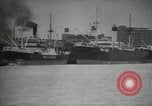
Activity at New Orleans harbor, United States.
View of New Orleans seaport of United States. Concrete grain elevator unloads grain from the cargo ship through suction pipe. Unloading bunches of bananas from the ship. 1935

Cotton ginning at New Orleans, Louisiana, United States.
Cotton ginning at New Orleans, Louisiana, United States. Row of horse carts carry seed cotton. It is weighed and unloaded through suction conveyor into the gin after cleaning. The gin roll separates seed and lint by saws. Moisture is added at the gin lint flue on cotton and separated by air blast. Dirt and trash are separated from cotton seed.

Baling the lint of cotton at New Orleans, Louisiana, United States.
Baling the lint of cotton at New Orleans, Louisiana, United States. After ginning, the lint of cotton is baled. Farmers load the seed and bale of cotton onto the horse cart.
CRITICALPAST.COM: About Us | Contact Us | FAQs - How to Order | License Agreement | My Account | My Lightboxes | Shopping Cart | Advanced Search | Featured Collections | Website Terms & Conditions | Privacy Policy ©2026 CriticalPast LLC.
License Agreement |
Terms & Conditions |
Privacy Policy
©2026 CriticalPast LLC.