


 Francais
 Deutsch
 Italiano

Refine Your Search
Coney Island New York 1898 stock footage and images
- Showing 8503 to 8508 of 11285 results more
 Hide
Color Sound
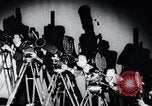
President Eisenhower speaks at press conference and USIA Director Streibert in a meeting in the United States.
Opening scenes show radio studio announcers in different countries and in different languages sharing news updates as they speak into microphones. Photographers and camera men shoot a news conference featuring President Eisenhower. President Dwight D Eisenhower speaks whle newsmen, journalists, and reporters disperse quickly from the room and telephone their notes and papers to publish the story. An official exits a taxi cab car and enters the USIS building at 1776 Pennsylvania Avenue, NW, Washington DC. View of door of Office of Director of USIA. '423' and 'Theodore C. Streibert' written on nameplate of office of director of USIA. Narrator describes the people there as working to "reinforce truth against distortion and the big lie." Director Streibert talks on the telephone and sits for a meeting in his office and talks about overseas posts. Map on wall.
Japanese self defense forces participate in training program, Japan.
Camp Kashi, Kyushu, Japan. Members of U.S. 187th Parachute Maintenance Company train Japanese Self Defense Force paratroops. Japanese instructor and U.S. paratroopers help Japanese paratroopers to don and secure their chutes. They board U.S. Air Force C-46 aircraft. Views through open door of C-46, in flight, show American paratroopers accompanying the Japanese. On ground, drop zone is marked by smoke and one of several American Army advisors talks radiotelephone to coordinate the jump. Onboard the aircraft paratroopers hook up to static line. On the ground, Japanese officers look up towards plane, as troopers emerge and their chutes deploy. As they land, the Japanese paratroops wrap up their chutes and form up into units. Soldier takes his bag and runs. Japanese Self Defense Paratroops march in parade. after training of two weeks: Graduates of training course and officers attend the program. The flags of Japan and United States. Japanese General honors the students of training program by giving them paratroop wings and certificates. U.S. Army Brigadier General and Japanese General salute as new paratroops pass in review. View of Paratrooper's wings. Certificate from Headquarters 187th Airborne Regimental Combat Team. Smiling new Japanese paratroopers.
Training Japanese Ground Self Defense Forces.Hokkaido.Honshu.Japanese 2nd Division, Engineers, Armor,Artillery,Aviation
Aerial views of snow-covered Camp Ashigawa Hokkaido, Japan, home of the 2nd Division, Japanese Ground Defense Forces Northern Corps. Japanese self defense force engineers assemble a Bailey Bridge. Defense Force personnel cross the new bridge in a half-track armed with antiaircraft guns Officers of 2nd signal unit, surrounded by snow banks, work on map reading exercise. Members of 2nd artillery regiment do practical exercises in setting up and operating a 155mm howitzer, in the snow. Members of the Aviation section practice emergency receiving and sending messages from ground to air. A light airplane (PA-18?) snags a message capsule suspended between two poles. The Japanese flag. A new unit of Japanese self defense forces in Northern Honshu. Local townspeople visit the camp in motorcade of jeeps. Japanese Defense force units parade in a ceremony. High ranking Japanese Officers, along with United States Generals Orlando Troxel and Herbert J. Vander, seated during ceremony. Officer, on Japanese Defense Force Sherman tank, salutes. Squadron of L-5 Sentinal Airplanes in flight.
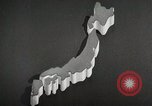
Views of China and Japan in the period leading up to the 2nd Sino-Japanese war
Film opens with outline map of Japan shown in contrast to 20 times larger China and figures representing China's 6 times greater population. Map of China is shown in pieces representing its numerous internal fiefdoms. In contrast, Japanese soldiers are shown marching in review before their singular leader, Emperor Hirohito and other national military leaders. Film shows contrasting 20th century characteristics of China and Japan. Sun Yat-sen, who figured prominently in post-Imperial China, and is considered the founding father of the Republic of China, is shown speaking to crowds. Narrator states that in 1911, this man fathered a peoples' revolution which brought to an end, China's ancient Imperial government. View of Chinese people marching and carrying flags and banners. Books are shown comparing China's Sun Yat-sen to America's George Washingon. Sun Yat-sen's political statement, shown in Chinese, contains words similar those in Abraham Lincoln's Gettysburg address. View of schools and colleges built in the new Republic of China. Chinese students shown in libraries. A couple dining in a Chinese hotel restaurant, overlooking other buildings. A tall clock tower looms at the same height outside their window. Steel being erected for a tall building. Architects at work. Scientist looking through a microscope. Technicians at work in a chemistry laboratory. Medical staff and patients in a modern hospital. Children in school under compulsory education program. Chinese people exercising their freedoms of expression and religion. The funeral of Sun Yat-sen, in 1925, attended by his successor, Chiang Kai-shek, and other Chinese leaders in military uniforms. Chinese people attending an outdoor ceremony. Examples of areas needing modernization. Chinese workers using manually operated machinery to process fabrics. Commercial vessel plying a river using wind and sail only. Views of steam locomotives and trains being introduced to link parts of China. Trucks moving goods over roads (still unpaved). Miners working in open air mines, digging coal and iron. Industrialization scene with molten tin being poured from a crucible. Machines performing complex tasks in a Chinese fabric mill and women and children workers tending spinning and knitting machines. Young Chinese school children engaged in collective outdoor games and exercise drills. Scene shifts to Japan, where Emperor Hirohito, on a white horse, leads military leaders in reviewing Japanese forces. A formation of Japanese Model 97 medium tanks passing in review, with tank commanders saluting from their turrets. Glimpse of Japanese steel mill. Headline in World-Telegram newspaper of 14 february, 1934, reads: "Tokyo House Passes Huge Arms Budget." A Los Angeles newspaper of 23 November, 1934, expands on the same story. New Orleans Times-Picayune, Sunday, 5, May, 1936, reports that Japan is strained by its huge arms costs.
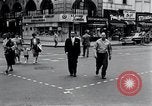
Japanese Books and Antiques in Washington, DC
Japanese man walks on a busy market street in Washington, DC. Japanese man window shops at a bookstore. English translation of Japanese Books 'Artistry in Ink' written by Seiroku Noma and 'Snow Country' or 'Yukiguni', in Japanese, by Yasunari Kawabata are on display for sale. Japanese paintings with writing and prints and . Japanese man walks into 'S Kriger Anique shop' and is greeted by shop proprietor. Japanese antique statuettes, china plates, bowls and box are on display for sale in antique shop. Japanese man holds a Newsweek magazine titled 'The New Surge The New America'. Japanese man talks. Scenes from World trade fair. Japanese stall in group five displaying Skis by R K Mizuno of japan. 1964-65.

Progress of women in Japan
Busy streets in Tokyo, Japan. Japanese people shop, cross streets, and ride bicycles. Aerial view of Tokyo after World War 2. View of the Japanese National Diet Building (Nagatachō 1-chome 7–1, Chiyoda, Tokyo) in Chiyoda district. Japanese Prime Minister of Japan Yoshida Shigeru addresses the parliament. Japanese men, women and ministers attend the National Diet. A new bill is passed. Hand flips through the pages of the new bill written in Japanese. Contrasts the progress of women with that of men in Japan. A Japanese man and woman. Japanese children playing in playground. A woman holds her child. A salaryman father laughs with wife and two children at home. Japanese man wipes sweat off his head with a napkin. An old farmer working. People crossing a street. Japanese men and women crowd a busy street. View of Japanese women work as traffic police officer, as telephone operators, as caretaker of family,voting and as an architect.
CRITICALPAST.COM: About Us | Contact Us | FAQs - How to Order | License Agreement | My Account | My Lightboxes | Shopping Cart | Advanced Search | Featured Collections | Website Terms & Conditions | Privacy Policy ©2026 CriticalPast LLC.
License Agreement |
Terms & Conditions |
Privacy Policy
©2026 CriticalPast LLC.