


 Francais
 Deutsch
 Italiano

Refine Your Search
Coney Island New York 1898 stock footage and images
- Showing 9577 to 9582 of 11283 results more
 Hide
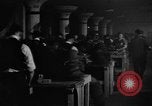
M1917 helmets painted and packed for shipment at Ford Assembly Plant in Philadelphia (WWI)
Ford Motor Company employees paint and finish United States Army Brodie-patterned M1917 helmets at a factory in Philadelphia, Pennsylvania during World War I. Factory workers working in assembly line. Worker hammers a bolt in the center of the helmet. A worker attaches chin strap into the helmet. A machine attaches a bolt into the chin strap. Helmets are prepared for the paint tank. Workers dip helmets into paint tanks. Men wipe off helmets to remove a coat of tallow applied to prevent rusting. Helmets placed on rack, dipped in paint tank, and hung to dry on stands. Helmets are treated with sawdust applied with air pressure (“sawdusting”). Workers are seen wearing goggles as they apply sawdust in helmets. After applying sawdust, racks of helmets are placed in bake oven. The workers close the bake oven door. Workers sort and stack new helmets. Military and quality control personnel inspect helmets carefully. Finished U.S. Army helmets put into wooden crate and shipment lid placed onto it. Helmets are packed with air pressure. Crates stenciled, seals soldered, and crates fastened with wires. A man places a receipt on top of helmets before another man seals the crate. Wooden crates piled up for shipment. [Note: This was filmed at the Ford Motor Company assembly plant on Broad Street and Lehigh Avenue in Philadelphia. Helmet shells were manufactured by other firms and sent vie rail to the Ford plant where they were painted and finished. This video depicts that finishing process.]

Practice of polygamy practiced among African tribesmen
Social religious customs of African tribesmen. Practice of polygamy among tribes. A man buys a girl from two men and presents cows to ensure the deal. Bride's family escorts her to the new home.

An Eskimo hunting party in Greenland
United States Corps of Engineers conduct research and development activities at Camp Tuto in Greenland. An Eskimo or Inuit hunting party from New Thule near Camp Tuto in Greenland. Women smile as sled dogs relax in a snow covered field.
Preparations for allied invasion of Normandy France during World War II.
'Normandy: Air borne invasion of fortress Europe ' Allied invasion of Normandy. Lieutenant General William S Knudsen introduces the film to be presented, expressing thanks to makers of the glider aircraft used in the invasion, who are the intended audience of the film. Field Order no1, 9th Troop commander Carrier. A man puts a Top Secret seal on the order. The Captain of United States 82nd Air Borne Division briefs men about the terrain with the help of a mosaic. A map of Europe shows principle cities of the continent. Map and narrator describe German Atlantic Wall coastal defenses on European continent. A giant concrete coastal gun emplacement. A large German railroad coastal gun moved out of a concrete shelter. Various concrete structures, sandbag structures of coastal guns. A concrete base gun turret revolves. Huge coastal guns protrude from concrete gun emplacements. Huge steel and concrete tank barriers stretched across. Large concrete and steel structures built along the coast to prevent assault craft from landing. Combined Chiefs of staff of the United Nations at a meeting. George Marshall and Henry Arnold at the head of the table during the meeting. A map shows invasion area near Le Harve. Troop Carrier units departing for Allied invasion on Sicily, Africa on 10 July, 1943. The United States C-47 aircraft take off towing gliders from an airfield in Africa. Troops transported from British 1st Air Borne division and United States 82nd Air Borne division. Dust rises as aircraft take off from a desert field. Demolished gliders on field and beside water. Multiple views of demolished gliders. C-47 in flight and paratroopers jump from the plane in New Guinea. Instructor trains paratroopers in United States. Discussion and demonstration of improvements in glider equipment and usage after Sicily Invasion and prior to D-Day Normandy invasion. Two men attach link nose chain to glider. Parachute extended and held open by men. Pilot of a glider talks to the pilot of the plane towing the glider over intercom.
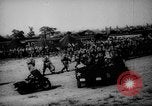
82nd Airborne troopers prepare England for invasion of Normandy during World War II.
Preparations in England for the Allied invasion of France during World War II. U.S. Army 82nd Airborne soldiers with equipment as they prepare to board an aircraft. Men load into buses as a motorcycle escort leads a convoy of buses through a farmland. Men get down from the buses and walk into hangar being used as barracks. Soldiers issued new equipment including life vests, ammunition and grenades. Medical supplies are checked. A jazz band of servicemen plays and men do pushups and calisthenics. Men play handball and volleyball. They read and write letters to loved ones at home. Men sharpen, check and work on knives and rifles. They clean and oil the rifles and attach bayonets. Soldiers paint invasion stripe marks on C-47 aircraft readying it for the D-Day invasion of France.

United States Secretary of Navy Josephus Daniels urges people to support Liberty Loan drive in Washington DC, United States
'Navy and the fourth Liberty Loan' Navy band plays and marches in Washington DC, United States. Navy Band from the Great Lakes Training Staation seen outside Union Station train station after arrival. Lieutenant John Philip Sousa with two other officers. Drum Major MF Tennant instructs the band. Men and women enter the newly built Navy Building. Exterior views of new building for Department of the Navy. Cars parked outside the building. United States Secretary of Navy, Josephus Daniel and Rear Admiral Thomas Jefferson Cowie address a gathering regarding Liberty Loan drive outside the State Navy and War building.
CRITICALPAST.COM: About Us | Contact Us | FAQs - How to Order | License Agreement | My Account | My Lightboxes | Shopping Cart | Advanced Search | Featured Collections | Website Terms & Conditions | Privacy Policy ©2026 CriticalPast LLC.
License Agreement |
Terms & Conditions |
Privacy Policy
©2026 CriticalPast LLC.