


 Francais
 Deutsch
 Italiano

Refine Your Search
Coney Island New York 1898 stock footage and images
- Showing 9595 to 9600 of 11283 results more
 Hide

Soviet Red Army officer talks about a soldier who lost his life during World War II.
Heroes of World War II in Soviet Union. A poster of a Red Army soldier who lost his life during World War II. An officer delivers a speech about the heroes of World War II. New recruits listen to the officer with the poster in the background.
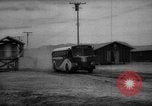
Japanese Americans at relocation center in United States during World War II.
Relocation of Nisei people in United States during World War 2. Japanese Americans arrive at the Manzanar relocation center (internment camp). Family members exit a bus. A young boy looking unsure as he observes the camp. New internees undergo medical examination. They participate in Americanization classes. They train themselves in self government. Block leaders are presented citations at a meeting. Japanese-American children internees are looked after in day care centers as men and women go to work. Young boys and girls seated at a table. Internees at Manzanar working in an experimental laboratory house for extracting rubber from guayule shrubs to increase rubber production during the war. Japanese American internees working in cultivating the guayule shrub. View of a project at the Parker camp where internees were working to irrigate desert land. View of sugar beet fields where internees could work. View of Manzanar war relocation center with mountains behind. War time propaganda narrator promotes the relocation centers as "setting a standard for the rest of the world in the treatment of people who may have loyalties to an enemy nation. We are protecting ourselves without violating the principles of Christian decency."

U.S. Coast Guard Cutter Tampa and life boats save many lives as Ocean liner SS Morro Castle, burns at sea.
Role of United States Coast Guards. A luxury liner, SS Morro Castle burns at sea as smoke rises from it. United States Coast Guard Cutter Tampa (WPG-48) underway to rescue the people on board the liner. A 75 foot long patrol boat underway to reach the burning vessel. Men aboard life boats. Men swim in the sea as lifeboats rescue them. Men swim towards the beach where beach patrol men save their lives. Smoke rises from the burning ship. USCG Cutter Tampa seen towing the SS Morro Castle after the disaster (but the hawser then broke and the Morro Castle drifted aground). Remains of the charred vessel aground at Asbury Park, New Jersey.
Ships destroyed during Pearl Harbor attack salvaged in Hawaii.
Aftermath of Pearl Harbor attack. An animation shows a map of Japan as a fictional character Tojo makes a call from Tokyo to Nagasaki and other cities disseminating the news of Japanese attack on Pearl Harbor. He rejoices at the attack. The United States Navy ship Arizona capsized. Wreckage of damaged ships like Nevada, West Virginia, California. Navy personnel along with civil technicians start the salvage of United States ships. Men work on the ships. Ships like California, Nevada and West Virginia underway after repair. Sailors and supplies aboard the ships. Military preparations in United States to counter the Japanese attack. (World War II period).
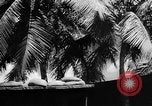
Protective measures taken by Americans in Hawaii, after the Japanese attack on Pearl Harbor.
Aftermath of Pearl Harbor attack. People in Oahu, Hawaii, prepare to deal with more air attacks by Japanese. Armed U.S. soldier in sandbagged position, in Hawaii. The territorial governor of Hawaii, Joseph Poindexter, signing a declaration of Martial Law. Four thousand members of Oahu's Civil Defense Committee, dressed in dark bottoms and white tops, wearing steel helmets with "W" on them, standing at attention in formation on grounds of a stadium. Windows in all downtown shops taped to prevent flying glass. Sand bags surrounding a power substation. Huge quantities of barbed wire in a storage yard and strung along the beaches, along highways, around schools, and public buildings of Oahu. A man pushing a lawn mower between sandbagged defense positions in a residential neighborhood. Construction machinery digging defensive trenches. Bomb shelters being constructed of precast concrete. Air raid sirens installed and school children leaving their building and sheltering in deep trenches during a test. Very small children taking shelter in zig-zag trenches and donning gas masks. Huge assemblies of children, and of grownups, all donning gas masks. Little children being dressed in capsule-like "bunny mask" protective gear.One of them crying inside the covering. Crowds of women and children lined up on a veranda waiting to receive these "bunny masks." Military personnel, civilians, and school children, all carrying personal gas masks with them at all times. Innumerable old rubber tires saved in an open yard. Japanese-Americans donating blood to the American Red Cross and lined up to buy war bonds. Soldiers arresting a Japanese resident known to be an enemy agent. Boarded up shops of Japanese-Americans, who had been interned. Japanese-Americans removing all Japanese language signs from their areas. Language school buildings with closed signs. An empty and boarded-up Shinto temple. One Japanese-American replacing his cafe sign with one reading: "Keep 'Em Flying Cafe." U.S. Army troops posted on roadways. The Aloha Tower in camouflage paint. A Lurline steamship leaving port, and being replaced by warships. Prewar view of people enjoying Waikakee beach, and current view of two boys playing in sand near barbed wire barriers. City streets deserted at twilight, as blackout procedures take effect at dusk. Views of darkened homes and palm trees silhouetted against sky at dusk. The "ghost" of a sailor killed in World War II, stands in front of Arlington cemetery, Washington, DC, and converses with the ghost of a soldier killed in World War I. They discuss idealistic notions about ending wars for good. Displays of flags is seen, including: Australia; Belgium; Brazil; Canada; China; Costa Rica; Cuba; Czechoslovakia; Dominican Republic; England; Ethopia; Greece; Guatemala; Haiti; Honduras; India; Yugoslavia; Luxembourg; Mexico; The Netherlands; New Zealand; Nicaragua; Norway; Panama; The Philippines; Poland; Russia; El Salvador; South Africa; and the U.S.A. "V" created in the sky by a skywriting airplane.
Australian Prime Minister Ben Chifley arrives at Gatow airport in Berlin, Germany.
Australian Prime Minister in Berlin, Germany. An Avro Lancaster XPP aircraft (a modified long-distance transport version of the Lancaster Mark X bomber) taxis to a parking place at the Gatow airport in Berlin, Germany. Australian Prime Minister Ben Chifley steps from the plane and is greeted by military officers and others including Lieutenant General Sir Edwin Otway Herbert, Commandant of the British Sector in Berlin.. Prime Minister Chifley speaks to news reporters as a photographer takes his pictures.
CRITICALPAST.COM: About Us | Contact Us | FAQs - How to Order | License Agreement | My Account | My Lightboxes | Shopping Cart | Advanced Search | Featured Collections | Website Terms & Conditions | Privacy Policy ©2026 CriticalPast LLC.
License Agreement |
Terms & Conditions |
Privacy Policy
©2026 CriticalPast LLC.