


 Francais
 Deutsch
 Italiano
Refine Your Search
Coney Island New York 1898 stock footage and images
- Showing 3157 to 3162 of 11259 results more
more Hide
Hide
During a presidential election debate in the US, John F Kennedy and Richard Nixon comment on the necessity to defend Berlin.
The third Kennedy-Nixon Presidential Debate in the United States. Moderator Bill Shadel introduces the candidates and tells that candidates will not share the same platform. Republican candidate U.S. Vice President Richard M Nixon is in a Los Angeles studio and Democratic candidate Senator John F Kennedy is in New York. He also introduces the panel of correspondents who will question the candidates. The panel includes Frank McGee from NBC News, Charles Van Fremd from CBS News, Douglass Cater from Reporter magazine and Roscoe Drummond from New York Herald Tribune. Frank McGee asks Kennedy whether he would take military action to defend Berlin. Kennedy answers and says that the U.S. has contractual right to be in Berlin coming out of the conversations at Potsdam and of World War II. He states that the United States must meet its commitment on Berlin in order protect the security of Western Europe. He concludes by saying that the U.S. will meet its commitments to maintain the freedom and independence of West Berlin. Nixon disagrees with Kennedy's statement that the Republicans are trigger-happy and lead the nation into wars. He talks about the Democratic presidents who led the U.S. into wars. He concludes and states that he thinks there isn't any question about the necessity of defending Berlin.

Westminster Kennel Club Dog Show event at Madison Square Garden.
View at Westminster Kennel Club's event of Dog Show at Madison Square Garden in New York. Many varieties of dogs walking. Crowd watching the show. For the first time a Springer spaniel is best in show at the Westminster kennel club dog show event. Wakefield's Black Knight, the new top dog, the new best dog is a Black Knight. Crowd applauds. Photographers taking photos.
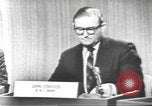
U.S. Vice President Nixon speaks about U.S. foreign policy towards Latin America prior to the presidential elections in the U.S.
The fourth presidential election debate held between Democratic nominee Senator John F. Kennedy and Republican nominee U.S. Vice President Richard Nixon in New York, United States on 21st October 1960. News correspondent John Edwards asks Senator Kennedy if he can give the names of three or four Americans whom he can appoint as the Secretary of State. Senator Kennedy replies to the question and says that this decision can only be made by the president and not presidential candidates. He says that he has made no judgment about who should be the Secretary of State. News correspondent Quincy Howe asks Richard Nixon to comment. Nixon says that it would be the responsibility of the next president to appoint the Secretary of State. Vice President Nixon speaks about a previous comment made by Senator Kennedy regarding Fidel Castro's regime. He says that President Eisenhower's administration appropriated five times as much for Latin America as was appropriated by the previous administration. He speaks that Democratic Congress has cut eighty million dollars off of the Voice of America appropriations to Latin America.
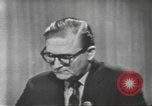
Vice President Nixon and Senator Kennedy debate in the U.S. over a summit conference between the U.S. and the Soviet Union.
The fourth presidential election debate held between Democratic nominee Senator John F. Kennedy and Republican nominee U.S. Vice President Richard Nixon in New York, United States on 21st October 1960. News correspondent John Edwards ask Vice President Nixon about the conditions to be met before meeting Soviet Premier Nikita Khrushchev at Vienna Summit of 1961. Nixon replies that an agenda should be prepared which should delineate those issues on which there is a possibility of some agreement or negotiation. He says that U.S. President should not go to the conference unless they have such an agenda, unless they have some reasonable assurance from Khrushchev that he intends seriously to negotiate on those points. News correspondent Quincy Howe asks Senator Kennedy to comment on the topic. Senator Kennedy says that the U.S. should not go to the summit until there is some reason to believe that a meeting of minds can be obtained on either Berlin, outer space or general disarmament including nuclear testing. He mentions the failure of the conference on May 15th 1960 in Paris, France. He further says it is important that they maintain their determination, that they indicate that they're building their strength, that they are determined to protect their position and that they are determined to protect their commitment.
Toscanini conducts the NBC symphony orchestra accompanied by Jan Peerce and Westminster Choir after Mussolini's downfall.
A documentary depicts Italian conductor Arturo Toscanini in the United States. A radio broadcast room. An emergency news item comes in. News being broadcast about the removal of Benito Mussolini as the Prime Minister of Italy. Toscanini plays a piano. He works on musical notes of Forza del Destino. At NBC broadcasting station preparations being made to put the music of Forza del Destino on the air in radio broadcast. Jan Peerce and Westminster Choir at a recording studio. NBC Symphony Orchestra at NBC Studio in New York. Toscanini conducts the orchestra. Westminster Choir sings as Toscanini conducts the music. Jan Peerce sings.
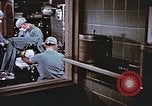
Examining effect of radiation on cancerous cells. New England Deaconess Hospital, Boston, Massachusetts, United States.
Doctors operate on a cancer patient at the New England Deaconess Hospital, in Boston. Cancerous tissue excised from patient's body during surgery is saved to test behavior of the cells when exposed to radiation. The tissues are cultivated and then.examined under microscopes fitted with a movie camera. Cells divide. Radioactive material in a pack with warning, 'Hazard' written on it. A doctor exposes cancerous tissue to the radioactive material. Cancer cells die after exposure. Exterior view of the White Plains Hospital building in White Plains New York. A child runs to a woman in front of the hospital building. She picks up the child and both smile.
CRITICALPAST.COM: About Us | Contact Us | FAQs - How to Order | License Agreement | My Account | My Lightboxes | Shopping Cart | Advanced Search | Featured Collections | Website Terms & Conditions | Privacy Policy ©2026 CriticalPast LLC.
License Agreement |
Terms & Conditions |
Privacy Policy
©2026 CriticalPast LLC.