


 Francais
 Deutsch
 Italiano
Refine Your Search
Coney Island New York 1898 stock footage and images
- Showing 3493 to 3498 of 11259 results more
more Hide
Hide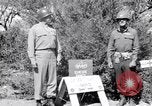
Lieutenant General George S. Patton presents Silver Stars to members of the U.S. Army 39th Infantry, 9th Division, during World War II
Lieutenant General George S. Patton addresses troops from an outdoor stage and then awards Silver Stars for gallantry to members of the U.S. Army 39th Infantry, 9th Division, in Capo Playa, near Cefalu, Italy. Patton awards the medals and then the soldiers form into groups from their respective home states, which include New Jersey, South Carolina, North Carolina, Tennessee, West Virginia, Pennsylvania, and New York. The army band is seen standing near the soldiers. The soldiers parade in front of the officers. Awarded soldiers take off their helmets and pose for photographers. Close-ups of soldiers with medals while flags from the honor guard wave in background. (World War 2. WWII. WW2.)
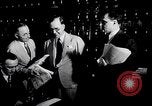
Harry S Truman becomes the Vice President and then takes over as President of the United States.
Harry S Truman and other officials work on some documents. Truman's Vice Presidential campaign. People hold boards reading 'Truman for Vice President' during Democratic National Convention of 1944. Vice President Truman with President Franklin D Roosevelt. View of the exterior of the U.S. Capitol in Washington DC. Soldiers and horses with Roosevelt's casket during funeral of Franklin D. Roosevelt. A crowd at the Washington Monument. The United States flag at half staff on the White House. Truman addresses the Congress. He talks about cooperation and duty. Nazi German Axis soldiers surrender during World War II in Europe. A large crowd at Broadway celebrates VE Day in New York City. The first atomic bomb mushroom cloud billows into the sky over New Mexico during the Trinity atomic bomb test. Signing of Japanese surrender documents aboard the USS Missouri at the end of World War 2. Japanese official Foreign Minister Mamoru Shigemitsu signs documents, then General Douglas MacArthur signs documents, and presents a pen to General Wainwright standing behind him. An American official takes a seat and goes through some documents. An officer reads documents at a table as soldiers stand by and watch.
Crashes showing pilots Lindbergh, Richard B. Byrd, Noel Davis and Stanton Wooster in the United States.
'The Epic American Trans Atlantic Flight' depicts crashes involving various pilots in the United States during early aviation history. Captain Charles A. Lindbergh. On September 21, 1926, Rena Fonck stands in front of his Sikorsky airplane, ready to try a solo flight across the Atlantic to Paris. He takes off and crashes in flames. Navy Commander Richard E. Byrd poses. On April 16, 1927, his Fokker C-2 trimotor airplane ("America"), piloted by Anthony Fokker, with Byrd, Floyd Bennett, and George O. Norville on board, flips over on takeoff at Hasborough, New Jersey. In September, 1927, Clarence Chamberlin in a Bellanca aircraft taxis and takes off. The tail and right main wheel dig into the soft field on landing and the airplane is severely damaged. The wreck of the "American Legion" Keystone Pathfinder airplane that carried Commander Noel Davis and Lieutenant Stanton Wooster to their deaths, in a crash landing, in the Back river, near Langley Field, Virginia, In Paris, on April 26, 1927, French pilot, Captain Charles Nungesser, and Francois Coli pose before taking off on their ill fated flight in a Levasseur PL8 aircraft named " White Bird." Charles Lindbergh standing next to his mother, Evangeline Land Lindbergh. The "Spirit of St. Louis" is towed out and refueled at Mineola, New York. Charles Lindbergh climbs into the plane and makes a bumpy takeoff. Bystanders watch. People gather to greet him upon arrival in Paris. Lindbergh poses with U.S. Ambassador to France Myron Herrick. Lindbergh honored by the French President Gaston Doumergue.
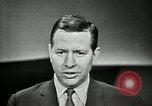
Major events of the 1930s include Wall Street crash, kidnapping of Lindbergh child, Hindenburg disaster, Spanish Civil War, etc.
'Retrospect' about the events that led to the present pattern of life in the United States. Host Douglas Edwards, an American television anchor speaks about the past events in America. Crowd of unemployed men gathering in bread lines after the 1929 crash and subsequent Great Depression. A man near a box of apples. The U.S. President Franklin Delano Roosevelt addresses a gathering. The kidnapping of Charles Augustus Lindbergh, Jr., the son of the aviator Charles Lindbergh in 1932. Bruno Richard Hauptmann, a German carpenter who abducted the child during the trial. The congressmen at the formation of the Lindbergh Law. Newspapers describe the apprehension or death of notorious mafia gangster criminals, such as Dutch Schultz and Baby Face Nelson. Huey Pierce Long, Jr. a American politician addresses people. Emperor Haile Selassie of Ethiopia appeals to the League of Nations, after his country is attacked by Italy under Mussolini. Adolf Hitler stands. Troops of the German army parade. Scenes from the Spanish Civil War in 1936-1937 as Spanish national forces battle against fascist rebel forces. Spanish Troops fire 75mm field artillery pieces. Bombs being dropped on the buildings. Spanish soldiers marching during the civil war. The Hindenburg disaster takes place on May 6th 1937: The German airship LZ 129 Hindenburg catches fire over the Lakehurst Naval Air Station in Manchester, New Jersey. Amelia Earhart the first woman aviator to fly solo holds flowers and is surrounded by people. She went missing in 1937. Cowboy philosopher Will Rogers, alone and with U.S. Vice President John Nance Garner and with aviator Wiley Post (who had patch over one eye). King Edward VIII of Great Britain, abdicating the throne for "the woman I love." People at the German-American Bund Nazi sympathizing gathering including the subduing of objectors on stage, in Madison Square Garden, New York. British Prime Minister Neville Chamberlain, returning from meeting with Adolf Hitler in Munich in 1938. View of Adolf Hitler. German tanks on parade in World War II. an array of artillery guns on display. Railway guns being fired in WW2.
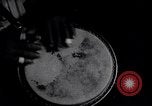
The Castro-led revolution in Cuba.
Film opens with bongo drummer playing and other Cuban musicians playing instruments while dancers in fetching costumes dance and enjoy themselves. Scene shifts to view from water of Havana skyline and then to automobile traffic on a busy street in a commercial district of the city. A Busy street crowded with pedestrians on sidewalks. Cuban workers leaving an industrial plant at shift end. Smoke pouring from three tall smoke stacks in background. Large machines employed in a factory. A construction worker in the cab of earth moving equipment. A field worker rotating a long wooden boom by hand. Men cutting sugar cane with machetes. A farmer opening gate to allow water into an irrigation network. View of water rushing into the irrigation ditches and entering the area of crops. A farmer using cattle to pull his plow. Cattle entering a stockyard. Shoppers at an open-air market filled with all kinds of fruits, vegetables and other agricultural products. Families of poorer people in rural areas outside of Havana. They live in shacks ahd are photographed with their small children. Next, two uniformed members of the Cuban National Police (Policia Nacional de Cuba) are seen. (The narrator mentions that Cuban people lived for 60 years under a succession of corrupt and often dictatorial leaders.) View of men in a line being monitored by a National policeman. Fulgencio Batista y Zaldívar is seen next to his wife, Marta Fernández Miranda, as they cast ballots in the 1952 Presidential election. Glimpse of several Cuban National Police lined up looking over a wall. Next, members of Fidel Castro's resistance movement are seen silhouetted against the sky, as they walk, carrying arms, in the mountain regions of Cuba. Fidel, himself is silhouetted as his men walk past him. Views of Castro's men moving through the rugged mountain terrain as shots are being fired. The combat becomes more intense. The views are from the Castro forces as they engage in fire fights with Batista forces (unseen). Machine guns are heard, and an explosion occurs. More views of the Castro forces using a machine gun and small arms. Scene shifts to a public square in Havana as it fills with people celebrating the downfall of Batista on 1s of January, 1959. Crowds surround Fidel Castro as he arrives in Havana. The crowds cheer him wildly. as the hero, and liberator of the Cuban people. Castro addresses the crowds from a balcony, promising them elections, land reform,freedom and the rights guaranteed under the Cuban Constitution of 1940. Glimpse of a copy of that document. View of Manuel Urrutia raising his hands to acknowledge the crowd, when he was named President on January 3rd, 1959. Fidel Castro arriving in New York City and greeted as a Cuban Nationalist hero. Castro waving to crowds of admirers. In Washington,DC, he is seen placing a memorial wreath at the Statue of Abraham Lincoln in the Lincoln memorial. Castro speaking at a press conference in Washington,DC. Speaking from a podium, in English, he states emphatically that he is not a communist. Castro is seen later, back in Havana at a large political gathering, where he and Che Guevara along with other revolutionaries, engage others in publicly broadcast discussions and debates. A barefoot boy is brought into the center of the proceedings, where he points an accusing finger toward someone (not clear who that person is). View inside a newspaper printing plant, as Narrator states Castro began attacks on the Press resulting in the demise of the Free Press, and its takeover by government run newspaper "HOY." View of Hoy sign in front of a newspaper building. Communist propaganda seen dominating papers and magazines at a news stand. Small bust of Lenin seen for sale.
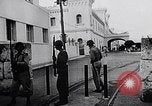
Progress of the Castro-led July 26th, 1953 revolution in Cuba
Moncada army barracks near Santiago de Cuba, immediately following the unsuccessful attack by Castro-led revolutionaries, on July 26, 1953. Soldiers in the yard of the installation. Cuban military commander and soldiers talking with officials. A bullet-riddled vehicle and many dead revolutionaries. Armed soldiers sitting on the veranda of the barracks.Fulgencio Batista visiting and viewing the captured materials of the revolutionaries.Frank Pais sitting with associate. Marker at street intersection in Santiago de Cuba reads: "Ave 7A and Calle 20." Revolutionary safe house at that location is shown. posters being prepared containing pictures of Revolutionary National Action group posing with the Cuban national flag. Frank País being interviewed. Newspapers announce the death of Salas Cañizares. Large crowd seen at his funeral.Parts of the United states and Mexico are marked on maps showing where Castro's revolution was finding support in funds and supplies. yankee Stadium in New York City is seen being papered with pamphlets. A patrol craft docked, bearing number: "GC 106." People visiting a cemetery with new graves marked with temporary wooden markers. Revolutionaries in the mountains.Fidel Castro getting a haircut and firing a pistol outdoors. Woman sews insignia of july 26th on a uniform.
CRITICALPAST.COM: About Us | Contact Us | FAQs - How to Order | License Agreement | My Account | My Lightboxes | Shopping Cart | Advanced Search | Featured Collections | Website Terms & Conditions | Privacy Policy ©2026 CriticalPast LLC.
License Agreement |
Terms & Conditions |
Privacy Policy
©2026 CriticalPast LLC.