


 Francais
 Deutsch
 Italiano
Refine Your Search
Coney Island New York 1898 stock footage and images
- Showing 3685 to 3690 of 11259 results more
more Hide
Hide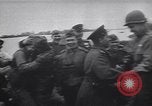
End of World War II and signing of UN charter in San Francisco, United States
United States and Soviet Union soldiers celebrate their victory as world War 2 comes to an end in Germany. "Elbe Day": Soviet and American soldiers meet at the River Elbe on 25-26 April, 1945. View of Nazi swastika being blown up at Zeppelinfeld in Nuremberg Germany in 1945. Scenes of celebration in the streets of Paris with French civilians cheering American and French soldiers and celebrating the end of World War 2. French women kiss soldiers. Crowd gathered in Times Square in New York celebrating VE-Day (Victory in Europe Day). Foreign Ministers of fifty nations arrive at San Francisco to sign the United Nations Charter. United States President Harry S. Truman addresses the delegates at the closing ceremony of the conference on June 26, 1946. Ships bring American soldiers back home, including some wounded, after World War 2. Women and families on dock at harbor wave and smile at arriving troop ship with American soldiers returning home. Also seen are soldiers of other countries including Soviet Russian soldiers returning to their families at a train station, with smiling and tearful family reunions. Cemeteries with headstones honoring soldiers who died in the war. Military hardware being scrapped to make peacetime goods. Views of explosive charges being set and military aircraft being blown up for scrap. Piles of scrapped military vehicles. A woman in a factory organizes newly manufactured clothes irons. Workers in a factory perform final assembly on newly manufactured ovens and stoves for homes.
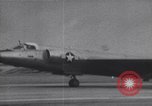
The Cuban Missile Crisis. The Limited Nuclear Test Ban Treaty.
October, 1962, U.S. Air Force U-2 reconnaissance aircraft, tail number 56-6707, of the Strategic Air Command (SAC) 4080th Strategic Reconnaissance Wing, lands at Laughlin Air Force Base, Texas. View of Photographic evidence, brought back by the U-2, showing Soviet missiles being set up in Cuba. President John F. kennedy broadcasts to the nation about the crisis on October 22, 1962, announcing measures being taken by the USA to address the situation. A B-58 Hustler bomber landing. Airmen removing camera from nose of a reconnaissance aircraft. Air Force Sergeant, photo interpreter, reading wet film in a base laboratory. U.S. Naval officers and sailors in Command Center viewing large wall map of the world. U.S. Air Force SAC B-52 bombers taking off. View of United Nations Headquarters building in New York City. On October 25, 1962, U.S. Ambassador to the UN, Adlai Stevenson, confronts Soviet Ambassador Valerian Alexandrovich Zorin about missiles in Cuba.He looks at Zorin, and says,"Don't wait for the translation, yes, or no." Zorin smiles as the room fills with laughter. He then responds. View of a Soviet ship bound for Cuba being monitored by a U.S. aircraft overhead. Pilot in cockpit of the aircraft. View from U.S. aircraft flying low past a Soviet ship. Crew in cockpit of the aircraft. Soviet ships turning away. Helicopter flying over sandy beach area of Hyannis Port, Massachusetts. The helicopter parked and Undersecretary of State, Averell Harriman, steps from the helicopter and is later seen with President Kennedy, and Secretary of State, Dean Rusk, at the President's Weekend White House. Harriman reports on the successful negotiation of a limited nuclear test ban treaty. Glimpse of Moscow. U.S. Secretary of State, Dean Rusk, Soviet Foreign Minister,Andrei Gromyko, and British Foreign secretary, Alexander Douglas-Home, are seen signing the document for their respective nations, August 5, 1963.
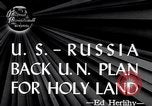
Jewish refugees from Europe reach Palestine
A newsreel titled 'US-Russia back UN plan for Holy Land' shows European Jewish refugees on board a former American vessel as they reach Haifa Palestine after traveling from a Black Sea port. Writing on ship says "Haganah Ship - Jewish State". Passengers hold up a dead infant for those on the docks to see, a victim of the overcrowded ship conditions. British forces patrol the docks before passenger disembark. Fatigued refugees, including families with small children, disembark from the ship as the injured and sick are carried away on stretchers. Passengers are sprayed with delousing agent powder to control spread of disease. Other passengers seen embarking a ship from dock for transport to Cypress detention camps, rather than facing deportation to Europe. Scene change to United Nations meeting at Lake Success New York. United States delegate, Herschel Johnson, addresses a meeting of General Assembly's Special Committee on Palestine, expressing support for proposed partition of Palestine.
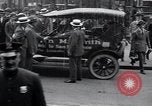
A motorcade comprising of Ford cars passes by a town in United States.
A Ford car with 'Ten millionth Ford,New York to San Francisco,via Lincoln highway' written on it. A motorcade comprising of Ford cars passes by a town in United States. Motorcade being escorted by policemen.
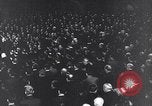
Isolationist versus interventionist sentiments of people in the United States regarding America entering World War 2
Americans express their views about United States entering into World War II after the Pearl Harbor attack. Anti-war isolationist and interventionist views are presented. Senator Gerald P. Nye advocates in favor of an arms embargo. Urging against American involvement in war, Senator Burton K. Wheeler cautions that war mongers and interventioners or intervention advocates control most of the avenues of propaganda. Wendell Willkie speaks advocating unity of purpose in America and importance of assisting the threatened democracies of Europe with war materiel and supplies. Next, Senator Joshua B. Lee of Oklahoma strongly urges support for lend-lease and "setting in motion an industrial blitzkrieg (of war materiel) that will make it possible for England to blast Hitlarism from the face of the earth." View of Congress meeting in the U.S. Capitol chamber. Anti-war college aged students protests against involvement in war and picket at the White House in Washington D.C.,United States. Adjacent to them are other protestors picketing against the peace advocates, with signs like "Americans are against subversive organizations picketing the White House" and "We Americans protest Communists picketing the White House. A women's organization advocating peace or protectionism or isolationism is seen wearing all black. They pull down black veils over their faces in a show of unity against war and the possible loss of American boys to war. An outdoor rally of a fascist organization meeting in America. Also scenes from a German American Bund meeting in 1939 at Madison Square Garden in New York City. Speaker at the meeting is Fritz Julius Kuhn who watches as a protestor leaps on the stage and is subdued by guards. Scenes shown from various other protests in the United States during the same era, including labor strikes and lockouts, and a group holding a rally in favor of equal rights or civil rights, with a woman holding a sign "Did Lincoln Free the Slaves?"
President Chaim Weizmann of Israel meets President Harry S. Truman in Washington D.C.,United States
President Chaim Weizmann of Israel meets President Harry S. Truman in Washington D.C.,United States. He presents a 'Torah' or a sacred scroll to Truman. While speaking to the press he hopes of lifting arms embargo and then leaves for Israel in a ship from New York.
CRITICALPAST.COM: About Us | Contact Us | FAQs - How to Order | License Agreement | My Account | My Lightboxes | Shopping Cart | Advanced Search | Featured Collections | Website Terms & Conditions | Privacy Policy ©2026 CriticalPast LLC.
License Agreement |
Terms & Conditions |
Privacy Policy
©2026 CriticalPast LLC.