


 Francais
 Deutsch
 Italiano
Refine Your Search
Coney Island New York 1898 stock footage and images
- Showing 5737 to 5742 of 11259 results more
more Hide
Hide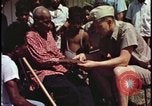
United States Army doctor examines Cold War atom bomb fallout victims near Bikini Atoll
United States Army doctor examine radiation sickness patients for fallout and radiation effects, including hair loss, likely after the disastrous atomic bomb BRAVO test at Bikini Atoll March 1, 1954 during the Cold War. U.S. Army doctor examines the eyes and teeth of an elderly Micronesian man and a little girl, as locals watch the procedure in Marshall Islands, near Bikini atoll. Army doctor examines scalp of a little boy and shows hair that has fallen out during the examination. Army doctor examines the scalp and skin of a Micronesian young woman. Micronesian young woman’s inner elbow show discoloration from radiation due to fallout. Army doctor examines the neck of a Micronesian woman. Likely residents of Rongelap Island or Utrik Atoll, which was engulfed in nuclear fallout after the BRAVO test.
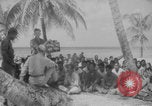
Commodore Ben Wyatt asks Bikini Atoll natives to voluntary relocate before United States testing of atomic bombs
United States Commodore Ben Wyatt, the military governor of the Marshall Islands, sits under a tilted coconut tree as he addresses the natives of Bikini Atoll. James, Commodore Wyatt’s interpreter, speaks to the locals about U.S. planning for nuclear weapon testing in Operation Crossroads. “Alright now James tell them that the United States government now wants to turn this great destructive force into something good for mankind” Commodore Wyatt asks his interpreter. King Juda, the leader of the native tribe, stands up and talks to his people. The interpreter speaks to Wyatt. King Juda gives his answer that his tribe will gladly move to Rongerik Island, as advised by the United States Navy. United States Navy personnel using clapboard before shooting scenes. Children sit near a United States Navy personnel and James the interpreter. A boy sits on top of an oil barrel. King Juda stands and talks to the tribe. The interpreter speaks to Commodore Wyatt. Commodore Wyatt stands and said “Tell him that’s fine, everything being at God’s hands it must be good”. King Juda nods in agreement. Interpreter speaks to the locals. Commodore Wyatt tells his interpreter that they will proceed with the plans for the relocation.
United States Army engineers repair destroyed airfield after the Battle of Saipan (WW2)
United States Army troops landing on beaches in the Pacific during World War II. An LCM (Landing Craft Mechanized) carrying troops approach an island. A tracked vehicle carrying U.S. soldiers and supplies wade towards the beach of Saipan. Injured casualties lie on stretchers on the floor. An injured soldier is being carried to an aircraft for evacuation to Kwajalein, Marshall Islands. Recovered soldiers board an aircraft bound for Saipan. A Curtiss C-46 Commando transport plane takes off from Kwajalein airfield. Saipan airfield and surrounding areas show extensive damage after Japanese surrender. Engineers repair a hangar and airstrip on Saipan. Abandoned and damaged Mitsubishi A6M Zero fighters in Saipan. A pile of destroyed Japanese aircraft in airfield. Damaged engine of a Mitsubishi Zero. Machines and conveyers mixing and transporting cement for airfield repair. A bulldozer clearing debris. A soldier hammering. Marston Mats laid down on newly repaired Saipan airfield. A Boeing B-29 Superfortress aircraft lands in Saipan.
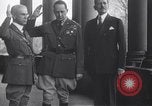
General Douglas MacArthur in 1930-1945; training of the Philippine Army; leading Allied troops against Japanese forces (WW2)
General Douglas MacArthur is appointed Chief of Staff, with rank of full General, in 1930. United States troops marching with the American flag. General MacArthur with two French military officers, during a tour of Europe. He is decorated by French Officials. MacArthur visits Germany and inspects German troops. U.S. President Roosevelt reappoints MacArthur as Chief of the Staff. MacArthur speaking to an audience in Washington DC. Scenes of MacArthur's headquarters in the Philippines. Filipinos walking outside MacArthur’s office. MacArthur at his office in the Philippines with Eisenhower at his side. MacArthur talks on the telephone. Flags of the United States and the Philippines. Filipino troops marching at Fort Santiago inside the walled city of Intramuros in Manila. MacArthur supervises the creation of a Philippine Army before World War 2. Philippine Army cadets perform outdoor calisthenics and attend a meeting. Philippine Army cadets train in knife fighting together with U.S. soldiers. View of Japanese attack of U.S. Navy ships and airfields at Pearl Harbor in December 1941. Japanese bombardment of the Philippines in December 1941 and into early 1942 as Japanese occupy Philippines during World War II. View of Corregidor Island. U.S. Army and Filipino soldiers on Corregidor load and fire artillery at the Japanese before the fall of Corregidor. U.S. soldiers in the Bataan peninsula. Face of MacArthur superimposed over a montage of American factory workers manufacturing ammunition and military vehicles. Start of the Bataan Death March. PT boat carrying MacArthur leaves Corregidor. War equipment prepared in factories. A battleship underway to Australia. MacArthur in Australia. U.S. convoy moves towards Japanese held islands in the Pacific. Allied soldiers land on the islands. A soldier lands on a beach and raises the American Flag. MacArthur points to the Philippines on a map and discuss war strategy. In accordance with the plan key positions in the Pacific are attacked. MacArthur looks on as United States soldiers land on the islands. MacArthur while smoking a pipe inspects the landing of Allied soldiers on islands behind heavy bombardment. Amphibious tractors land on the beach of Palo, Leyte. Allied paratroops make a landing. United States troops sail on rubber boats towards the beach of Palo, Leyte. Paratroopers on parachutes landing in Leyte. MacArthur confers with Allied Commanders. Allied troops walk past a destroyed Bahay Kubo nipa hut. Japanese soldiers are taken as prisoners in the Philippines.

Queen Elizabeth visits New Zealand in Royal Yacht Britania accompanied by Price Philip .
View of Royal Yacht Britania in water. Queen Elizabeth arrives at bay of islands in Britania accompanied by Price Philip. Queen is greeted and welcomed by the huge crowd and she attends Waitangi celebrations where dance is performed by tribal people. Then Queen Elizabeth reaches Auckland and visits beaches. View of sailboats at beach and in water. Queen Elizabeth leaving the beach.
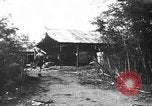
U.S. military personnel occupying Aslito Airfield, Saipan, captured from the Japanese in World War II.
U.S. personnel during the Pacific Campaign on the Island of Saipan, Mariana Islands in World War 2. Interiors of damaged steel frame hangar building showing the men as they set up beds with mosquito netting over them inside the building for temporary shelter. Men taking showers in improvised wash rooms. Men cleaning up their living area. U.S. troops looking at dead Japanese sniper.
CRITICALPAST.COM: About Us | Contact Us | FAQs - How to Order | License Agreement | My Account | My Lightboxes | Shopping Cart | Advanced Search | Featured Collections | Website Terms & Conditions | Privacy Policy ©2026 CriticalPast LLC.
License Agreement |
Terms & Conditions |
Privacy Policy
©2026 CriticalPast LLC.