


 Francais
 Deutsch
 Italiano

Refine Your Search
Croydon London England United Kingdom 1932 stock footage and images
- Showing 7819 to 7824 of 16124 results more
 Hide
Color Sound

Walter Mondale travels during the United States Presidential elections campaign of 1984 in the United States.
The United States Presidential elections campaign in the United States. Democratic candidate Walter Mondale gives a speech during the campaign at the 1984 Democratic Convention in San Francisco, California, in July 1984. Mondale supporters holding banners. Picture of young boy Walter Mondale with his family. View of men in a bread line during the Great Depression. President Franklin D Roosevelt seated in a car talking to farmers or possibly CCC workers. Still photos of Walter Mondale elected captain of the football team in his school days. Still images of Mondale with Hubert Humphrey. Mondale with his wife and three children. He spends time with his family playing and dining outdoors. He chops wood and cooks food on a barbecue grill beside a lake. Footage of Mondale speaking while Chairman of the Senate Subcommittee on Children and Youth. Mondale speaking with a group of children. A girl typing on a computer keyboard. View of an early computer screen or CRT screen as data runs along the screen. Closeups of wide eyed boy and girl children looking up and watching something. Pollution at a Superfund site. A fence and sign warning of a contaminated area. Broken barrels and chemical toxic waste sludge in a superfund area. Mondale and Jimmy Carter together on stage at the Democratic Convention of 1976, holding up their hands as as he became Carter's running mate for Vice President. Supporters at the convention cheering in 1976. Mondale meeting with world officials including leaders of China while signing an agreement. Mondale meeting with other world leaders in Vienna, Austria to discuss human rights issues with the government of South Africa. Mondale at Camp Davis assisting President Carter in negotiating the peace deal between Israel and Egypt. He is shown with Jimmy Carter, and with Anwar Sadat and Menachem Begin. Walter Mondale traveling all over the United States during run up to 1984 election. Mondale and his running mate, Geraldine Ferraro on stage as his supporters cheer the two running for President and Vice President in 1984. Monale telling a crowd, "I want to be President of the United States."
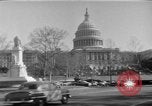
Decline in industry and jobs, and Stock Market crash and start of Great Depression in the United States.
The film 'The Unfinished Revolution' opens by showing people recovering after the Great Depression in the United States. Most scenes circa 1929 - 1931 (but film produced in 1960s). Landmarks in Washington DC: the United States Capitol building with 1940s and 1950s cars and taxi cabs on roads in foreground. View of exterior of Supreme Court building. Closer view of U.S. Capitol and then of the White House in Washington DC. Also the Washington Monument. Scene changes to the American West and a herd of sheep and of cattle grazes on pastures or ranch. Cowboys on horseback herd cattle on a giant field with snow covered mountains in the background. Farmers work in a field picking cotton. Scene changes to New York City with view of Manhattan skyline including Empire State Building, with new skyscrapers in construction in the foreground. View of market area and tenements; push cart vendors lined up on a street in a lower east side New York City neighborhood, and a Ford sedan on the street. Busy New York City streets filled with cars and pedestrians at end of 1920s. Children standing on fire escape in poor downtown area look down over suspended laundry lines between tenement buildings. An officer looks out from small window of a raised booth traffic light as the lights on the booth change color. A Ford automobile assembly line. Engineers work in a factory with minimum wages. A farmer plows a field of potatoes using four horses. A wheat thresher working a field. Trains at a crossing, on a bridge, and coal cars lined up at a coal yard. Busy New York Stock Exchange (NYSE) floor filled with people around time of 1929 stock market crash and start of Great Depression. Frenzied stock market scenes. Board outside a factory reads 'No Men Wanted'. Scenes of silent railroad yards and dormant factories. A man plays an accordian and collects coin donations. Jobless people wait in relief lines, soup kitchen lines, unemployment lines or queues and bread lines. Unemployed and homeless men asleep in public areas.
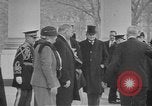
Franklin D. Roosevelt helps Americans to recover from the Great Depression in the United States.
Great Depression scenes and recovery efforts in the United States. U.S. President Franklin D. Roosevelt inaugurated as President on March 4, 1933. Scenes of Roosevelt and outgoing President Herbert Hoover leaving the White House together in a top-down convertible limousine before the ceremony. Roosevelt at the U.S. Capitol building during the inauguration ceremony as President of the United States. Roosevelt delivering the famous line in his speech, "The only thing we have to fear is fear itself." Jobless American men wait in unemployment relief lines to get work or jobs. Men in a bread line. Unemployed man with a large sign "Will take any job." Scenes of families migrating in the United States, with vehicles filled with belongings. Families and children suffering poverty and in makeshift camps and tenement dwellings during migration (usually migration west). Troops and bands march with American flags on Constitution Avenue during the Roosevelt Inauguration parade. Exterior view of U.S. Capitol Building framed by tree limbs. Men in an office empty heavy mailbags filled with letters (presumably to congress and senate). Government officials at a long table working on emergency banking laws in March of 1933. Scene of people flooding into a bank and making a run on the bank to retrieve deposits. President Roosevelt signs Emergency Banking Act in his office on March 9, 1933. View of White House lawn and White House. The CCC (Civilian Conservation Corps) is created to put unemployed young men to work on various conservation projects. CCC boys and men working on planting trees with pick axes and mattocks. Men and women in line to sign up for Emergency Work Relief programs. Officials write down the information for each worker as they are put to work in a variety of projects. Women and men, including white and African American men are seen getting assigned to work projects. A sign "USA Work Program WPA" advertising a suspension bridge work project of the Works Progress Administration in Los Angeles, California. People build roads, bridges and post offices. Cable fed out of a large spool as construction of a suspension bridge is shown. People work in factories. Four steam railroad locomotives preparing to run on parallel tracks. Close up views of railroad train locomotive wheels as they start moving and the train on tracks near factories. Various factory scenes including smokestacks, groups of workers entering factory for work shift and two different closeup views of a steam whistle blowing to mark the start or end of a work shift. A coal mining operation. Automated tools dig coal in shaft. Two coal miners take a break and eat. Crane hoists material at mine. A steel factory and hot molten steel pouring from a ladle.

Involvement of the Tennessee Valley Authority during the Great Depression in the United States.
Recovery efforts from the Great Depression in the United States. (Footage largely from mid 1930's, produced in 1967). A farmer plows his field using oxen. Men and women work in fields. Price tags on food products. Officials of the Agricultural Adjustment Administration in an office discuss reforms to solve farming over production and low demand. Statue of Abraham Lincoln in the Lincoln Memorial. The White House building. Scenes of dilapidated farms and fields overcome by drought and dust bowl conditions. Farmers sit outside their houses fatigued and exhausted. Faces of tired, fatigued farmers. A town meeting of farmers in a small town. Franklin Roosevelt with cabinet and other officals in early days of his administration. Floods in Tennessee Valley washing away farmland. Farmland scarred by erosion lines and trenches. The Tennessee Valley Authority builds dams and power plants in the Tennessee Valley and helps farmers reclaim and improve land. Farmers in a rural town listen to a Tennessee Valley Authority official present plans of development. Establishment of Rural Electrification Administration. Electric power lines set up in the rural areas of the United States. Franklin Roosevelt addressing the U.S. Congress in the Capitol. Scenes from voting centers and of a voting booth in an American town. Wendell Willkie addressing a crowd. U.S. President Franklin D. Roosevelt converses with an African American official (possibly in connection with signing of Executive Order 8802, the Fair Employment Act). Eleanor Roosevelt behind him, and Secretary of State Edward Stettinius, Jr. to her left. Eleanor Roosevelt speaking to group of African American children.
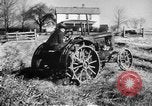
American economy strengthens after the Great Depression; also growth and prosperity and civil rights reform in 1950s and 1960s.
Chronicles recovery in America after the Great Depression in the United States, from roughly 1933-1967, but with emphasis on the earlier years of that period. Pre-war work programs such as the Works Progress Administration (WPA) help with employment. Farmers work in their fields with tractors. Officials in an office discuss and prepare graphs. Workers drill and work at a construction site. The 1933 Homeowners Loan Corporation sparks new home building. View of new homes being built and new suburban neighborhoods. Brief scene of bombing at Pearl Harbor. American warships launching from shipyards during World War II. Women war production workers work in factories in the United States. Post-war Marshall Plan aid being sent to European countries. Crates of supplies marked for European countries. Industrial output booming again, and scenes of industrial factories and plants with smoke pouring from chimneys and pollution from stacks. Large pool typists room filled with female typists and clerical workers busy at work in government agency. Close up views of hands of women operating typewriters. Reforms for housing projects, African American Civil Rights and measures taken to stabilize unemployment, with scenes of successive Presidents signing reform bills, including Truman, Eisenhower, and Kennedy. A ship departs from a harbor with goods. A convoy of vehicles on a road. Various Federal buildings in Washington DC. The White House building. An aerial view of an American town and of a factory with pollution smoke emitting from stacks. Letters being delivered to elderly women. People enter a medical clinic and wait in the clinic waiting room. Racially integrated classroom of older high school students or university students, with white and African American students, and both young men and women. A young white woman worker and a young African American working in a machine shop or possibly an academic shop class. A white and a African American man share a sandwich and views of white and black people together in integrated classrooms and factories as segregation begins to wane. Elementary school children in a classroom drawing pictures.

Improved United States economy after Great Depression; scenes of American workers and lifestyle in 1930s, compared to 1950s and 1960's
Civilians and the government officials work towards strengthening economy after Great Depression. Scenes from the Great Depression in the 1930s: Idle factories and signs "No men wanted." Homeless and unemployed men sleep on benches and holes are shown in closeup view of worn shoes on a man. Unemployed workers in a soup line receiving food aid from a soup kitchen. Wooden shanties and shacks for housing of people during the Great Depression. Poor African American woman seated outside a simple tent for her house. A young girl holds her baby sibling while seated on a rusty bunk bed as the infant child cries. Close-up view of tired looking children with sad, blank expressions, during the depression. Sad looking woman seated on a bed rocks a baby. Scene change to 30 years later in mid 1960's. Aerial view of modern highway interchange with traffic on roads. Surveyors at work. Scientists work in laboratory. Doctors examine patients. Arm of person wearing a "Polio Vaccine Volunteer" armband. Children in line to receive polio vaccine. A girl gets a polio shot. Ferris wheel at a fair goes around. American citizens at a picnic enjoy foods assembled on tables. Communist troops march on street in East Germany parade and East German people wave small flags in review stand. Traffic on the main roads of a small American town, with a police officer directing traffic. Shops seen along roadside. Views of American farmers and scientists at work. Farmer on tractor and on harvester machines. Women work in a factory assembling machines. 1950s and 1960's cars in parking lot and woman shopper with cart. Women work in clerical jobs in an office. Women in typing pool working in a large office room. Nurses in classroom. Early computer technology; large electronic devices and many wires; lights and mechanical switches on electronic computing equipment. Reel to reel tape recorder or data recorder. Factory shipment floor with goods on belt. President John F Kennedy signs Manpower Development and Training Act in 1962. Golden Gate bridge from shore and from moving vehicle. Bridge construction workers handle tossed hot rivet. Boy watches dam construction workers. Boys running outside school. Cars in main street area of a small town in America. Boy and farmer in cornfield.
CRITICALPAST.COM: About Us | Contact Us | FAQs - How to Order | License Agreement | My Account | My Lightboxes | Shopping Cart | Advanced Search | Featured Collections | Website Terms & Conditions | Privacy Policy ©2026 CriticalPast LLC.
License Agreement |
Terms & Conditions |
Privacy Policy
©2026 CriticalPast LLC.