


 Francais
 Deutsch
 Italiano
Refine Your Search
Croydon London England United Kingdom 1932 stock footage and images
- Showing 2005 to 2010 of 26292 results more
more Hide
Hide
Preflight inspection of U.S. B-17 bombers in Algiers, Algeria before returning to England during World War II.
U.S. Army Air Forces B-17 Flying Fortresses in Algiers, Algeria during 'Shuttle Mission' of World War II. U.S. EMs (Enlisted Men) check ammunition. An EM inspects weapon and wipes gun parts. EMs checking wheels of a B-17F aircraft. A pilot with earphones in the cockpit. The airplane warms up. A formation of B-17Fs returning to England.
Lester Keith Piggott rides a colt "Never Say Die" and wins Epsom Derby in Epsom Downs, England.
An American colt wins British Derby in Epsom Downs. Queen Elizabeth comes to Epsom Downs to watch the British Derby. She steps from her car and is greeted by officials. A large crowd of spectators to watch the horse race. Lester Keith Piggott, an English Jockey, rides on American colt named "Never Say Die." Queen watches the race through binoculars. The race starts. Lester Keith Piggott is aged 18 years. He wins the Epsom Derby.
U.S. fliers inside building at USAAF Station Polebrook, England, during World War II.
Two U.S. Army Air Force fliers of the 351st Heavy Bomb Group stand in front of a large wall map during World War 2. A U.S. Army Air Force Warrant Officer, Mr. Steele, holds a packet of chewing tobacco and puts some in his mouth.. USAAF fliers seated on chairs watching the filming, are amused. Suddenly, one of them gets up and looks out the window. They all get up and leave the room quickly.
A film recounts two years of German aerial attacks on Dover, in Kent England, during World War II
British troops evacuating from Dunkirk and arriving in Dover. British home guard civlians march and train. British troops in defensive positions on the cliffs of Dover. Winston Churchill sitting outdoors with Lord Louis Mountbatten . British civilians preparing air raid shelters. British farmers working their fields in August, 1940. They look up at the sound of approaching German bombers. RAF fighter planes intercept German bombers. One seen crashed on the ground. A fallen German aviator. Views of British countryside. Cemetery with crosses marking graves of downed German airmen. Closeup of graves of fliers, Leutnant R.Zehre and Unteroffizier Scheidt, German Air Force, downed on September 27, 1940. Blossoms on fruit trees. Artillery gun firing. Squad of British soldiers runs for cover as explosions occur around them. German Dornier Do 217 bomber in flames overhead. British paratroopers in training drop. Parachutes open. British soldiers charge out of trench as explosion occurs right in front of them in a live fire exercise. British troops firing automatic weapons from cover in brush. British sailors manning landing craft (invasion barges) carrying troops during beach landing exercises. The troops charge ashore as the boats hit the beach. British Able Seaman Fletcher in a landing craft, says in former raids on enemy territory, he had to put the "pungos"(sp?) (soldiers) ashore in a rowing boat. Navy Lieutenant John Lewis mentions several French coastal locations where the landing craft were used. He speaks of taking soldiers on raids and waiting to take them back home again. More scenes of British troops in live fire exercises.
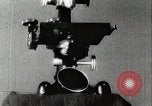
Lessons from microscopic science lead to advances in antiseptic surgery, pasteurization, and vaccinations.
1930s narrated feature about scientific advances made possible by the microscope. View of a microscope. Chemist or scientist looks through a microscope in laboratory. Microscopic view of the living organisms. Milk pasteurized by heated coils in large drums. Milk graded with pasteurization label. Boy drinks a glass of milk. Narrator describes milk as "the most valuable of all our foods for health." Sterilization techniques introduced in surgical operations: Doctor Joseph Lister of London (dramatized by an actor) shown with a spray can administering a "poison spray" to kill germs and disinfect a surgical or operating theatre. Surgeon performs antiseptic surgery on patient. Surgeon sterilizes the instruments to be used in an operation by pouring carbolic acid solution over them. View of operating instruments being removed from a heated steam chamber used to kill germs on the instruments. Doctors performing a surgery. Dramatized scenes of a doctor arriving at a home in Berlin to treat a girl suffering from Diphtheria. View of sick girl in a bed, through an outside window with snow falling, and the girl's mother and a nurse assisting her. The doctor gives the girl a diphtheria inoculation. Girl is shown recovered and walks outside of her home and gives a hug to her mother. Public vaccination clinics: Young children, including a young boy and an infant, receiving immunizations in a doctors office.
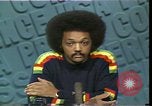
Patrick Borgan questions Jesse Jackson on Civil Rights protests of the 1960s versus 1970s approaches, during a press interview.
Jesse Jackson is interviewed in a press conference. Jesse answers Patrick Borgan of London Times on protesting peacefully with reference to 1968 and its riots and unrest vis-à-vis Civil Rights and racial equality for African Americans. Judith Randal of New York Daily News and Henry McGee of Newsweek Magazine are also present. Bill McCrory of Voice of America is the moderator. Jackson discusses the purposes of the protests of the 1960s, and explains that the vision toward the goal of equality takes time and has curves, rather than being a straight line. He implies that some people because satisfied with the gains from the 1960s, but that there is more to do, and that moral depravity and a lack of good ethics is the current obstacle in the 1970s holding back progress.
CRITICALPAST.COM: About Us | Contact Us | FAQs - How to Order | License Agreement | My Account | My Lightboxes | Shopping Cart | Advanced Search | Featured Collections | Website Terms & Conditions | Privacy Policy ©2026 CriticalPast LLC.
License Agreement |
Terms & Conditions |
Privacy Policy
©2026 CriticalPast LLC.