


 Francais
 Deutsch
 Italiano

Refine Your Search
Croydon London England United Kingdom 1932 stock footage and images
- Showing 2053 to 2058 of 26292 results more
 Hide

Officers and sailors of the British Expeditionary Force aboard a ship bound for France during Battle of France of World War II.
The BEF (British Expeditionary Force) in England during Battle of France of World War II. British officers standing at a harbor in England. Sailors and officers board a ship. The sailors salute the officer.

Queen Elizabeth II attends the consecration of Guildford Cathedral, signs the Sentence of Consecration as the principal witness
Queen Elizabeth II and the Royal Family attend the consecration of the Guildford Cathedral, the first Anglican Cathedral to be built in 500 years (Stag Hill, Guildford, England GU2 7UP). The procession of Guildford Cathedral clergy to the altar. Queen Elizabeth II, Prince Philip, the Duke of Edinburgh, Princess Margaret and Anthony Armstrong-Jones, the 1st Earl of Snowdon, participate in the procession. The Bishop of Guildford, the Right Reverend George Reindorp, enters the cathedral through the Great West Door. Congregation participants hold prayer books. Queen Elizabeth II and Prince Philip are holding prayer books. Right Reverend George Reindorp signs the Sentence of Consecration. Queen Elizabeth II signs the Sentence of Consecration as the principal witness and as the supreme governor of the Church of England . Trumpeters of the Royal Military School of Music. The Anglican clergy, Queen Elizabeth II and the Royal Family leaving the newly consecrated Cathedral after the service.
United Nations forces in Britain ready for action and the Allied Generals see new equipment in action.
Chiefs of Allied Invasion Command at the headquarters in England. American General Dwight D Eisenhower meets the soldiers. Military supplies put into action. Trucks, Jeeps and mechanized equipment are assembled. General Montgomery, Deputy Commander General Arthur Tedder and General Eisenhower see new equipment in action. Artillery fired. Aircraft in flight. Paratroopers in sky. General Montgomery, Master of air tactics, General Arthur Tedder and Liberator of North Africa, General Eisenhower. (World War II period).
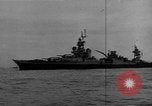
Allied movements including dispatch of Airborne units, the day before D-Day invasion of Normandy in World War II
Final preparations for the D-day invasion of Normandy, France, in World War 2. View of the USS Augusta (CA-31). Allied senior commanders on the Augusta, making decision to delay invasion 24 hours for weather. U.S. Army Airborne troops boarding buses for airfields in England. Formations of B-26 bombers overhead. B-17 bombing lines of communication. Invasion convoy ships underway. Gliders and C-47 tow planes in D-day stripes. C-47 aircrews and glider pilots being briefed. Brigadier General James Gavin, Commander of the 82nd Airborne Division, briefing his paratroopers. Chaplain conducting religious services. General Dwight D Eisenhower visiting paratroopers of the 101st Airborne Division. U.S. paratroopers boarding their C-47 transport planes. Troopers fastening parachute packs (parapacks) of equipment onto a C-47 for airdrop. Paratroopers loading their equipment onto a Waco CG-4A glider. Paratroopers of the 101st Airborne putting on their chutes and equipment. Jumpmaster checking each soldier's chute. The troopers helping one another as they board the aircraft. C-47 tow planes taking off with gliders behind. All planes in D-day white stripes.
Crew of the U.S. B-17 "Memphis Belle" begin their 25th (final) mission from Bassingbourn airfield, England, during World War 2
Scenes regarding the U.S. 8th Air Force B-17 named Memphis Belle, the first American bomber and crew to complete twenty-five missions over enemy territory in Europe during World War Two. Views of the peaceful English countryside around the British Royal Air Force Bassingbourn airfield, home base of the U.S. 8th Air Force 91st Heavy Bombardment Group. B-17s parked all around on the airfield. Views of Bassingbourn Church, graveyard, horse-drawn wagon, fields of grain, and farm buildings. On the airfield, ground crews clean canopies, refuel aircraft, and perform maintenance on the B-17s. Bombs seen stacked in munitions dump. Airmen ride on bombs aboard trolleys pulled by tugs. One plays the harmonica. Arriving at B-17s, they begin inserting nose fuzes in bombs. Pilots, Navigators, and bombardiers attend morning mission briefing and learn that their target is Wilhelmshaven. Chaplain prays over several crew members. Bombs are loaded on the B-17s. Crew of the 324th Bomb Squadron B-17, "Memphis Belle," arrives at the aircraft aboard a jeep. Pilot, Captain Robert K. Morgan gives last minute briefing and the crew boards the aircraft for their 25th bombing mission. Their airplane has 24 bombs painted on its side (one for each mission). They start their engines.
German occupation of Paris in June 1940 and the city's liberation by Allies in 1944. Also Includes some D-Day scenes.
The occupation and liberation of Paris during World War II. Germany occupies Paris in June 1940. A Nazi flag on the Eiffel Tower. Adolf Hitler with Nazi officers. Germans unfurl the Nazi flag on the Alsace-Lorraine Memorial. Hitler and his officers driven through the Place de la Concorde and past the Arc de Triomphe. Parisians close their shops. A man removes a Vichy poster and scribbles on a wall. Parisians listen to U.S. General Dwight Eisenhower's broadcast from London on June 6, 1944: The Allied task forces advance towards France on D-Day. Naval guns shell Normandy. Allied troops land on the beachhead and advance inland. Some fall to German gunfire. Headquarters of the Paris Underground. Members of the French Forces of the Interior (FFI) discuss, plan, document, prepare grenades, check guns, and wear badges of freedom with the FFI symbol. The French underground barricade streets. Men, women and children build barricades using various material. They inspect their guns and take their positions behind sand bag barricades on sidewalks. FFI soldiers honored. Burning vehicles on the roads. Street fighting between the FFI and the Germans. Corpses on the street. FFI men holding flags. Medics carry a wounded on stretcher. German tanks roam the streets. Wrecked vehicles and war equipment. FFI soldiers fire at German tanks. German snipers fire while French forces equipped by the U.S. are liberating the city. Explosions on the street. Civilians take cover. FFI fighters inspect a German soldier's corpse. They take German prisoners. French troops and military vehicles close in on Paris. Civilians watch and cheer as they enter the city. Barriers built by the FFI are pulled aside to let the troops pass. French forces in American tanks pass the Eiffel Tower. Explosions and machine gun fire during the street fighting. French soldiers fire at Germans hiding in buildings. Several German prisoners. German officers and soldiers surrender. Parisians watch as they are herded to prisons. Prisoners clean street.
CRITICALPAST.COM: About Us | Contact Us | FAQs - How to Order | License Agreement | My Account | My Lightboxes | Shopping Cart | Advanced Search | Featured Collections | Website Terms & Conditions | Privacy Policy ©2026 CriticalPast LLC.
License Agreement |
Terms & Conditions |
Privacy Policy
©2026 CriticalPast LLC.