


 Francais
 Deutsch
 Italiano
Refine Your Search
D-Day stock footage and images
- Showing 2443 to 2448 of 4856 results more
more Hide
Hide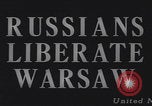
Liberation of Warsaw by the Soviet Red Army (WW2)
Warsaw is liberated by Soviet troops during World War II. Soviet artillery fire victory salvo to celebrate the liberation of Warsaw in Moscow at night. Aerial view of Warsaw, Poland after its liberation. Smoke rises from destroyed buildings and structures. Shows Hitler and German troops in Poland in 1939 and the final surrender to Germany. Stalin and Russian generals. German Fuhrer Adolf Hitler and his generals in Warsaw during its 1939 siege. Warsaw sign in Polish stands in front of Hitler and his group. German infantry troops firing in prone position. Buildings engulfed in flames as Warsaw held out for 18 days. Civilian refugees panic on the street. Polish garrison, commanded under General Walerian Czuma, officially capitulated to the Germans. German General der Infanterie Johannes Blaskowitz and Generalmajor Bruno Bieler in a meeting inside a bus for signing of surrender. Polish colonel Aleksander Praglowski seen at window of bus during signing. Polish women watch as captured Polish Army soldiers are led to captivity. Polish prisoners of war (POW) gather on a field. The Red Army fight German Wehrmacht troops in Russia. Red Army tank move across the battlefield. Pillars of smoke rises far from the tanks. Howitzers and Katyusha rocket launcher firing at night. Soviet tanks on fire. Rear view of soldiers advancing in smoky battlefield. Scenes of devastation and rubble of bombed buildings in Warsaw after its liberation by Soviet forces. Polish civilians in bombed streets, some holding newspapers. Soviet Marshal Georgy Zhukov uses a compass on a map. Marshal Konstantin Rokossovsky of the 2nd Belorussian Front talks to military officers. Marshal Ivan Konev of the 1st Ukrainian Front smokes a long cigarette. View of the Kremlin. Josef Stalin smiles in the Kremlin.
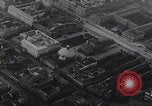
Aerial view of Berlin, Danzig (Gdansk) and Königsberg (Kaliningrad) from Junkers F 13 passenger aircraft in flight
Aerial view of Berlin as seen from a flying aircraft. Major landmarks such as Humbolt University, Unter den Linden Avenue, Brandenburger Tor, the Reichstag and the Victory Column (Siegessäule) are seen below. Aerial view of Danzig (present-day Gdańsk, Poland) as aircraft approach for landing. St. Mary’s Church is seen. Ships in the port of Gdańsk. Pilot and airport staff help men and women disembark from the Junkers F 13 aircraft after landing in Königsberg (Kaliningrad, Russia).
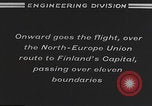
Aerial view of Riga from descending plane, a woman drops letters on air mailbox
Early civilian air travel with Junkers passenger aircraft in Northern Europe. A Junkers F 13 plane in flight. Aerial view of Riga as seen from an aircraft approaching for landing. Bridges, palaces, and lakes are also seen. Horse drawn carriage cross a bridge in Riga (present day capital of Latvia). Boats docked along Riga port. A Latvian mailbox for airmail reads “Gaisa pasts. Correspondence.”. A woman drops letters on the mailbox outside a building.
Junkers F 13 seaplane landing and skimming across water, tourist attractions of Reval (Tallinn, Estonia)
Early civilian air travel with Junkers passenger aircraft in Northern Europe. A Junkers plane in flight. View of Rival or Reval (present-day Tallinn, Estonia). A Junkers F 13 seaplane landing and skimming across the water. The Brick Gothic Tallinn Town Hall (Tallinna raekoda 10146 Tallinn, Estonia) and the market square. View of road through gate in Tallinn’s medieval City Wall.
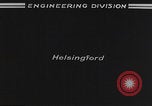
Vintage views of Port of Helsinki and Market Square with Uspenski Cathedral.
Early civilian air travel in Northern Europe. Aerial view of a strait and island (probably Suomenlinna) near Helsingfors or Helsingford (present-day Helsinki), Finland. Boats docked in Helsingin satama (Port of Helsinki) with Uspenski Cathedral (Kanavakatu 1, 00160 Helsinki, Finland) in background. View of Market Square (Eteläranta, 00170 Helsinki, Finland) with Uspenski Cathedral and Tsarina's Stone in background.
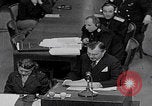
Chief Prosecutor Robert H. Jackson enumerates German laws during the Nuremberg trials
United States Chief Prosecutor Robert H. Jackson continues his speech on the Criminality of Organizations during Day 70 of the Nuremberg Trials. Robert H. Jackson speaks to the tribunal at the Nuremberg Palace of Justice (Fürther Str. 110, 90429 Nürnberg, Germany). Secretary take down notes beside him. Other guests listen to his speech from their seats behind him. Jackson enumerates the various laws from the German Strafgesetzbuch (1871 Penal Code of the German Empire) that prohibits secret associations and associations inimical to the state. Jackson also cites Weimar Republic laws such as the March 22nd 1921 Law against paramilitary groups and July 1922 law against organizations aimed to overthrow the constitution of the German republic.
CRITICALPAST.COM: About Us | Contact Us | FAQs - How to Order | License Agreement | My Account | My Lightboxes | Shopping Cart | Advanced Search | Featured Collections | Website Terms & Conditions | Privacy Policy ©2026 CriticalPast LLC.
License Agreement |
Terms & Conditions |
Privacy Policy
©2026 CriticalPast LLC.