


 Francais
 Deutsch
 Italiano
Refine Your Search
Dayton Ohio USA 1947 stock footage and images
- Showing 679 to 684 of 25558 results more
more Hide
Hide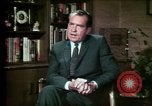
Republican nominee Richard Nixon recounts his past and speaks about his father prior to U.S. Presidential Election of 1968.
Self-portrait of Republican nominee Richard Nixon aired during his 1968 presidential run against Hubert Humphrey and George Wallace in the United States. Richard Nixon recounts his past and speaks about his father Francis A. Nixon. Nixon says that his father was a very determined person who wanted him to accomplish what he could not accomplish in his life. He speaks about achievements of his uncle who is the younger brother of his father. An old photograph showing the Nixon Family in Ohio. He says that his father started working on a farm at the age of nine. Nixon states that he was born in a house his father had built. A picture of Richard Nixon's father standing in front of the house where Richard Nixon was born.
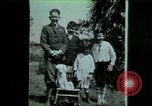
Prior to U.S. Presidential Election of 1968, Richard Nixon recounts his past and reveals details about his Quaker family.
Self-portrait of Republican nominee Richard Nixon aired during his 1968 presidential run against Hubert Humphrey and George Wallace in the United States. An interviewer asks Richard Nixon what sort of a life he lived when he was about 10 years old. He speaks how he used to work on his lemon ranch at that time and later on a service station and says that it was much of work and no play. The interviewer asks how his father and mother met. Nixon responds saying that his father came from Ohio and mother came from Indiana and they met in California. A church. Nixon speaks that his father was a Methodist and his mother a Quaker and they both met in a social church. An old picture of Nixon's father and mother. Nixon speaks more about his Quaker family.
Boy Scouts visit the Pentagon building and meet U.S. Secretary of Defense James Forrestal during Boy Scout Week 1949.
Eagle Scouts from the 12 regions of the Boy Scouts of America visit the Pentagon building in Arlington Virginia during Boy Scout Week 1949 (celebrating the 39th anniversary of the Boy Scouts of America). The group of Boy Scouts on the steps of the Pentagon building. The Boy Scouts look around at the building and surroundings. The scouts walk up the stairs and enter the Pentagon building. U.S. Secretary of Defense James Forrestal seated in his office. The Defense Secretary meets with the scouts and talks to them. He shakes hands with various Boy Scouts. The 12 scouts in the group are: Alan Fritts of Troop 11 in Mankato, Minnesota; Andrew L. Clement, senior patrol leader of Troop 2 in Raleigh, North Carolina; George Barron of Troop 17 in Franklin, Virginia; Daniel Abbott of Senior Outfit 16, in Newtonville, Massachusetts; James Roswurm of Troop 31 in Huron, Ohio; Charles S. Wilson of Troop 3, in Bristol Tennessee; H. Cumings Johnson of Senior Outfit 230 in Traverse City, Michigan; Joseph L. Cox of Troop 98 in Trenton, Missouri; Howard M. Williams of Explorer Post 345 in Houston, Texas; James C. Vincent of Sea Scout Ship 232 in Brookings, Oregon; James E. Gill of Air Scout Squadron 234 in Berkeley, California; L. Drury Cathers of Troop 22 in Gouverneur, New York.
U.S. Army Brigadier General Prichard talking to Boy Scouts in his office at the Pentagon building in Arlington County, Virginia.
Eagle rank Boy Scouts representing the 12 regions of the Boy Scouts of America visit the Pentagon building in Arlington County, Virginia, during Boy Scout Week 1949. The interiors of the office of U.S. Army Brigadier General Vernon E Prichard. Boy Scouts arrive in the office and meet Brigadier General Prichard. A wall map in the background. Brigadier General Prichard speaks to the boys. The Vice Chief of Staff General Joseph Lawton Collins, talking to the boys in his office. The 12 Boy Scout representatives are: Alan Fritts of Troop 11 in Mankato, Minnesota; Andrew L. Clement, senior patrol leader of Troop 2 in Raleigh, North Carolina; George Barron of Troop 17 in Franklin, Virginia; Daniel Abbott of Senior Outfit 16, in Newtonville, Massachusetts; James Roswurm of Troop 31 in Huron, Ohio; Charles S. Wilson of Troop 3, in Bristol Tennessee; H. Cumings Johnson of Senior Outfit 230 in Traverse City, Michigan; Joseph L. Cox of Troop 98 in Trenton, Missouri; Howard M. Williams of Explorer Post 345 in Houston, Texas; James C. Vincent of Sea Scout Ship 232 in Brookings, Oregon; James E. Gill of Air Scout Squadron 234 in Berkeley, California; L. Drury Cathers of Troop 22 in Gouverneur, New York.
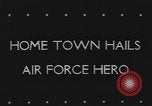
U.S. Air Force officers meeting their family after they return from the war front in the United States (WW2)
U.S. Air Force officers return to the United States in World War II. The officers with their families in Washington DC. Buildings in the background. One of the officers returns to his home in Piqua, Ohio. A sign board reads: 'Welcome to Piqua'. Buildings along the sides of the street. The officer with his family in his home. People gather at his home to greet him. He hugs his sister.

JB-2 robot bomb produced and test launched in the United States during WW2.
Manufacture and testing of a new robot bomb in the United States: A Republic Aviation and Ford Motor Company collaboration known as the JB-2 Loon, modeled after the German V-1 flying bomb. Interior of a war production factory. Worker welding part of bomb frame. Workers wheeling completed bomb fuselages on wheeled platforms in the plant. Closeup of an African American man wheeling a bomb. Henry Ford II and Ray Rausch, of Ford Motor Company, who oversaw the production of the pulsejet engines for the JB-2 bomb. Men working for the construction of the robot bomb. Closeup view of engine being fired on a test stand. Men and women war production workers at the Willys-Overland production plant in Toledo, Ohio are seen working on the interior components of the flying bomb, then closing the completed fuselages, and attaching the wings to the flying bomb. Engineering officers from the Army Air Forces Air Technical Command inspect a completed JB-2 flying bomb. View of a test launch o the bomb from a sandy beach area. The bomb engine fires and the bomb launches out over ocean waters, dropping its auxiliary launching apparatus beneath it, close to shore.
CRITICALPAST.COM: About Us | Contact Us | FAQs - How to Order | License Agreement | My Account | My Lightboxes | Shopping Cart | Advanced Search | Featured Collections | Website Terms & Conditions | Privacy Policy ©2026 CriticalPast LLC.
License Agreement |
Terms & Conditions |
Privacy Policy
©2026 CriticalPast LLC.