


 Francais
 Deutsch
 Italiano
Refine Your Search
Dayton Ohio USA 1947 stock footage and images
- Showing 25471 to 25476 of 25558 results more
more Hide
Hide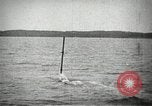
Holland type submarine of the Plunger class undergoing trials at Electric Boat Company
Holland type submarine of the Plunger class undergoing trials at the Electric Boat Company, New Suffolk, Long Island, New York. Submarine running along at periscope depth. Periscope of the submarine. Several times the boat disappears below surface and rises again (porpoising). It makes way on the surface. Civilian testing crewmen in business attire climb out of conning tower and walk on the deck. They start back down into the conning tower. Men on the deck as the submarine runs along the surface. Submarine tied up at the pier, men walking around on deck and using a plank to walk to the pier..

"Scramble horn," at Offut AFB, that sounds when SAC alert aircrews must rush to their aircraft.
Strategic Air Command (SAC) Headquarters at Offutt Air Force Base in Nebraska. Views of the so-called "Scramble Horn." When sounded, SAC aircrews, standing alert, must immediately respond to their aircraft ready to take off on a mission. The horn, atop wooden beams, near power lines, appears approximately 5 feet in diameter and resembles a power line insulator.
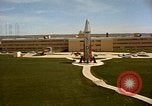
The Atlas missile at the U.S. Air Force Strategic Air Command Headquarters in Nebraska.
Aerial views of the U.S. Air Force Strategic Air Command Headquarters at Offutt Air Force Base in Nebraska. Atlas - the first operational intercontinental ballistic missile, erected in front of the building. USAF written on the missile. Cars parked near the building. Air Force personnel near the missile.

Views of the Biltmore Hotel in the Coral Gables section of Miami, Florida.
Biltmore Hotel (1200 Anastasia Ave, Coral Gables, FL 33134, United States) and tourists during winter vacations in Miami, Florida. Golf course in front of the building. Trees in the foreground. A foursome of golfers plays in front of the hotel.
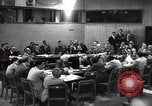
Iran's oil nationalization and takeover of the Anglo-Iranian Oil Company (AIOC) raised at 559th meeting of UN Security Council
59th meeting of UN Security Council at Flushing Meadows, New York. Agenda of the meeting is the Termination of Anglo-Iranian Oil Companies Concession. Council President J.C.Muniz of Brazil, gavels the meeting to order. Representative of UK Gladwyn Jebb addresses the Council. Representatives from various countries make statements regarding the issue.
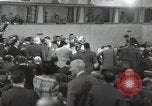
559th United Nations Security Council Meeting in Flushing Meadows, New York
59th meeting of UN Security Council at Flushing Meadows, New York. Views of the meeting chamber with council members at the table and reporters and various international observers, seated in the chamber. Several are wearing headsets to listen to simultaneous translations of proceedings.
CRITICALPAST.COM: About Us | Contact Us | FAQs - How to Order | License Agreement | My Account | My Lightboxes | Shopping Cart | Advanced Search | Featured Collections | Website Terms & Conditions | Privacy Policy ©2026 CriticalPast LLC.
License Agreement |
Terms & Conditions |
Privacy Policy
©2026 CriticalPast LLC.