


 Francais
 Deutsch
 Italiano
Refine Your Search
Dayton Ohio USA 1947 stock footage and images
- Showing 2833 to 2838 of 25604 results more
more Hide
Hide
Bishop James Cannon Jr. being tried on charges of mishandling Presidential Campaign funds
Photographers take pictures, as Bishop Cannon, of the Southern Methodist Church, emerges from courthouse. Cannon, founder of the Virginia Anti-Smith Campaign, was on trial along with campaign treasurer Ada L. Burroughs, accused of mishandling Presidential campaign funds in 1928. Bishop Cannon walks slowly down steps using a cane and makes his way to a coupe automobile awaiting him at the curb.

Franklin D Roosevelt Junior participates in crew workout at Cambridge, Massachusetts.
Franklin D Roosevelt Junior participates in year's first workout of the Freshman Eight Harvard crew, in Cambridge, Massachusetts. Wearing number 20 on his shirt, he takes his place, in a racing shell along with the rest of the Freshman crew.
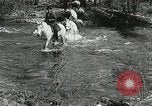
Government workers plant saplings in the mountains of Columbia National Forest in Yacolt, Washington.
Government workers on horseback cross a stream in Yacolt, Washington. They plant saplings in the mountains of Columbia National Forest during a giant re-forestation project. They use big log as bridge to cross stream. Pack horses carry the saplings for planting. Men use pickaxes to plant the saplings and work their way in a formation line up a hill as they plant.
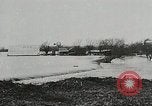
Railway track submerges in water during floods in Clinton, Oklahoma.
The Washita River overflows its banks during floods in Clinton, Oklahoma. Railway track submerges in water. Men stand on remains of railroad, that had been destroyed, and survey damage. Others stand knee deep in flood waters surveying the damage.
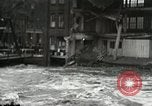
The Washita River overflows its banks during floods in Clinton, Oklahoma.
The Washita River overflows its banks during floods in Clinton, Oklahoma. Floods make highways impassable, wreck hundreds of homes and cause damage. At Chippewa Falls in Wisconsin, Duncan Creek goes on rampage, wreaks great havoc.
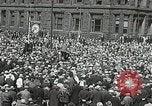
Huge crowd of unemployed men demonstrates outside City Hall and Courthouse in Minneapolis
A crowd of unemployed Americans demonstrate asking the City Council for work and relief during the Great Depression. The crowd, many who are CWA workers (Communications Workers of America) and others, including Communists, fill the street in front of the Minneapolis City Hall (350 S 5th St, Minneapolis, MN 55415, United States) and Courthouse area. Police move the crowd back from the buildings. The crowd is seen beating a man dressed in a black overcoat. The beaten man is then escorted away to safety by a policeman and another man.
CRITICALPAST.COM: About Us | Contact Us | FAQs - How to Order | License Agreement | My Account | My Lightboxes | Shopping Cart | Advanced Search | Featured Collections | Website Terms & Conditions | Privacy Policy ©2026 CriticalPast LLC.
License Agreement |
Terms & Conditions |
Privacy Policy
©2026 CriticalPast LLC.