


 Francais
 Deutsch
 Italiano
Refine Your Search
Dayton Ohio USA 1947 stock footage and images
- Showing 3715 to 3720 of 25603 results more
more Hide
Hide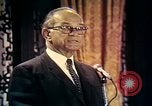
William J Fulbright, Chairman,Foreign Relations Committee, talks about the attitude of Senators in United States.
Debate on the 'Role of Congress in Foreign Policies' between John C Stennis and William J Fulbright in United States organized by American Enterprise Institute. Senator William James Fulbright, Chairman, Foreign Relations Committee discusses about the attitude of Senators to support the Congress. He says that he does not recall any incident when congress has rejected President's decision on any issue. He gives an example of an issue regarding war. He said that it is the responsibility of Congress to present a different view to President and the Senators have a collective wisdom on a particular issue. He states that better relations on non military grounds must be practiced. A comparison with policies and powers of other countries must be done. Fulbright says that no Senator has contested with the President on any issue.
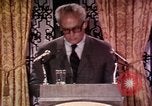
John C Stennis, Chairman, Armed Service Committee, talks about amendments to be made after WWII in United States.
Debate on the 'Role of Congress in Foreign Policies' between John C Stennis and William J Fulbright in United States organized by American Enterprise Institute. John C Stennis, Chairman, Armed Service Committee speaks about Senators and their exercise of powers. He talks about the amendments made on June 30th 1971. He states that the people have welcomed these amendments, but that they have over committed themselves. Fulbright talks about their expectations from the United Nations for world peace. He hopes to recognize problems and find solution within their system. Instead of war there must be re amendments.
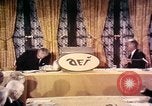
William J Fulbright, Foreign Relations Committee, talks about the issue of resolution passed during WWII in United States.
Debate on the 'Role of Congress in Foreign Policies' between John C Stennis and William J Fulbright in United States organized by American Enterprise Institute. William J Fulbright, Chairman, Foreign Relations Committee talks about the polls. He talks about the role Congress plays in policy making. He discusses the beginning of the war. Fulbright discusses in detail the disagreement among Foreign Relations Committee and the Congress.
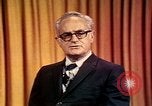
Moderator Peter Lasigor concludes and restates issues raised by Stennis and Fulbright in United States during a debate.
Moderator concludes debate on 'Role of Congress in Foreign Policies' between John C Stennis, Chairman, Armed Service Committee and William J Fulbright Chairman, Foreign Relations Committee in United States organized by American Enterprise Institute. The Moderator Peter Lasigor says that Stennis and Fulbright disagree on the issue of Congress's role in foreign policy. Stennis has said that the Congress has contributed in making 40 mutual treaties and plays a crucial role in making Foreign Policies. Stennis states the resolutions passed on the issues of Cuba, Berlin and others. Lasigor says that both of them agree on the point of reassessment. The points Fulbright raised were about the war making functions and deprivation of senate from the agreement on war issues.
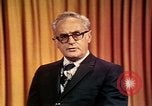
Dr W Kintner with Senator Fulbright during a debate on the 'Role of Congress' in Washington DC.
Question Answer period of the debate on 'Role of Congress in Foreign Policies' among John C Stennis, Chairman, Armed Service Committee and William J Fulbright, Chairman, Foreign Relations Committee in Washington DC, organized by American Enterprise Institute. Moderator of debate Peter Lasigor concludes the Question Answer period. He tells that Dr William Kintner asked Senator Fulbright about the controversy of Gulf of Tonkin Resolution. Senator Fulbright replied that President has the right to act without consultation whenever there is an emergency or threat to the nation's security but the issue about Gulf of Tonkin incident was not an urgent issue. He said that he was only the agent of situation and the decision of war was imposed over them.
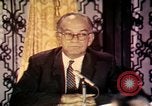
John C Stennis speaks during Question Answer period of a debate on the 'Role of Congress' in Washington DC.
Question Answer period of the debate on the 'Role of Congress in Foreign Policies' among John C Stennis, Chairman, Armed Service Committee and William J Fulbright Chairman, Foreign Relations Committee in United States organized by American Enterprise Institute. Stennis reacts on the statement of Senator Fulbright that on several issue majority of senators do not vote but on the issue related to Gulf of Tonkin Resolution (following the Gulf of Tonkin incident in the Vietnam War). It (resolution) was presented to the committee and Senators had voted for it. He regarded it as the perfect illustration of working in a democratic country.
CRITICALPAST.COM: About Us | Contact Us | FAQs - How to Order | License Agreement | My Account | My Lightboxes | Shopping Cart | Advanced Search | Featured Collections | Website Terms & Conditions | Privacy Policy ©2026 CriticalPast LLC.
License Agreement |
Terms & Conditions |
Privacy Policy
©2026 CriticalPast LLC.