


 Francais
 Deutsch
 Italiano
Refine Your Search
Eboli Italy 1944 stock footage and images
- Showing 1867 to 1872 of 7968 results more
more Hide
Hide
Funeral of German General Günther Korten in World War II. Hitler visits other victims of bomb plot, in hospital
Camera pans across the Tannenberg Memorial courtyard where Nazi military hierarchy is gathered for the funeral of General Günther Korten, Chief of the General Staff of the Luftwaffe, who died from injuries suffered in the assassination attempt on Adolf Hitler in July 1944. German military Honor Guard and band are seen in background as Marshal Hermann Goering expresses his condolences to the General's widow and relatives. Closeup of a German soldier and of the bereaved. Scene shifts to view from above and behind the flag-draped casket of General Korten, as Goering, standing in front of it, salutes with his Marshal's baton. Field Marshal Wilhelm Keitel, Grand Admiral Karl Dönitz, and other senior military officers all salute. Soldiers bring a large wreath forward and Goering places it before the casket and salutes. View of the flag-draped casket with helmet and dagger atop it. Pall bearers lift the casket shoulder height and proceed to carry it into a tomb in the memorial building. In a complete change of scene, Adolf Hitler is seen walking with a medical officer into a military hospital in Rastenburg, where he visits German Army officers, who were injured, in the July 20th bomb plot against him during World War 2. He visits Major General Walter Scherff; Navy Captain Heinz Assmann; Rear Admiral Karl-Jesco von Puttkamer; and General Walther Buhle. He takes time and speaks with each of the wounded officers. Women nurses, assembled outside, render Nazi salutes, and cheer Hitler as he departs.

U.S. troops set up a field kitchen and mess in Eygelshoven, the Netherlands, during World War 2
View from hill, above, of U.S. Army troops, from the 3rd Battalion, 115th Regiment, 29th Division, who have set up a field kitchen and mess along the side of a road (Nieuwenhagerweg) in Eygelshoven, the Netherlands, during World War II. Closeup of the troops in a chow line, receiving food in their personal mess kits. Closeup of one soldier's mess kit with his ration. Closeups of smiling soldiers and views of some eating their meals. [Note: In the first 10 seconds, two churches can be seen in opposite corners of the background.The oldest, on the right, sheltered US soldiers. The other, on the left, was hit by German shelling around December 20, 1944. U.S. soldiers of the 562nd Anti-Aircraft Artillery Battalion, Automatic Weapons (Mobile), Battery D, patched the hole in the church roof.]
U.S. B-24 aircraft drop bombs on Bicy airfield in Orleans, France during World War II.
Allied air attacks against France during World War II. A map of France shows the location of Orleans. Aerial view of bombs being released by U.S. Army 8th Air Forces B-24 Liberator aircraft. The bombs drop and strike Bicy airfield, Orleans, France, on May 23, 1944. Billows of smoke rise from the airfield. Bombs being dropped on revetments. Smoke and fire occur.
U.S. 8th Air Force B-24 Liberator aircraft drop bombs on an airfield in Orly, France during World War II.
Allied air attacks against France during World War II. A map of France shows the location of Orly. Aerial view of U.S. Army Air Forces B-24 Liberator aircraft in a formation flight. Bombs being dropped on an airfield by U.S. 8th Air Force aircraft on May 24, 1944. Pillars of smoke rise up as the bombs hit the targets. Bomb craters on the field. Smoke rises.
U.S. 8th Air Force B-24 aircraft drop bombs on enemy beach defenses in Calais, France during World War II.
U.S. 8th Air Force air attacks against France during World War II. Aerial view of U.S. Army Air Forces B-24 Liberator aircraft in formation flight. A gunner mans a gun. On June 5, 1944 a B-24 airccraft releases bombs over Calais. The bombs fall in the English Channel. B-24 aircraft drop bombs to strafe enemy beach defenses on the coast of Calais. Billows of smoke rises after the bombs detonate. A convoy of Allied ships underway in the English Channel.
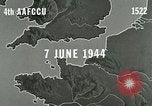
U.S. 9th Air Force B-26 aircraft drop bombs on marshaling yards in Normandy, France during World War II.
U.S. 9th Air Force air attacks against France during World War II. Aerial views of the 9th Air Force aircraft in flight on June 7, 1944. A convoy of Allied ships underway in the English Channel. Landing crafts circle around the ships. Aircraft attacks German gun emplacements and smoke rises as bombs hit the targets. Saint Lo being bombarded. U.S. Army Air Forces B-26 Marauders bombard marshaling yards. Billows of smoke rises due to bombing. Bombs drop and impact results in smoke and fire.
CRITICALPAST.COM: About Us | Contact Us | FAQs - How to Order | License Agreement | My Account | My Lightboxes | Shopping Cart | Advanced Search | Featured Collections | Website Terms & Conditions | Privacy Policy ©2026 CriticalPast LLC.
License Agreement |
Terms & Conditions |
Privacy Policy
©2026 CriticalPast LLC.