


 Francais
 Deutsch
 Italiano

Refine Your Search
Elizabeth New Jersey 1952 stock footage and images
- Showing 7153 to 7158 of 8486 results more
 Hide
Color Sound
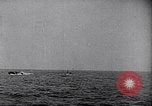
Scenes of warfare using American technology, including submarines, aircraft bombing of London, atomic bomb use in Japan
Training regarding relief and rebuilding works in Germany and Japan by United States Army, after World War II. Narrator discussing adoption of American inventions during the war that were used against America and allies. Sketch of an early American submarine design, followed by view of German U-boats operating under sea, firing torpedoes and target ship is destroyed. Footage of Wright brothers with an early Wright Brothers airplane invention, as they prepare it for a flight. This is followed by a view of London burning after aerial blitz raids by German aircraft during World War 2. View of atomic bomb explosion over Japanese city of Nagasaki and mushroom cloud seen from the air. Also view of Trinity blast in New Mexico - the first U.S. atomic test. The atomic cloud rises high and vast in the sky. Narrator warning against the perils of a third world war.
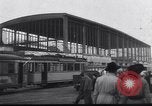
Markets and shops of Berlin busy with buyers and merchandise in morning after night time power cuts
Berlin during Berlin Airlift operations. Streetcars in Berlin enter tunnel. Pedestrians walk on streets. Roads of Berlin darkened during night hours due to power cuts. A Berlin Airlift "Raisin Bomber" airplane flying low over the city at dusk. Headlamps of vehicles on streets during night. People going to work walk up the stairs of a subway in morning hours. Counter girl sells bread and other bakery goods to customers in a bakery shop. Canned goods emptied from a can and weighed in a shop. Citizens gathered around a news stand. A busy market of Berlin. The partially bomb damaged Kaiser Wilhelm Memorial Church in Berlin, with a plan flying in the background.
Documentary titled 'Copenhagen, Gay and Vivacious' showing buildings, markets and monuments of Copenhagen, Denmark.
Aerial views of Copenhagen, Denmark. Swedish Fokker F.XXII passenger airplane, named "Lappland," at the airport. Danish Airline Fokker F.VII passenger airplane. It taxis quickly, and stops in front of the airport terminal. Woman passenger deplanes. Luggage is removed from aft of the cabin. A German Lufthansa Junkers JU-52 with wheel pants, taxis, and parks. Passengers and a uniformed crew member disembark from the plane. The name "A.B. Aerotransport" printed on Fokker F.XXII. A steam locomotive pulls a passenger train into railroad station (possibly leaving and not stopping). A passenger ocean liner docks. Cars, taxis and buses meet the ship. Passengers disembarking from ocean liner. Taxi carrying passengers to hotel. A finely dressed, wealthy man and woman sign in at hotel desk, as bellman or bellhop brings luggage into hotel lobby. The couple peruse a booklet showing sights in Copenhagen and discuss them in English. View of the Copenhagen City Hall (Rådhuspladsen 1, 1550 København, Denmark). Trams and cars driving past and pedestrians on sidewalks. View of clock tower on City Hall. View from high above Town Hall Square (City Hall Square 1599 Copenhagen, Denmark). Rack filled with bicycles. A messenger heading off on a bicycle. An open-air market, with many farmers' and mongers' small trucks parked in lines. Numerous customers visiting the marketplace. Flower sellers' stalls along sidewalk. Fishing boats at the pier in Nyhavn (New Harbor). People eating at tables and women preparing foods for sale. Tram operators boarding their cars and driving away. Tram operators boarding their cars and driving away. Boats in a canal and a rowboat moving through a picturesque arch under a bridge. Diners at long tables in a restaurant. A policeman. Tower of Saint Nicholas Church, now presently known as the “Nikolaj, Copenhagen Contemporary Art Center” (Nikolaj Plads 10, 1067 København K, Denmark). View of Frederik's Church (Frederiksgade 4, 1265 København, Denmark). Church of Our Lady (Vor Frue Kirke, Nørregade 8, 1165 København, Denmark). Statue of Moses near the Church of Our Lady. An Expressionist style church, the Grundvig Memorial Church (På Bjerget 14B, 2400 København NV, Denmark). Gefion Fountain (Churchillparken, 1263 København K, Denmark). Hans Christian Andersen statue (Rådhuspladsen, 1550 København V, Denmark) near Tivoli Gardens. The equestrian statue of King Christian IX Monument (Christiansborg Ridebane 25, 1218 København, Denmark) by Anne Marie Carl-Nielsen, the first equestrian statue of a monarch created by a woman sculptor. Statue of King Frederick VII (Christiansborg Slotsplads 1, 1218 København, Denmark). The equestrian statue of Archbishop Absalon (Højbro Pl., 1200 København, Denmark), the founder of Copenhagen. Statue of King Frederick V (Amalienborg Slotsplads, 1257 København K, Denmark). Formal gateway with Doric columns. King Frederick IX and Queen Ingrid of Denmark in open coach. Drawbridge opening for small sailboat. Man feeding birds on the park. A bored driver presses car horn. Cars waiting for drawbridge to lower down.

Tivoli Amusement Park and other places illuminated by lights at night in Copenhagen, Denmark.
The entrance to Tivoli Gardens, in Copenhagen, Denmark. View from above, at night, of the Tivoli grounds. The illuminate Wivex restaurant sign is visible. Buildings are outlined by numerous lights, as are amusement park rides and waterfalls. Neon lights of shops, restaurants, hotels, theaters, and advertisements are reflected in the wet city streets near Tivoli Gardens and Rådhuspladsen. Scene shifts to a couple, in costume, at a nightclub, possible on New Year’s Eve, with balloons, and other decorations everywhere. They get up to leave. The man stops to drain his glass, first. The dance floor is filled with chorus girls performing a synchronized dance routine. View of table with empty glasses and bottles of Tuborg beer.
German occupation, martial law, and Danish resistance in Denmark during World War II
Film about Denmark after the Nazi German occupying force declared martial law and state of war with Denmark, in 1943-44 during World War 2. It was made by Danes and smuggled out of Denmark during that period. Opens with view of a church building and flocks of birds. Views of German army troops marching into Copenhagen, Denmark on April 9, 1940. SS troops dressed in black, marching. German soldiers carrying rifles with fixed bayonets, goosestepping. A fire burning at site sabotaged by Danish resistance elements in 1943. Derailed trains carrying goods to Germany. Fire at a German factory. Danish workers with bicycles staging a strike in protest German measures in response to resistance actions. Danes gathered in outdoor observance memorializing those killed by the Germans. A shop owned by German sympathizers (Quislings) destroyed by other Danes. People gathered on street on 29 August 1943, when the occupying German forces attacked the remaining Danish garrison and declared martial law. Announcement posted in Danish on a wall. View of Danish Naval vessels ordered scuttled by the Danish Admiralty, including the coastal defense ship,Peder-Skram, seen in front of a large building, the submarine, Havfruen (not seen) and others seen sunk at docks in Copenhagen harbor. Bullet hole through a glass window. A week later, on Sunday, 5 September, 1943, a German Panzer light tank is seen moving on a street, as pedestrians go about their business in Copenhagen. German soldiers patrolling on a motorcycle with sidecar. A man holding his hands up as he is hustled through a crowd under arrest by a German in black uniform (possibly Gestapo or SS). Motorcycle driving through pedestrians on the sidewalk. Spectators line a fence by an open field near a building labeled "Badstue Badminton." One, a woman, speaks through the fence to a Danish soldier interned there. View of the quarters of the Royal Guard at Rosenborg, occupied by German soldiers and with Nazi flag flying above it. Civilian relatives of interned men wait outside army headquarters for news about them. A courtyard, during a mass funeral, is filled with memorial flower wreaths covering the coffins of Danish soldiers and civilians killed by the Germans. Camera focuses on a wreath from King Christian of Denmark, among the many others. Two German soldiers march up a path at the Royal Residence Amalienborg, where King Christian is arrested. Views from moving camera as Danish flags are seen flying all over the city of Copenhagen, on 26 September, 1943, to celebrate the King's 73rd Birthday. The major exception is the Nazi Gestapo headquarters in the "Shellhus" (the prewar Shell Oil offices) shown in isolation. Views of people moving their belongings on hand carts after their homes were taken over by Germans. The slogan in English, "Do it well and do it now,"is seen left by Danish resistance fighters where they sabotaged a German military installation.

U.S. Air Force pilot successfully lands a B-52 aircraft without vertical stabilizer
Pilot successfully lands a B-52H (6-032) airplane with its vertical stabilizer tail torn off at Eaker AFB, Blytheville, Arkansas. The B-52 plane gets damaged during a test flight over northern New Mexico. The vertical stabilizer was ripped off due to buffeting stresses during turbulence (loss of structural integrity). Pilot Charles "Chuck" Fisher lands safely after five hours of flying without tail. Crew and ground support staff on the airfield look at the torn tail.
CRITICALPAST.COM: About Us | Contact Us | FAQs - How to Order | License Agreement | My Account | My Lightboxes | Shopping Cart | Advanced Search | Featured Collections | Website Terms & Conditions | Privacy Policy ©2026 CriticalPast LLC.
License Agreement |
Terms & Conditions |
Privacy Policy
©2026 CriticalPast LLC.