


 Francais
 Deutsch
 Italiano

Refine Your Search
Elizabeth New Jersey 1952 stock footage and images
- Showing 7825 to 7830 of 8486 results more
 Hide
Color Sound
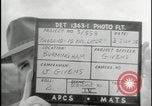
Views of industrial Birmingham, England, taken in 1954, post World War 2
Elevated view of British industrial region of Birmingham, England, in 1954, ten years after WW2. Structural frame of building in the foreground, large cooling towers and smokestacks in the distance. Cars and buses drive on a roadway lined by trees. The view pans left, showing more of the skeletal building in the foreground. New elevated position shows residential housing in the foreground and industrial zones stretching into the distance. Smokestacks and mega-scale construction project in the background. Closer views of the skeletal frame of a many story building.
Dr. Hugo Eckener, commander of German Zeppelin Hindenburg, (LZ-129) talks to journalists about his voyage to the United States.
Dr. Hugo Eckener (1868-1954) who commanded the German Zeppelin Hindenburg (LZ-129), describes the maiden voyage of the airship over the North Atlantic, and states his opinion that even in bad weather the Zeppelin would be able to successfully make regular transatlantic flights.

Author Leslie Charteris, a passenger on zeppelin Hindenburg's maiden voyage, tells of his experience.
Author Leslie Charteris (1907-1993), a passenger on zeppelin Hindenburg's maiden voyage, talks about his trip from Frankfurt, Germany aboard the airship. He says it is the most natural way to travel across the North Atlantic Ocean.

Father Paul Schulte describes the maiden North Atlantic voyage of the zeppelin Hindenburg at Lakehurst Naval Air Station.
Father Paul Schulte, a Roman Catholic priest from Germany, arriving at Lakehurst Naval Air Station aboard the German Zeppelin Hindenburg on the airship's maiden North Atlantic voyage, states that this is only his second trip to the United States. He would like to be able to have an airplane to explore "every nook and corner" of this country. He says "I don't like this country. I love it."
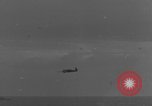
A convoy of U.S. warships under attack by Japanese warplanes during World War II.
Film opens showing a Japanese Nakajima B5N (Kate) torpedo bomber flying low over the water through hail of bullets fired from Allied ships, during World War 2. Glimpse of the plane flying past a U.S. Iowa class Battleship. Next, it flies past a U.S.New Orleans Class Cruiser. As it continues flight, away from the camera, a U.S. Mahan class destroyer appears from the left. Flak puffs of black smoke are in the air. Scene shifts to smoke rising from a bombed ship in the distant background. Change of scene shows a U.S. Douglas SBD-5 Dauntless aircraft recovering on an aircraft carrier.
Battle off Empress Augusta Bay, during World War 2.
Night engagement off Empress Augusta Bay, during World War 2. Documents describing U.S. forces engaged in the battle. View of the Augusta Bay at dawn. Animation on screen shows the Guadalcanal naval battles and the attacks on Solomon Islands and Bougainville Island. A diagram depicts the movement of U.S. Navy Task Force 39 from Empress Augusta Bay to Shortland Island and diverting towards Treasury Island. Fleet of ships en route. United States B-24 Bomber in flight. Diagram shows the route of Japanese Forces and the United States Task Force 39. Fleet of Japanese ships on the way.
CRITICALPAST.COM: About Us | Contact Us | FAQs - How to Order | License Agreement | My Account | My Lightboxes | Shopping Cart | Advanced Search | Featured Collections | Website Terms & Conditions | Privacy Policy ©2026 CriticalPast LLC.
License Agreement |
Terms & Conditions |
Privacy Policy
©2026 CriticalPast LLC.