


 Francais
 Deutsch
 Italiano
Refine Your Search
Elizabeth New Jersey 1952 stock footage and images
- Showing 109 to 114 of 8484 results more
more Hide
Hide
Views of the Hudson River, Pulaski Skyway, a hospital building and a medical center in New Jersey, United States.
Home front activities in New Jersey, United States. A bridge on the Hudson River. Vehicles driven on the bridge. A sign : 'Clearance, Tunnel to New Jersey'. Vehicles drive through the tunnel. A bus driven away. A sign in the background: 'Highway Directory'. Vehicles on Pulaski Skyway. A square and a hospital building. A police man directs traffic. A medical center seen. Pedestrians on a street.
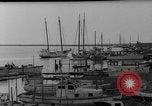
Fishermen catch oysters and examine their oyster catch aboard a ship in New Jersey, United States.
Oyster fishing in New Jersey, United States. Ships and boats anchored. Sail boats at sea. Fishermen catch oysters. An oyster catch aboard a ship. Men examine their oyster catch. View of a bridge. A sign: 'New Jersey, 25, Highway'.

War plants closed and traffic completely disrupted due to floods in New Jersey, United States (WW2)
Floods in New Jersey, United States. Water level of the Passaic River rises. Floods causing damage to infrastructure. Crowds gathered to watch the flooding of Passaic River in Paterson, New Jersey. People wading in floodwater in downtown Paterson. Street sign “River St.”. Parked car partially submerged in flood. War plants are closed, and traffic is completely disrupted. Streets and vehicles submerged in water. (World War II period)

Barbara Jo Walker of Memphis wins the Miss America contest in Atlantic City, New Jersey.
1947 Miss America beauty pageant contest at the Boardwalk Hall (2301 Boardwalk, Atlantic City, New Jersey, United States) in Atlantic City, New Jersey. Miss America Contestants pose in swim wear. Girls seated on the decorative floats move on street. Civilians gathered on either side of the street. Miss America and Miss Canada pose in front of a fountain. Miss Ohio and other contestants on floats are seen wearing large butterfly wings. Contestants wave toward the gathering. Contestants walk on the ramp. Winner Barbara Jo Walker of Memphis is awarded the Miss America crown. Spectators applaud. The winner heads the traditional boardwalk.
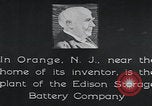
Workers manufacture Edison nickel-iron batteries at the Edison Storage Battery Company Building in West Orange, New Jersey
Manufacturing Edison batteries (also known as nickel-iron battery or NiFe battery) in West Orange, New Jersey, United States. View of the Edison Storage Battery Company Building (177 Main Street, West Orange, New Jersey, USA), the manufacturing facility for Edison batteries. Smoke emanates from vats. Motorized ceiling rack carries cylinders receiving nickel flake via electro plating. Aerial view of battery tube steel manufacture. Factory workers working in assembly lines to assemble batteries. The workers pack batteries for shipment. The four main parts of an Edison battery- negative plates (steel), container (steel), electrolyte (alkaline), and positive plates (steel)- on display. The steel positive plate and perforated steel tube which hold Nickel Hydrate on display. A finger touches the carbon steel ribbon that runs through a perforating machine to create battery tubes. A pen points to the perforation of the carbon steel ribbon. Machines nickel plate steel ribbons. Man places reels of steel ribbons in a tub. Men pushes the tubs into an automatic machine. A machine winding steel ribbons into tubes. Closer view of the steel tube showing its spiral pattern. Hand holding a steel tube. The manufacturing of nickel flake by an electro plating process. Metal sheet cylinders lifted out from vats of nickel. The cylindrical rolls of metal sheet are lowered to alternating vats of copper and nickel. Man unfolds a nickel-copper sheet. A machine cuts the nickel-copper sheet into small pieces. The copper in the nickel-copper pieces is chemically dissolved in a electro plating vat. The positive tubes are loaded with alternate layers of nickel hydrate and nickel flake. Man fits the tubes into a metal mold. Nickel hydrate and nickel flakes are fed into a machine. The man takes off the metal mold, taking the tubes. Cross section of a steel tube. Steel rings on a machine. Man counts the 8 steel rings of the tube. A woman mounts the tubes and presses them into a permanent position in a nickel-plated steel grid. A finished positive plate. A man mounts positive plates on the pole piece. He screws them into place. View of the negative plate, showing its perforated steel pockets holding iron oxide. Machines fold the perforated steel ribbons into Negative Pockets. A worker inserts Negative Pockets into a metal mold. A machine fills the Negative Pockets with iron oxide. Worker mounts the Negative Pockets in a nickel-plated steel grid. A machine secures the Negative Plates by a pressure of 120 tons. The Negative Plates are equidistantly spaced on the negative pole piece. Worker assembles the positive and negative plate groups together. A woman inserts additional insulation between each plate. The container is made of a nickel-plated steel sheet folded and welded to form one piece. Workers carefully inspect and insulate the assembled elements before the elements are permanently sealed in the container. Workers wearing goggles fill the finished battery cells with alkaline solution. Man closes the Filler Cap of the battery cell. Two terminals are seen on top of battery cell. Quality control inspectors check the finished products. A Weston DC voltmeter. A man dips battery cells into an insulating preservative compound. He places the battery cells in trays. Another man connects the cells in trays.

Queen Elizabeth launches the tanker ship, "British Admiral" in England.
Shows a 100,00 ton tanker, the 'British Admiral' on its launch day in England. Large crowd gathered on the eve. Queen Elizabeth arrives at the christening platform, pulls a liver and launches the new tanker. The tanker gets underway in the water.
CRITICALPAST.COM: About Us | Contact Us | FAQs - How to Order | License Agreement | My Account | My Lightboxes | Shopping Cart | Advanced Search | Featured Collections | Website Terms & Conditions | Privacy Policy ©2026 CriticalPast LLC.
License Agreement |
Terms & Conditions |
Privacy Policy
©2026 CriticalPast LLC.