


 Francais
 Deutsch
 Italiano
Refine Your Search
Elizabeth New Jersey 1952 stock footage and images
- Showing 3265 to 3270 of 8468 results more
more Hide
Hide
African American art song group learn classical music and sing chorus directed by William Lawrence in New York.
Employment for African Americans provided by Works Progress Administration (WPA) Projects in New York, United States, during the Great Depression. African American men and women of an art song group learn classical music. They sing chorus. William Lawrence sits on piano and sings along.

Soldiers of the 45th Thunderbird division greeted by their families on return from Korea in New York.
People waiting at a shipyard in New York. People holding placards, boards and banners welcome soldiers home coming. Soldiers of the 45th Thunderbird division return from Korea. Relatives and loved ones wait to greet them. Young soldiers kiss their wives on return. Family members hug the returned soldiers. Soldiers embrace their young children. A mother hugs her son on his return.
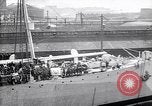
A troop ship prepares to depart from New York carrying American soldiers during World War I
Camera slowly pans from bow to stern along a large troop ship in New York harbor during World War 1. U.S. Army troops and emergency lifeboats, rafts, and gear fill the upper deck of the ship. The ship is docked at one of a line of berths. As the camera covers the stern of the ship, ferry boats can be seen plying the waters, and a tug boat approaches the ship's stern. The ship is in camouflage paint. Buildings can be seen lining the waterfront across the water, in the background. (WWI. WW1)
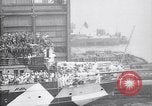
A troop ship gets underway from New York carrying American soldiers during World War I
U.S. soldiers and ship's sailors fill the upper deck of a camouflage painted troop ship leaving its berth in New York harbor, during World War 1. Tugboats back the ship stern first from her berth. Two officers stand amidship beside the ship's single funnel. The tugboat's funnel, bearing letter,"D" passes in front of the camera. Sailors in white are seen on upper decks of the ship. Brief panning view of the ship. Glimpse of the troop ship moving under her own power. (WWI. WW1)
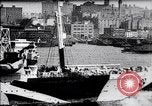
A troop ship departing New York harbor during World War I
A U.S. troop ship underway as she departs New York harbor, carrying troops during World War 1. The two-stacker ship is painted in camouflage colors. A ferry boat passes going the opposite direction. Buildings and boats are seen along waterfront in backgroud. (WWI. WW1)
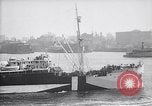
A U.S. troop ship filled with soldiers leaving New York harbor during World War I
A long single-funnel troop ship, in camouflage paint, making way in New York harbor, carrying U.S. soldiers overseas during World War 1. The local waters are busy with ferry boat and tugboat traffic. Buildings line the opposite shoreline. (WWI. WW1)
CRITICALPAST.COM: About Us | Contact Us | FAQs - How to Order | License Agreement | My Account | My Lightboxes | Shopping Cart | Advanced Search | Featured Collections | Website Terms & Conditions | Privacy Policy ©2026 CriticalPast LLC.
License Agreement |
Terms & Conditions |
Privacy Policy
©2026 CriticalPast LLC.