


 Francais
 Deutsch
 Italiano
Refine Your Search
Elizabeth New Jersey 1952 stock footage and images
- Showing 5017 to 5022 of 8468 results more
more Hide
Hide
U.S. soldiers advance up a hill and move out to new positions near Phu Bai fire base in Vietnam during the Vietnam War.
U.S. troops near Phu Bai fire base in Vietnam during the Vietnam War. Soldiers advance up a hill to take up NDPs (night defensive positions). They move out to new positions. Soldiers sitting and resting. A U.S. Army UH-1D Iroquois helicopter in flight. Colored smoke rises from a signal grenade explosion. The UH-1D Iroquois helicopter comes in for a landing. Aerial views of soldiers moving over a mountainous terrain.
Newly constructed buildings in a new housing project. African American residents in the area and nearby homes.
African American boys playing marbles on the ground. Five members of an African American family riding in a wagon pulled by a mule. Two African American girls walking along a path. Newly constructed modern garden apartment buildings. Several local African American residents in vicinity of a number of large older wooden dwellings near the new apartments. Several African American boys huddled between brick columns as they pose for camera. An African American boy pulling a roller skate board with a large parcel on it. A couple placing curtains on a stretcher outdoors. A large, older, more run-down building with unusual collection of stone, tile, and other material comprising its walls.
Ground-breaking ceremony for expansion, including new runway, at Wright Field in Dayton, Ohio.
U.S. Air Force Material Command headquartered at Wright Field in Dayton, Ohio. Aerial photograph of Wright Field highlights new construction planned. People assembled out in the field for ground-breaking ceremony. U.S. Army Air Force officers shaking hands at start of ground-breaking ceremony. One officer speaks using microphone on a tripod. Heavy construction equipment in background. One officer performs the traditional ground-breaking, using a spade with a large ribbon tied to it.

News media military analysts discuss the problems of Allies invading Europe to defeat Germany in World War II
Map of Europe and label "Invasion." Westbrook Van Voorhis leading a panel discussion about the problems arising from the Allied invasion of Europe in World War 2. He introduces panelists: Hanson Baldwin (military editor of the New York Times) Dewitt MacKenzie (Associated Press military analyst), and Paul Schubert (of Mutual Radio Network). He asks Mr. Baldwin about the importance of aerial bombing campaigns. Baldwin also stresses importance of a land invasion of Europe. Relief map of Europe highlighting major German cities. Asked about the merit of invading Italy on the way to Germany, Mr. Schubert cites the problem of the Alps and suggests other more effective invasion routes. Van Voorhis asks Mr. MacKenzie about best route into fortress Germany. He considers the criterion of ease of supply as most important, and suggests the Atlantic coast, near a good port and not far from England. Animated map shows this idea. When asked about this, Mr. Baldwin agrees completely, calling the conflict "a quartermaster's war." He adds, "The problem of victory is the problem of supply."
American Naval Officers posing outside the new Yokosuka Submarine Base,Japan, right after end of World War II.
American Naval Submarine Officers posing at the new Submarine Base, Yokosuka, Japan, about two weeks after the Japanese surrender, ending World War 2. Officers in group posing outside a building. A sign on the building reads: "Yokosuka Submarine Base." In the most formal group photo, Vice Admiral Charles A. Lockwood, Commander, Submarine Force, Pacific Fleet is seen seated in front row, near center, as he poses with officers in his command.
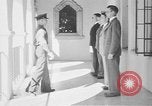
Reenactment of new recruits being received for training as U.S. Air Forces flying cadets
Reenactment, at Randolph Field, illustrating how new recruits are indoctrinated by upper class upon arrival for training as U.S. Army Air Forces flying cadets. Upper class cadet standing with recruits on a veranda. He teaches them how to stand in a "brace" and conduct themselves. Interior of a barber shop. Cadets getting haircuts. Cadets dressed in newly issued uniforms. They have photographs taken for their ID cards.
CRITICALPAST.COM: About Us | Contact Us | FAQs - How to Order | License Agreement | My Account | My Lightboxes | Shopping Cart | Advanced Search | Featured Collections | Website Terms & Conditions | Privacy Policy ©2026 CriticalPast LLC.
License Agreement |
Terms & Conditions |
Privacy Policy
©2026 CriticalPast LLC.