


 Francais
 Deutsch
 Italiano
Refine Your Search
Elizabeth New Jersey 1952 stock footage and images
- Showing 5035 to 5040 of 8468 results more
more Hide
Hide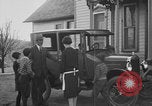
A family climbs into a new Ford Model T car outside their house
A man meets his family outside a farm house in the United States. The children, wife, and the man board a new Ford Model T car parked in front of the house. A dog moves past the car. One of the children is carrying a lamb. The man helps children enter the car.
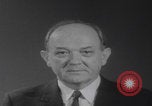
President Johnson addresses the public at a news conference about the Vietnam War
President Lyndon B. Johnson addresses the United States public at a White House news conference about the Vietnam War on July 28, 1965. “We do not seek the destruction of any government, nor do we covet a foot of any territory. But we insist and we will always insist that the people of South Vietnam shall have the right of choice, the right to shape their own destiny in free elections in the South or throughout all Viet-Nam under international supervision, and they shall not have any government imposed upon them by force and terror so long as we can prevent it… We do not want an expanding struggle with consequences that no one can perceive, nor will we bluster or bully or flaunt our power, but we will not surrender and we will not retreat,” says President Johnson,
New York Journal "Buccaneer" dispatch boat leaves the United States to cover events of the Spanish-American War
The "Buccaneer" dispatch boat of the New York Journal steaming through the water, having aboard war correspondents assigned to cover the Spanish-American war. The dispatch boat sails rapidly in the water.
Automobile Club of America parade in Manhattan, New York
The first annual automobile parade by the Automobile Club of America in Manhattan, New York City. Madison Square Garden is seen in the background. At least ten different types of cars, including electric and steam powered ones drive by. Some bicycles ride near the automobiles. Police officers walk nearby. A carriage pulled by a white horse is driven past the camera, and a horse-drawn hansom cab is seen waiting for the parade to pass.
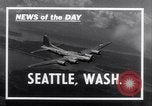
New Boeing B-17 Bomber aircraft in flight over Seattle shortly after introduction of the the new airplane.
B-17E bomber in flight. Close aerial views of aircraft flying in skies and clouds, soon after its introduction for use by British RAF and the U.S., early in World War 2

New conscripted Dutch workers in occupied Netherlands receive shovels as symbol of new obligation to their homeland
Shovels handling ceremony in Holland during occupation of the Netherlands by German forces in World War 2. Newly recruited or conscripted Dutch young menstand in a formation during a ceremony as they become members of the Dutch Workers Service, as required by the German occupation. They receive shovels as symbols of their commitment to work for Holland. The uniformed Dutch workers shoulder their shovels and parade.
CRITICALPAST.COM: About Us | Contact Us | FAQs - How to Order | License Agreement | My Account | My Lightboxes | Shopping Cart | Advanced Search | Featured Collections | Website Terms & Conditions | Privacy Policy ©2026 CriticalPast LLC.
License Agreement |
Terms & Conditions |
Privacy Policy
©2026 CriticalPast LLC.