


 Francais
 Deutsch
 Italiano

Refine Your Search
Elizabeth New Jersey 1952 stock footage and images
- Showing 5101 to 5106 of 8486 results more
 Hide
Color Sound

Empty buildings on Ellis Island, in 1954. Flashback to Immigrants arriving and being processed in 1901.
Start of a documentary production titled,"The Inheritance." Introductory slate tells how in December, 1914, the Amalgamated Clothing Workers of America (Union) was founded in a meeting at Webster Hall, New York City. It also describes how far and wide that union had grown in the ensuing 50 years. An ocean liner is seen in the mist in New York Harbor. Fog horn sounds. The statue of Liberty is seen dimly through the fog. A commercial ship and a tug boat pass in front of Ellis Island. Views of building interior, Sign in boiler room reads: "U.S. Immigrant Station. Ellis Island. N.Y.H." Furnace door and thermometer and pressure gauges are seen. Large hall is seen. Camera pans through the empty corridors and rooms of the facility. The frame of an iron baby's crib sits in an empty room. View through window of Ellis Island proper, just outside, and of New York City buildings across the water. Montage of still photo images: Immigrants on the deck of a ship in 1901. Views of small children. A group of immigrants wearing the fez. Immigrants waving their hats as they see the Statue of Liberty. Broader view of the ship packed with immigrants. Interior of Ellis Island building with queue of new arrivals being processed. Immigration officers seated on high stools, checking documents of arrivals. Medical officer examines a boy with a stethoscope (screening for TB). View shifts to passengers arriving. They walk across the pier, carrying their belongings.

Glimpses into the lives of America's gilded age wealthy, early in the 20th Century
Immigrants on board a ship arriving in New York Harbor, circa 1905, see New York City buildings across the water. A couple walking along the avenue in New York City. The man buys a newspaper from a newsboy or newsie (newspaper boy). A trolley car passes in the center of the avenue. A sign on the trolley reads: "Broadway." Several automobiles drive along a street, each close behind the other. One is decorated with American flags. A school building at side of the street displays numerous American flags. Pedestrians walking along 5th Avenue in New York City. Some men are wearing top hats, and others bowlers. Women are wearing bonnets. Several high society gentlemen in formal attire seat seated at a banquet table. They smoke cigars and have after-dinner drinks. Flowers adorn the table and the men wear boutonnieres. They all sport mustaches and wear some sort of garlands of greens (or paper) on their heads. The scene expands to reveal more aristocracy men at the table,similarly attired, including the garlands. Scene of wealth at turn of the century with couples dancing in an elegant ballroom. Change of scene shows waiters serving guests at an outdoor dining venue. Most of the men wear straw boaters (hats) and the women wear summer dresses and bonnets. A gentleman in a top hat with two women at a fashionable outdoor affair. The women wear large-brimmed hats. Ann Harrison Vanderbilt (Mrs. Willian K Vanderbilt) seated in a rolling straw chair, pushed from behind, chats with a gentleman in Florida. Lady in striped jacket and white skirt, with tennis racquet under her arm talks to chauffeur, standing next to a Locomobile limousine, parked at the curb. The Vanderbilt home, "the Biltmore," in Asheville, North Carolina, viewed from the back of the mansion.

Trucks hauling and delivering products and commodities to people in the United States in the early 1940s
Trucks and workers operate after midnight for availing next day facilities to people, in New York and other cities of the United States. Alarm rings in morning and a man starts with his daily activities. Workers maintain water supply at night. Electrician maintains power distribution lines during night. Orange juice for morning breakfast of people in New York loaded on trucks in Florida. Likewise eggs from a distant farm transported in truck. View of Armour's Star ham and bacon truck with "Armour" sign on front being loaded at plant. Coffee, sugar and many such things transported in trucks. Morning street view in New York City with tall buildings and light car traffic on road. Small town in America with shops on a Main Street and 1930s and 1940s cars parked on streets. Produce market in a town with woman discussing vegetables and fruits with grocer A farmer loads potatoes on a truck beside a farm field. Truck driving away from cattle stockyard with Beef cattle in truck. Sign on barn reads "Peterson Bros. Herefords of Quality." Meat hanging from hooks in butcher shop. General Electric home refrigerators being loaded onto a a truck for delivery. Traffic and pedestrians in front of the S. Karpen & Brothers furniture manufacturing company building in Queens at 37-18 Northern Boulevard, Long Island City, New York. "Karpen Furniture" signs seen on building. Dining Room table furniture being loaded onto a truck. A Hahn's Express delivery truck on a road. Boxes of consumer goods being loaded into trucks at a warehouse. Fresh cut timber logs loaded onto trucks for transport. "Prestridge and Seligman Timber Products" sign on truck doors. Line of timber trucks delivers logs at saw mill (possibly routing from logging at the Mescalero Reservation of the Sacramento Mountains to Southwest Lumber Company, or SWLCo, lumber mill, operating near Alamogordo) for processing into lumber products. Ford D-8 trucks move on the roads.
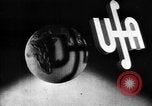
Hermann Wilhelm Goering represents Hitler at Heroes' memorial day ceremonies in 1938
The opening scene depicts Heldengedenktag (Heroes' memorial day) in Berlin, March 13,1938. It shows the spartan interior of the Neue Wache (New Guard) World War One memorial on Unter den Linden. A cross stands above masses of flowers and a flame burns next to it. A sentry stands outside the building. View of the equestrian statue of Frederick the Great, nearby in the center of Unter den Linden. Camera pans back across the front of the New Guard building showing soldiers in formation on either side. Accompanied by two officers, Hermann Goering in uniform, including steel helmet, walks behind soldiers as they carry a large floral wreath across the square and into the New Guard building. View from inside as they enter and place the wreath. Closeup of the wreath shows a ribbon with words: "Adolf Hitler." The two officers render a Nazi salute and Goering salutes with his Luftwaffe Field Marshal's baton. Throughout the sequence,the war song, "Ich hatt' einen Kameraden," is softly played as a slow dirge in the background. Scene shifts completely to a hall at night, in Vienna, Austria, as Goering gives a speech referring to Adolf Hitler. View of St. Stephen's cathedral and scenes from several days prior, as crowd of German people cheer in Heldenplatz about the Anschluss (annexation of Austria by Germany). Animated map showing the territorial annexation. Slate displaying the slogan: "Ein Volk; Ein Reich; Ein Fuhrer" (One people; one nation; one leader.) (Note: Regarding the New Guard, in Berlin: Since 1993, it has been the Central Memorial of the Federal Republic of Germany for the victims of war and tyranny. The eternal flame was replaced by a Four- times-enlarged copy of the bronze sculpture, "Mother with Dead Son,"by Kaethe Kollwitz, on a slab of black granite in the center of the room underneath the oculus. Her original small bronze made in 1937, resides in the Kaethe Kollwitz Museum in Charlottenburg.)
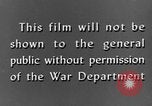
The City of Paris, France, before and after the Nazi invasion of 1940, and America preparing for World War II
Views of Paris in the late 1930s, prior to World War II. The Arc de Triomphe de l'Étoile (Arch of Triumph). The Tuileries gardens (Jardins des Tuileries) with bed of tulips in full bloom in foreground. The Eiffel Tower (la tour Eiffel). The fountain of River Commerce and Navigation at the Place de la Concord, Paris, with the Madeleine church (L'église de la Madeleine) directly behind, the Hotel de Crillon,barely seen at left, and its twin building, the French Naval Ministry, opposite, on the Rue Royale. People strolling and shopping on the Boulevard Haussmann. Awning of Les Deux Magots café and patrons seated at tables outside, in the Saint-Germain-des-Prés area of Paris. People relaxing in the Tuileries gardens, with Arc de Triomphe du Carrousel and Musée du Louvre in background. An artist at work, seated at a bench in the foreground. The west facade of Notre Dame Cathedral. Parisians looking at posters, reading in parks, visiting bookstores. Sign directing visitors to the Congres des Ecrivains (Congress of Writers) held at Maison de la Mutualité conference center at 24 Rue Saint-Victor, 5th arrondissement of Paris, France.in June, 1935. Several writers seated at a table with others standing around. Closeup of three. Closeup of British writer, Aldous Huxley, wearing eyeglasses. Two writers conversing. Scene shifts to Paris at night. Car traffic on streets of Paris at night. Illuminated sign at Moulin Rouge cinema theatre, topped with illuminated arms of a windmill. Lighted sign of nightclub, Le Rat Mort, in Place Pigalle. Interior of a Paris nightclub with sophisticated clientele. French entertainer musician playing a guitar. An official posting an announcement called "Counseil de Revision," calling for conscription (military draft recruitment) of citizens for military service. Parisians preparing defenses in the city, in front of the Eiffel Tower. Man deep in a trench preparing a shelter. Men carrying sandbags up a ladder to protect a national monument. Copy of the New York Times newspaper annnouncing the German attack on Poland. Copy of New York Daily News announcing fall of Holland. The New York World-Telegram paper announcing capitulation of France. German Panzer II tanks and motorcycle troops entering Paris. German infantry marching through the Arch of Triumph, on the Champs-Élysées. A Frenchman wiping his eyes as he watches the occupying troops. Hermann Goering with other officers riding in an open car along a Paris street. Closeup of Arch of Triumph. Adolf Hitler, accopanied by staff, looking at the Eiffel Tower. Nazi flag flying from the tower. Closeup of Hitler looking around. The U.S. Capitol building in Washington, DC. President Franklin D. Roosevelt, in Academic garb, at the University of Virginia commencement ceremony, in Memorial Gymnasium, on June 10, 1940. (FDR's son Franklin Jr. was among the graduates assembled, from the UVA Law School). Roosevelt expresses American sympathy and support for nations invaded by the Nazis. American street scene. Women preparing gifts intended for France. A poster showing a French soldier, entitled: "Le Paquet Au Front." American draftees in training at an army post in the U.S. Smoke billowing from American industrial facilities. Workers at an American shipyard. View of warships under construction at the yard. A Huge gun barrel being moved on special rail dollies, in a U.S. arms factory. U.S. Navy F4U Corsair Production Line during World War II. M3 Lee medium tanks being manufactured in U.S. factory. Closeup of finished one being transported via transverse crane. M4 Sherman tanks moving on flat rail cars. A speeding steam locomotive pulling freight cars. Martin PBM-5 Mariner in flight over an Atlantic convoy carrying war materiel to the United Kingdom. Sailor wearing headset, standing near depth charges at stern of a ship. British Naval Ensign flying from mast of a ship.

John F. Kennedy wins the Presidential election in the United States.
Presidential election of November 8, 1960. Voting for the 1960 Presidential election underway in United States. President Eisenhower arrives at a firehouse in Cumberland Township, Pennsylvania via helicopter to cast his vote. His wife, Mamie Eisenhower, also casts her vote. Senator John F. Kennedy and wife Jacqueline cast their votes at the Boston Public Library. Republican candidate Richard Nixon and wife Pat Nixon cast their votes in California. Republican Vice Presidential candidate Henry Cabot Lodge, Jr. votes. Senator Lyndon Johnson is also seen voting. Ballots are fed into a ballot box marked 'Town of Barnstable' Kenned Kennedy with his wife and daughter appear before the press at the Kennedy compound in Hyannis Port Massachusetts as he leads the race for the White House. News that Kennedy is pulling ahead in the race is seen on a scrolling text marquee aka 'The Zipper' mounted on New York Times building at One Times Square in New York City. A reported watches wire reports printing from Associated Press machines. Richard Nixon at a public meeting accepts his defeat and assures his support for Kennedy. Votes being counted and Kennedy wins the election. A man at a newsstand views the front page of the New York Mirror newspaper with headline, 'EXTRA KENNEDY!' 'John F. Kennedy after winning the election. He addresses a public meeting at Hyannis, Massachusetts with his wife by his side, and other Kennedy family members present on stage, including Joseph P. Kennedy Sr, Rose Kennedy, Robert Kennedy, Edward Kennedy with Joan Bennett Kennedy, and the President-elect's sisters Patricia Kennedy Lawford, Jean Kennedy Smith, and Eunice Kennedy Shriver. John F. Kennedy accepts Nixon's greetings and talks about making a supreme effort to take America out of difficult times.
CRITICALPAST.COM: About Us | Contact Us | FAQs - How to Order | License Agreement | My Account | My Lightboxes | Shopping Cart | Advanced Search | Featured Collections | Website Terms & Conditions | Privacy Policy ©2026 CriticalPast LLC.
License Agreement |
Terms & Conditions |
Privacy Policy
©2026 CriticalPast LLC.