


 Francais
 Deutsch
 Italiano
Refine Your Search
Elizabeth New Jersey 1952 stock footage and images
- Showing 5413 to 5418 of 8468 results more
more Hide
Hide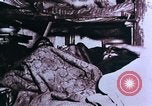
Immigrants from Europe, arriving from 1880 to 1914, participate in the working life of America.
Two new immigrant man are seen on bunks in a tenement in New York City, where the narrator says nine out of ten immigrants arrived in the period from 1880 to 1914. Two women pose, sitting beside a sleeping child in a tenement. An immigrant speaks about the hardship of arriving in a strange land where he did not speak the language and felt "lost." He says he gradually overcame that by going to night school to learn a little English and to read and write. He says he made a nice living as a peddler, and expressed appreciation for the opportunities America gave to immigrants. In the next scene, children enjoy rides on a traveling merry-go-round visiting their neighborhood. The operator runs it manually, by turning a wheel. View of children riding and others watching on the street. Streams of pedestrians crossing a bridge across a busy city street. Pedestrians on sidewalks and horse-drawn wagons and electrified street cars moving on the street in the commercial center of a city. Workers heading home after their shift in a factory. View of workers producing products in a factory. A line of women punching a time clock at their place of work. Women working in a clothing factory. Men standing atop a shipment of steel rails for the building of a railroad. Views of rails being moved into position for a new segment of the railroad. Glimpse of a steam shovel scooping a bucket full of raw material. Black smoke rising from funnel on a steam locomotive, and also from nearby steam shovel. Iron workers on a the wide open upper floors of the 60-story skyscraper Woolworth Building under construction in Lower Manhattan, New York City, in 1911. Pilings being put in place for a new building. Riveters guiding a section of steel column into place for a new building . Views inside a heavy manufacturing plant of the W. E. & M. company in New York City. Their products appear to be large dynamos and motors. View of the Statue of Liberty on Bedloe's Island in New York harbor, with its arm appearing to hold up a full moon.
Montage of images chronicling the settlement and development of the United States of America over many years.
The last portion of Emma Lazarus’sonnet,"The New Colossus," is shown as engraved on a tablet inside the pedestal of the Statue of Liberty. Illustrations of immigrants arriving and felling trees to build dwellings in America. Reenactments of early English, Scottish, and Dutch settlers building houses and working at crafts in New England. Italian sulphur mine workers in Louisiana. Immigrants, from France and Switzerland, planting vineyards in California and New York State. Danes, Norwegians, and Swedes, sowing seed and cultivating crops in the Midwest. Polish and Welsh immigrants in American coal mines. African Americans harvesting cotton on farm fields in the United States south, including a woman picking cotton with her baby riding on her long collecting bag. A Spaniard on horseback in the Southwest. Mexicans working in Texas oil fields and on ranches of New Mexico. Greek and Portuguese fishermen with huge catches of fish. A German technician working with fine instruments. Hungarian and Russian immigrants working in steel mills. Irish, Slavs, and Chinese, building railroads. Closeup of lumberjack's axes and saws cutting trees. A forge and a blacksmith shoeing a horse with horseshoes. A woman at work with a spinning wheel. Railroad ties and rails being placed. An antique railroad workman's locomotive and car. Men installing telegraph wire on rough poles. A early historic railroad 0-4-0 steam locomotive (appears to be one of the few replicas of "The Atlantic" which had been built in the 1830s) pulling a single small passenger train car. Cowboys on horseback rounding up steers. Herds of cattle,sheep, and pigs, bound to market. Farmers tilling soil with horse-drawn cultivators, preparing tobacco leaves for drying, and loading cotton bales. Machines spinning thread in a textile mill or factory. Fabric weaving machines at work. An early steam boat underway in a river. Early model automobile driving on dirt road. Wright Brothers' Wright Flyer airplane in flight with several persons on board. Early tractors and harvester machinery working on a farm. Glimpses of American industrial plants and transportation in rapid succession (some of it showing building of Hoover Dam and building of the Chrysler Building in New York City). Oil well drilling and a "gusher" oil well spouting oil upward. Steel mills, locomotive trains, and then a scientist in a laboratory working with beakers and a solution. Dynamite charges blasting away sides of mountains and gorges, and scenes of dam construction and dams opening to allow water gushing. Large electrical control levers being thrown to run electricity, and scenes of electric transmission towers and facilities. Natural gas storage areas. Golden Gate bridge under construction and high rise skyscraper buildings being constructed, including the Chrysler Building circa 1930 while still under construction in New York City. Aerial view of New York City. Camera panning over the gravestones in Arlington National Cemetery.
A man and a woman talk in the light of a kerosene lamp in the United States. Also shows the 1893 DeWitt Clinton replica locomotive and train in operation.
The world struggle for oil is depicted. Use of components of oil in homes and in railroads in the United States is shown. A dramatization shows the effect of a kerosene lamp on social life. A woman seated in a chair near a table in a room. A kerosene lamp in a corner. A man opens the door of the room and walks in. The woman gets up and welcomes the man. They both walk to a seat and sit down. Another woman enters the room. The man stands to greet her. She increases the light of the lamp and then leaves the room. The man decreases the light of the lamp. The man and the woman talk. The 1893 replica of the 1831 DeWitt Clinton steam locomotive is shown in operation with its three carriage train, in New York City. The DeWitt Clinton was the first railroad locomotive to operate on the Mohawk & Hudson Railroad in New York. The reproduction seen here was built in 1893 by the New York Central Railroad for the Columbian Exposition in Chicago. This footage was shot on July 17, 1921 when the DeWitt Clinton train was preparing for a trip to another exposition in Chicago. On this day it ran several times from 96th to 116th streets in New York City. New York Central employees are seen on the drain, dressed as passengers would have been in 1831. This replica was later displayed at Grand Central Terminal in New York City, and is is now on display at The Henry Ford museum in Dearborn Michigan. It was acquired by Henry Ford in 1934, in an agreement with the New York Central that it would continue to travel to events on occasion.
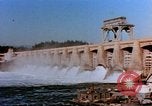
Promotion to buy U.S. Saving Bonds in the United States to contribute towards the development of the country.
A public service announcement (PSA) depicts industrial development in the United States and urges the purchase of savings bonds to preserve American heritage and way of life. Water flows through the Bonneville Dam on the Columbia river between Oregon and Washington for hydroelectric production of electricity. A power house for power transmission. Views of transmission towers and electricity is supplied to houses and industries. A glass tumbler factory. Robot machines using electricity in operation to make drinking glasses. A line of finished articles and items being made in factories using new materials like plastics. A man mixes a color in an industrial mixer. A scene with lightning flashing. A worker moves a large breaker handle in a power transmission facility. Neon lights of Times Square, New York City, at night, with many lit sign boards using electricity. Exterior view of U.S. Capitol on a clear day. View of traffic and pedestrians in front of New York Public Library. View of exterior of Trinity Church Wall Street in New York City. A boy with a dog on a long driveway in front of a nice house. Farmers harvesting crops, a mechanic operating a large wrench, a professor in front of a chalk board in a class room, overhead view of a surgical operation underway by doctors, a business man at work in an office typing a paper. Hands of a banker spinning large wheel to open a bank vault. Scenes of busy traffic on streets of New York City. View of Empire State building skyscraper panning from ground to top of building. Welders working at a job site. Women shoppers or office workers in 1940s fashions walking on sidewalks of a city with a double decker bus in background. View of streets of a small town. A line of people to buy U.S. Saving Bonds. View of United States Savings bonds of various denominations being placed on a table. Overhead view of women office workers filing items in a business office. View of a skyscraper in New York City. Wide view of Manhattan New York City skyline from water. A view of Mount Rushmore. Two women serve food and drink to young children seated in chairs. View of Bill of Rights document. Statue of Abraham Lincoln inside Lincoln Memorial in Washington DC. View of a U.S. flag being raised on a flag pole and fluttering in breeze.
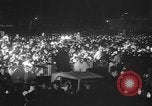
Wiley Hardeman Post receives welcome after flying solo around world and Colonel Roscoe Turner earns Bendix Trophy for speed
Wiley Post on arrival at Floyd Bennett field in New York, after flying around the world in 8 days. People take dinner at dining table to celebrate the setting of a new record in aviation. Crowd stands around the aircraft after arrival. Motorcade of Wiley Post in New York City. People welcome him with ticker tape parade in New York. Mayor of New York city, John Patrick O'Brien presents him with Medal of Valor. Next segment covers pilot Colonel Roscoe Turner who sets a new record of 10 hours and 5 minutes flying coast to coast from New York to Los Angeles. His Wedell-Williams Model 44 (WW-44) aircraft is seen landing and Roscoe Turner smiles broadly for the camera. He won the Bendix Trophy. From a November 10, 1958 newsreel recounting events 25 years earlier.
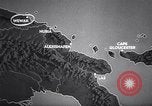
USAAF B-24 Liberator bombers drop 1000 lb demolition bombs over Nubia in World War II.
1943: An animated map depicts the strategic Japanese air and shipping base at Nubia in Papua New Guinea, during World War Two. 25 August 1943, Nubia: USAAF 5th Air Force B-24 Liberator bombers drop 1000 lb demolition bombs, from 16,000 feet, over Nubia. They target bivouac and supply areas. That afternoon, U.S. B-25s, flying low to the ground, make strafing attacks against the Japanese airfield at Nubia. United States soldiers unload jeeps, bulldozers, scrapers and other construction equipment in an abandoned Japanese airfield at Nadzab. U.S. 5th AAF constructing their air base. USAAF C-47s bring Australian infantrymen to the new base.
CRITICALPAST.COM: About Us | Contact Us | FAQs - How to Order | License Agreement | My Account | My Lightboxes | Shopping Cart | Advanced Search | Featured Collections | Website Terms & Conditions | Privacy Policy ©2026 CriticalPast LLC.
License Agreement |
Terms & Conditions |
Privacy Policy
©2026 CriticalPast LLC.