


 Francais
 Deutsch
 Italiano
Refine Your Search
Elizabeth New Jersey 1952 stock footage and images
- Showing 5533 to 5538 of 8468 results more
more Hide
Hide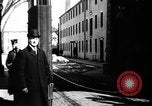
Franklin D. Roosevelt's early years in politics before becoming President of the United States
Franklin D. Roosevelt seen, well-dressed, in overcoat and hamburg hat, as a successful New York lawyer, in 1910, when he decides to run for a seat in the New York State Senate. He is seen greeting supporters outside his family home, Springwood, in Hyde Park New York, after winning the election. Very brief glimpse of Eleanor Roosevelt. Governor James M. Cox of Ohio, Democratic Party candidate for President, is seen with Franklin Roosevelt,Assistant Secretary of the Navy, whom he selects as his running mate, in 1920. View of Eleanor Roosevelt being recognized in the Democratic National Convention at the Civic Auditorium in San Francisco, California. Views of Franklin Roosevelt driving in an open car and speaking before crowds during the campaign of 1920. One crowd is notable for the preponderance of straw boater hats worn and waved by the men in the audience. Scenes of family life, after defeat of the Cox-Roosevelt ticket. Eleanor Roosevelt with children: Anna Eleanor;Franklin Delano Jr. II; Elliot; James; and Anna's dog, in 1921, at their summer retreat on Campabello Island, New Brunswick, Canada. Franklin D. Roosevelt (FDR), seated in a wicker chair in front yard of the Campobello house, smoking a pipe and writing on some papers. FDR standing with a cane.His mother, Sara Delano Roosevelt, seated and conversing with FDR. Eleanor, with them, knitting as they converse. Political aid,Louis McHenry Howe.FDR posing with cane, alone, and with wife, Eleanor. Mrs. Roosevelt hosting a gathering at Springwood, to promote FDR's political future. Eleanor speaking at a political gathering.
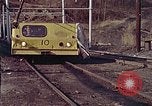
Glimpses of industrial and commercial activities in the United States
Miners arriving above ground on a rail car. Open coal cars filled with coal. A steel furnace. A commuter railroad train. A man operating a tracked crane at a city construction site. Workers and equipment at a road and tunnel project. Home builders starting on foundation of a new house in the suburbs, with view of a new suburban neighborhood being built in background. Views of various construction activities: a mobile home; a high rise building; a residential house. Factory workers on an automobile assembly line are seen assembling engine, transmission and other parts to chassis. Salesman showing a car to prospective woman customer a a new car dealership. Bushel baskets of vegetables, fruits, and assorted produce at a sidewalk market. Several shoppers seen on Connecticut Avenue, in Washington, DC. Businesses seen include: The Camalier & Buckley shop, Raleigh's haberdashery and the Mayflower hotel (in the background). New automobiles stored in a yard, including many station wagons, and a sedan car being offloaded from a truck. Man doing major bodywork repairs on a car. Doormen in red uniforms assist patrons in taxis at a hotel or apartment building.
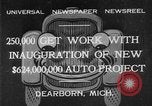
Workers work in an automobile plant and Henry Ford inspects the plant in Dearborn,Michigan.
Unemployed men get work with the inauguration of the new auto project of Ford Company in Dearborn, Michigan, during the Great Depression. Sweeping aerial view of the Ford River Rouge Complex. Henry Ford seen riding his Ford Quadricycle invention on snow covered ground. Workers work in a Ford automobile plant factory and assembly line putting finishing touches on new 8 cylinder sedan. Henry Ford himself inspecting the first one of the new cars during its assembly. A test car of the new 1933 Ford car drives on rutted and rough terrain to show durability and handling.
Life in Britain on eve of War. Chamberlain, Hitler and Mussolini signing the Munich Agreement during World War II.
An Allied propaganda film to solidify Anglo-American solidarity within the ranks as well as to counter Nazi propaganda aimed at weakening the alliance shows British soldiers in Great Britain during World War 2. 1938: in the United States New York Yankees win the pennant in baseball; scene of Yankees team members shaking hands. View of aviator Douglas Corrigan nicknamed Wrong Way Corrigan after his accidental flight from New York to Ireland instead of California as planned. View of trains on the 6th Avenue Elevated (or Sixth Avenue El) before that service was halted in Manhattan New York City. British citizens go about their daily life. Derby horse race in a stadium. A British boy and his father shovel dirt for a backyard garden. Players play a football (soccer) game at Wembley Stadium in England as spectators cheer the 1938 FA Cup Final with Preston North End taking the Cup versus Huddersfield Town as George Mutch scores the winning goal. Scenes in Germany: People cheer for German Chancellor Adolf Hitler and give Nazi salute. Newspaper headlines about Czech occupation. Graves in a cemetery. British Prime Minister Arthur Neville Chamberlain, Adolf Hitler Italian Prime Minister Benito Mussolini sign the Munich Agreement. Despite a peace agreement Hitler invades Czechoslovakia. People read 'Military Training Act, 1939'. British soldiers march along a road. View of Adolf Hitler smiling and laughing. Artillery is fired. A poster reads 'Britain Declares War on Germany'. Airplanes in flight and drop leaflets over Germany. German airplanes in flight. Parachutists jump from the airplanes. Hitler talks to officers and considers the war to be over. Radio news broadcast of the British declaration of war on Germany by Neville Chamberlain. Many different British citizens and families shown in living rooms and work places gathered around radios to listen to the so called "We shall fight on the beaches" speech of Winston Churchill on June 4, 1940. Clip includes scenes from 1938 through 1940; from a film produced in 1943.
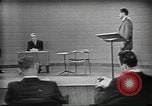
Senator John F Kennedy answers a panel of correspondents during a presidential election debate in Chicago, Illinois.
The first Kennedy-Nixon Presidential Debate in Chicago, Illinois. Moderator Howard K. Smith thanks Republican candidate U.S. Vice President Richard M. Nixon and Democratic candidate Senator John F. Kennedy for their opening statements. The Moderator the panel of correspondents: Sander Vanocur from NBC News, Charles Warren from Mutual News, Stuart Novins from CBS News and Bob Fleming from ABC News. Mr Fleming directs his first question to Senator Kennedy. He asks him why does he think that people should vote for him rather than Vice President Nixon. Kennedy answers and tells about his 14 years of experience in the Labor Committee. He compares the programs being advocated by the Democratic party and the Republican party. He states that the Republican leadership has opposed federal aid for education, medical care for the aged and development of country's natural resources in the past few years.
During a presidential election debate in the US, John F Kennedy and Richard Nixon comment on the necessity to defend Berlin.
The third Kennedy-Nixon Presidential Debate in the United States. Moderator Bill Shadel introduces the candidates and tells that candidates will not share the same platform. Republican candidate U.S. Vice President Richard M Nixon is in a Los Angeles studio and Democratic candidate Senator John F Kennedy is in New York. He also introduces the panel of correspondents who will question the candidates. The panel includes Frank McGee from NBC News, Charles Van Fremd from CBS News, Douglass Cater from Reporter magazine and Roscoe Drummond from New York Herald Tribune. Frank McGee asks Kennedy whether he would take military action to defend Berlin. Kennedy answers and says that the U.S. has contractual right to be in Berlin coming out of the conversations at Potsdam and of World War II. He states that the United States must meet its commitment on Berlin in order protect the security of Western Europe. He concludes by saying that the U.S. will meet its commitments to maintain the freedom and independence of West Berlin. Nixon disagrees with Kennedy's statement that the Republicans are trigger-happy and lead the nation into wars. He talks about the Democratic presidents who led the U.S. into wars. He concludes and states that he thinks there isn't any question about the necessity of defending Berlin.
CRITICALPAST.COM: About Us | Contact Us | FAQs - How to Order | License Agreement | My Account | My Lightboxes | Shopping Cart | Advanced Search | Featured Collections | Website Terms & Conditions | Privacy Policy ©2026 CriticalPast LLC.
License Agreement |
Terms & Conditions |
Privacy Policy
©2026 CriticalPast LLC.