


 Francais
 Deutsch
 Italiano

Refine Your Search
Elizabeth New Jersey 1952 stock footage and images
- Showing 5575 to 5580 of 8486 results more
 Hide
Color Sound

Vietnamese refugees board buses and arrive for processing at Fort Indiantown Gap Pennsylvania
Scenes of Vietnamese refugee arrival during Operation New Life / New Arrival in the United States. Vietnamese refugees boarding buses. The refugees sitting inside the bus. The refugees disembark from the buses at Fort Indiantown Gap, Pennsvlvania, and walk towards a building holding their personal gear. The interior of a building. The refugees being served lunch. Refugees seated at a table, having their food.
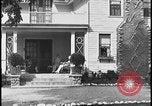
1928 film advertising Ford Motor cars
Opening scene shows women gathering for a bridge club party. They each drive to the party in their own cars and park in front of the house. While waiting for the last club member to arrive, they relax on the front porch of the hostess's home. They wear the fashions of the period, including Cloche hats, and some like flappers. The last woman to arrive drives a new Ford sedan, which attracts immediate attention from all the other women, who leave the porch and admire her car. Scene shifts to the next gathering of the bridge club, when all the womens' cars parked in front of the house, are new Fords.
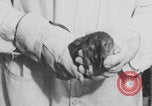
Rats being used for experimentation of animal behavior in crowded space by scientist
In a laboratory, a scientist places a rat in a small cage containing another rat. The latter attacks the new rat, after it felt threatened by its unfamiliar presence. The attack stops and the rat sniffs the newcomer. The new rat walks away. The rat attacks the newcomer again.
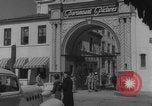
Film executives meeting in Los Angeles; Work Progress Administration staff and actors under WPA Federal Theater Project prepare and perform on stage
View of Paramount Pictures movie studio entrance. Hollywood film executives such as Paramount Picture’s Adolph Zukor in a meeting. View of Motion Picture Daily with news saying “Federal- NBC Units to Use Film Houses”. Two men buy theater tickets for a vaudeville show by the Federal Theater Project of the Great Depression organization called the Works Progress Administration (WPA). Works Progress Administration staff under the Federal Theater Project create props and stage design. A Works Progress Administration carpenter uses a Delta woodworking machinery. Works Progress Administration costume designer shows a design for a dress. Close up shot of Works Progress Administration costume designer. WPA technicians work on stage set design. A Works Progress Administration tailor measures a portly actor’s waistline. Seamstresses working in the costume department of the Federal Theater Project. Artist painting a background for a stage play. A seamstress adjusts a high slit dress of an actress. A milliner arranges a Fascinator, with tulle and pom-poms, on an actress’ head. Two actors and an actress practice a dance number together. Men and women dancers practice a dance. A pair of dancers perform a no-touch tango. Theater marquee saying, “Oh say can you sing WPA Music Comedy”. Newspaperman announcing show business news on newspaper. Orchestra plays inside a theater. Actors and actresses, in different period costumes, perform “Oh Say Can You Sing” as an ensemble after the curtains opened. View of faces of audience members as they clap and smile after watching the performance.
Scenes from WW1 include Woodrow Wilson, Franklin Roosevelt, troop deployment, munitions factory, ship building, WWI battle, and Armistice Day.
A title reading “1917”. An American ship sinks down in the Atlantic Ocean after it was torpedoed by a German U-Boat during World War I. United States President Woodrow Wilson signs the United States declaration of war on Germany. President Woodrow Wilson at work in his desk. A United States soldier blows a trumpet. United States soldiers crowd the deck of a ship sailing to Europe during WWI. The American Expeditionary Forces are waving as the ship sails away from the port. Franklin Roosevelt during World War I. American troops disembark from their ships after arriving in Europe. American women working in military supply factory. Women manufacture bullets using hand drills. A woman assembles munitions. Men building battleships at shipyard assembly line. Allied soldiers running in the battlefield to avoid being hit or bombed by the Germans. Bombs explode in the battlefield in Europe during World War I. Soldiers avoid bombs. A railway gun fires. An biplane falls in smoke after being hit. Explosion from tank in battlefield. Soldier rolls down to a trench. Explosion beside a rolling tank. A German soldier ducks in trench. An Allied soldier fires from a trench. A soldier behind him throws a grenade. Soldier with machine gun ducks from a trench. Tank rolls and fires in battlefield. Black explosion in battlefield. Soldiers run and avoid explosions. German soldiers fire a machine gun and throw grenades. Surrendered German prisoner soldiers march out as prisoners-of-war. American soldiers celebrate Armistice Day. View of the United States flag. Allied soldiers march in victory through ruined city. Americans celebrate Allied victory in World War I, filling with crowds in New York City. Americans hold banner saying, “Germany Surrenders”. Celebrating Americans in New York City, hold American flags and their hats triumphantly after Allied Victory in World War I.

American Expeditionary Forces reviewed by Wilson and Pershing; U.S. troops return home; Franklin Roosevelt meets French officials after WW1
Intertitle saying “1919”. United States President Woodrow Wilson reviews troops alongside General Pershing at Pershing's headquarters in Chaumont, France. American Expeditionary Forces, wearing “doughboy” helmets, march with American flag. Assistant Secretary Franklin Delano Roosevelt with French army officials in France. American Expeditionary Forces climb stairs. American Expeditionary Forces smiling as they assemble to return home to the United States after World War I armistice. Franklin Roosevelt speaks to French officials. Crowds celebrate the return of the American Expeditionary Forces from Europe at the Victory Arch in Madison Square Park in New York City. American Expeditionary Forces, who fought in Europe during World War I, parade with their bayonets at the Victory Arch in Madison Square Park New York City.
CRITICALPAST.COM: About Us | Contact Us | FAQs - How to Order | License Agreement | My Account | My Lightboxes | Shopping Cart | Advanced Search | Featured Collections | Website Terms & Conditions | Privacy Policy ©2026 CriticalPast LLC.
License Agreement |
Terms & Conditions |
Privacy Policy
©2026 CriticalPast LLC.