


 Francais
 Deutsch
 Italiano
Refine Your Search
Elizabeth New Jersey 1952 stock footage and images
- Showing 5791 to 5796 of 8468 results more
more Hide
Hide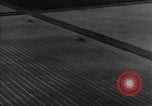
Views of the United States. Farms, cities, highways, and beaches. Destruction in Japan by atomic bomb. U.S. infantry in combat
Farmers harvesting grain and corn with machinery on American farms with a narrow tractor harvester. Steel mills and heavy industry and cargo railroads in the United States. Industrial views with smokestacks releasing much smoke and smog (also pollution scenes). Scenes of New York City with busy streets filled with cars, buses, and truck traffic, together with pedestrians. Many varied 1940s and 1950s cars on the roads. Elevated and also aerial views of U.S. highway networks busy with 1940s and 1950s cars. Views of Jones Beach, on Long Island, New York. Scenes of destruction in Japan from the atomic bomb, with sweeping views of destroyed city in Hiroshima or Nagasaki circa 1945 or 1946. U.S. Army infantrymen engaged in house-to-house fighting in Europe during World War II, firing rifles and moving between points of cover in a city filled with rubble.
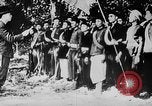
Cadres of Viet Minh holding flags. Ho Chi Minh, in declaration of independence,establishes Democratic Republic of Vietnam
Views of several cadres of Viet Minh holding flags. Image of Ho Chi Minh. Crowds gathered in celebration as Ho Chi Minh declares the independence of the new Democratic Republic of Vietnam. The Viet Minh flag with single star appears in many places as the flag of the new nation.

Franklin D. Roosevelt campaigns for Vice Presidency in 1920 and supports Smith -Davis ticket in 1924.
Franklin D. Roosevelt seen standing in courtyard of White House, with other officials. The old Executive Office Building is in the background. Democratic National Convention of July, 1920. Roosevelt is nominated as Vice Presidential candidate on ticket with James M. Cox. The two of them campaigning in San Francisco. Supporters parading. Mrs. Eleanor Roosevelt with their four children and dog, at Hyde Park in New York. Crowds gather to hear Roosevelt campaign speeches. Franklin D. Roosevelt returns to Hyde Park and is greeted by his mother. He speaks there and greets supporters. Roosevelt on chrutches (due to polio) standing with John W. Davis and Alfred Smith. Scenes of the Democratic National Convention of 1924, in New York.
United States Army recruits in World War 1 are given gas mask training in the United States.
A United States Army Signal corps training film titled 'Defense Against Chemical Warfare'. Mobilization of new U.S. Army troops arriving by railroad trains for training following recruitment. New recruits undergo training. They assemble in their uniforms and salute their officer. Recruits are given gas masks and are given training about their care and use. A U.S. Army soldier demonstrates how to strap a gas mask. The recruits don gas masks. (World War I; World War 1; WWI; WW1)
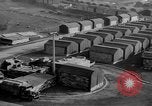
U.S. Army forces build up supplies and advance positions in preparation for invasion of Germany during World War 2
Activities of American first Army in Germany. Aerial and ground views of an Allied supply depot at Liege, Belgium. U.S. Army soldiers arrange supply boxes. Signal Corps engineers work on readying communication lines from the rear to the front and are seen stringing communication lines and preparing communication hubs. New transmission equipment of various kinds are received and installed for news. U.S. Army engineers supervise steel manufacture and sawmill operation in Luxembourg at a protected steel works facility that was taken over by the Allied Supreme Command. U.S. Army Corps of Engineers personnel walk on finished steel beams and check them before shipment front. Plank boards are cut and stacked for use in road projects. U.S. engineers repair a bridge over the Meuse in Belgium that had been damaged in the Battle of Belgium. Train crosses a repaired bridge over the Meuse, and U.S. military and civilian pedestrian traffic seen on the bridge road. Track connectors are installed to better grip in mud and allow passage of Allied tanks and tracked vehicles. Aerial view of Siegfried line and Dragons Teeth. U.S. forces seen using a tank bulldozer and mud to effectively bury Dragon's Teeth tank traps to allow passage through the Siegfried Line. Allied trucks and vehicles are repaired. A convoy of Allied supply trucks passes by through a snowy landscape bringing supplies to the front in preparation for invasion into Germany.
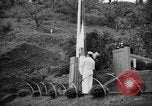
United States and Japanese diplomats, naval officers and sailors mark centennial of Commodore Perry Expedition
American and Japanese diplomats, Naval officers, sailors, and local officials mark the centennial of Commodore Perry's expedition at Shiroyama Park in Shimoda, Japan. The Japanese flag is slowly raised by an American sailor. Then the American flag is slowly raised by a sailor of the Japanese Naval Self-Defense Force. A small Japanese boy unveils a new memorial for Commodore Perry and Consul Harris. Admiral Robert Briscoe, commander of U.S. naval forces in the Far East, lays wreaths at the new monuments. Japanese officials also place wreaths, and a Japanese official gives a speech. view of the bay from the memorial. Japanese school girls in traditional costume pose with a model of a "black ship" from Commodore Perry's Squadron.
CRITICALPAST.COM: About Us | Contact Us | FAQs - How to Order | License Agreement | My Account | My Lightboxes | Shopping Cart | Advanced Search | Featured Collections | Website Terms & Conditions | Privacy Policy ©2026 CriticalPast LLC.
License Agreement |
Terms & Conditions |
Privacy Policy
©2026 CriticalPast LLC.